
Hydroponics · Substrate growing
Cocopeat grow slab system
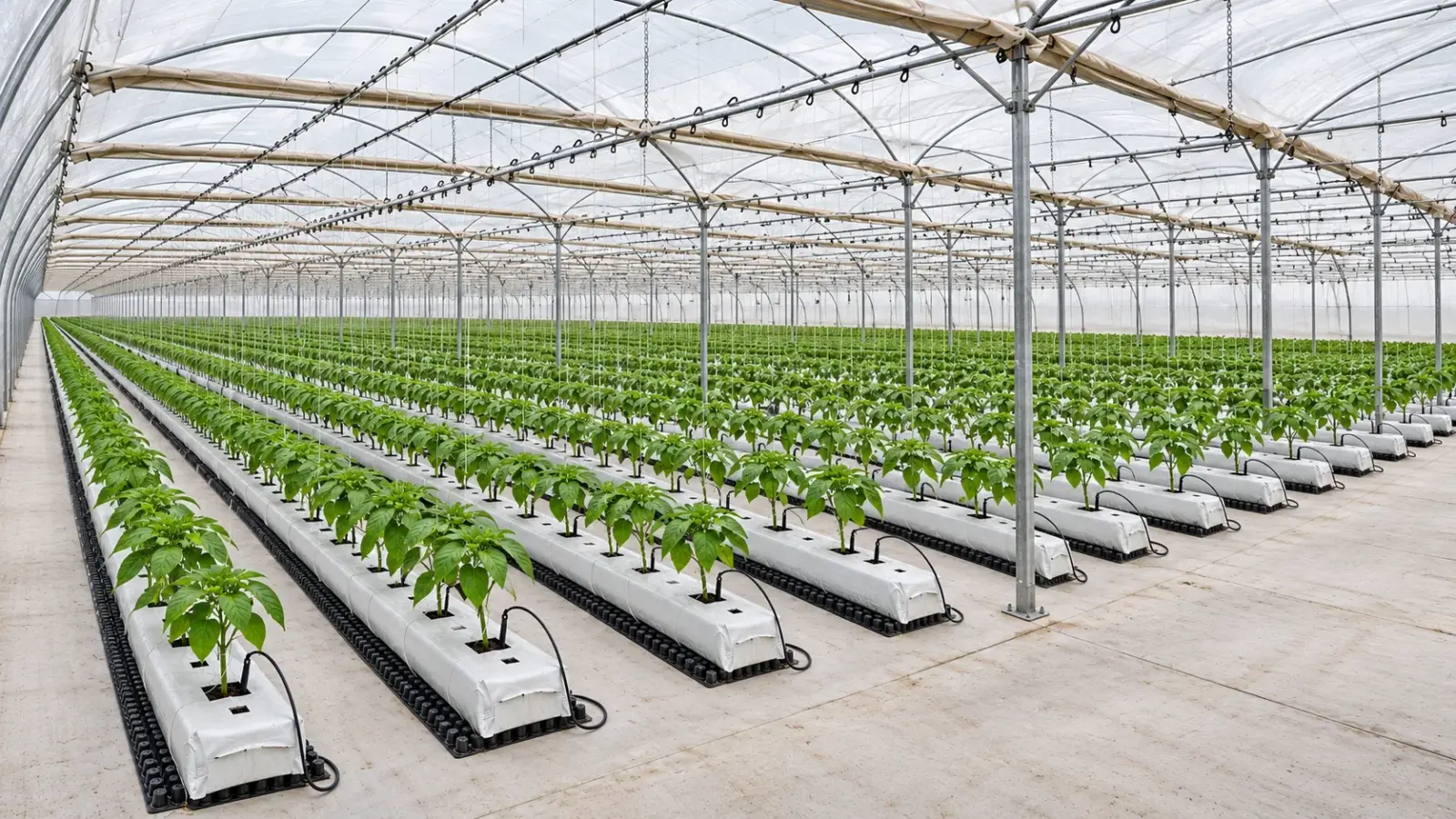
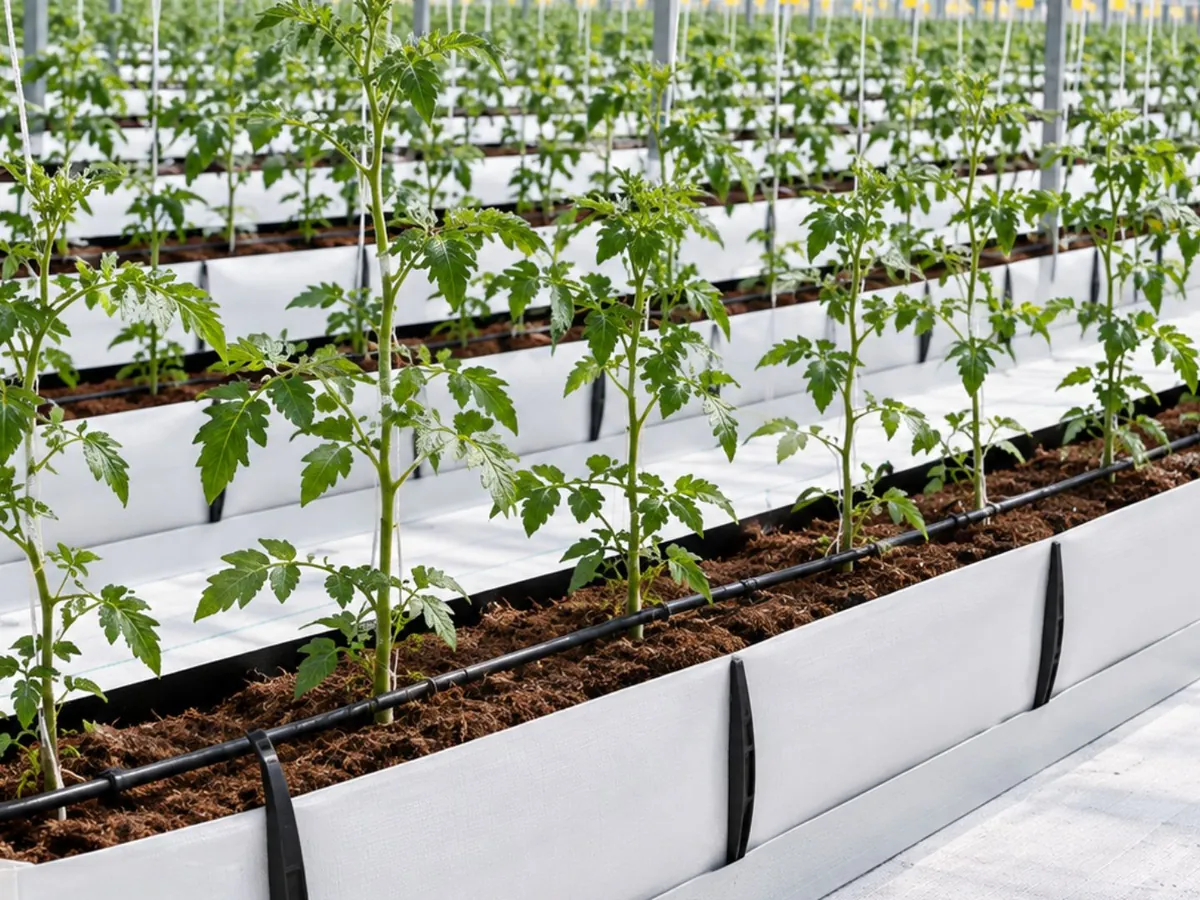
Compressed low-EC cocopeat slabs in white-on-black UV sleeves, fed by drip. A clean, quick way to grow capsicum, tomato and cucumber without soil, designed, made and installed by Kryzen inside your polyhouse.
350+farms built by Kryzen across India
Ready-to-use slabs
Compressed low-EC cocopeat in a sealed UV sleeve. Soak, cut planting holes and plant.
Exact feeding by drip
A dripper at every plant gives the whole row the same measured feed.
Made for long crops
Capsicum, tomato and cucumber grow for months in the same slab.
What is a grow slab?
Ready-to-plant cocopeat, sealed in a sleeve
Quick answer
A grow slab is a block of compressed low-EC washed cocopeat sealed in a white-on-black UV sleeve. It is soaked, planting holes are cut in the top, and a few plants grow in each slab, fed by drip. It is widely used for long-cycle capsicum, tomato and cucumber.
It works like cocopeat grow bags, but the cocopeat arrives compressed and sealed, so setup is quicker and cleaner.
How it works
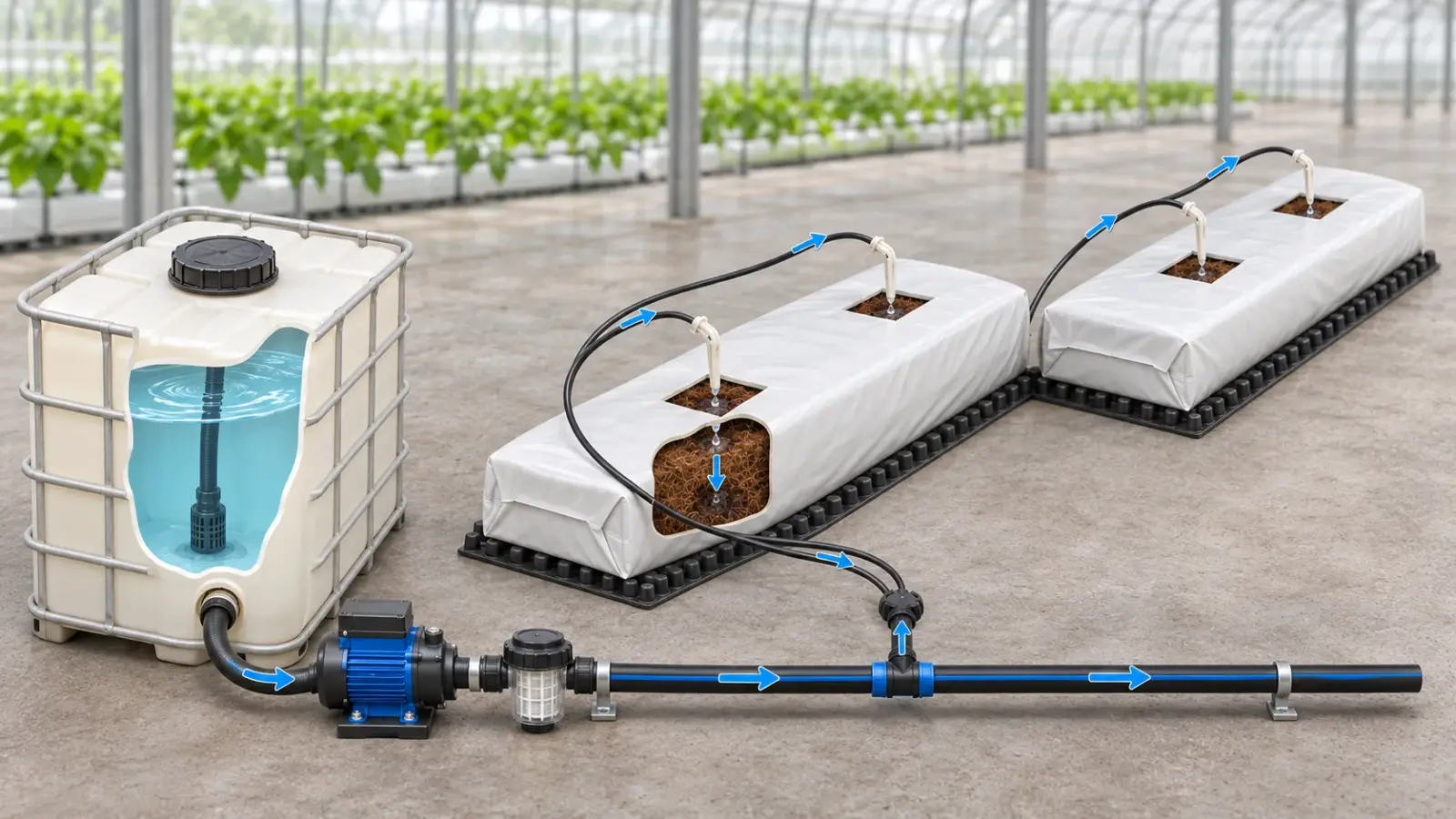
From fertigation tank to slab
Six parts deliver the same measured feed to every plant on every slab.
 01
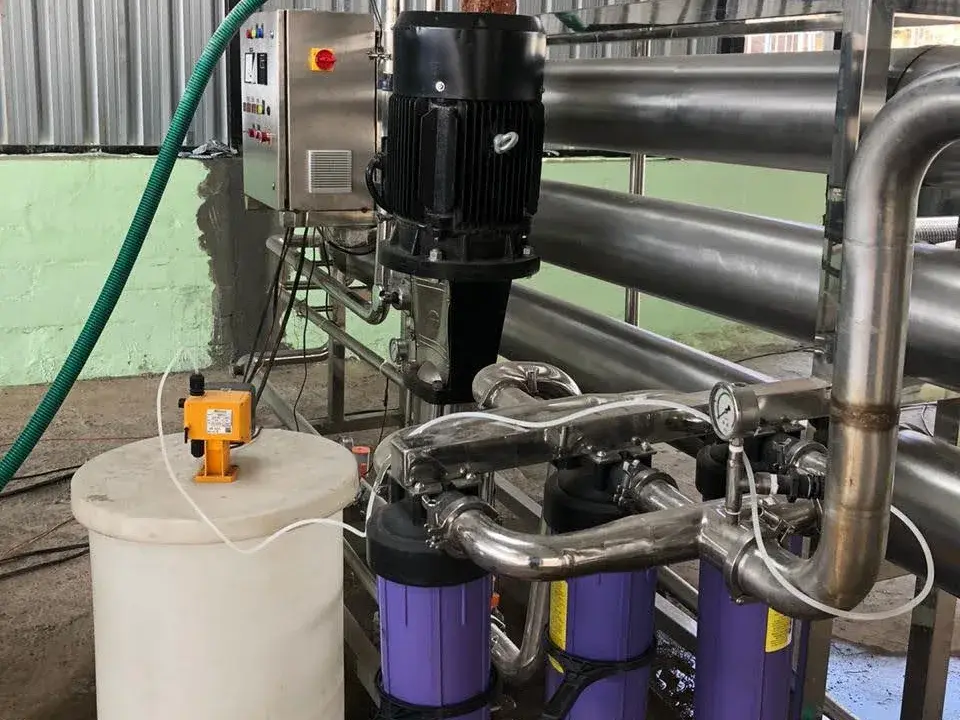
Fertigation tank and pump
Nutrients are mixed in a fertigation tank. A pump and filter send the solution to the drip lines on a timer.
 02
Cocopeat grow slabs
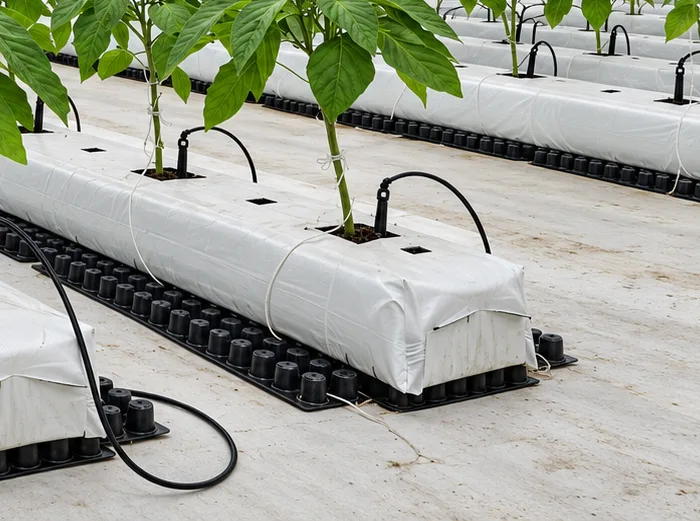
Each slab is a flat block of compressed low-EC cocopeat, sealed in a white-on-black UV sleeve. White reflects heat and light; black keeps roots dark.
 03
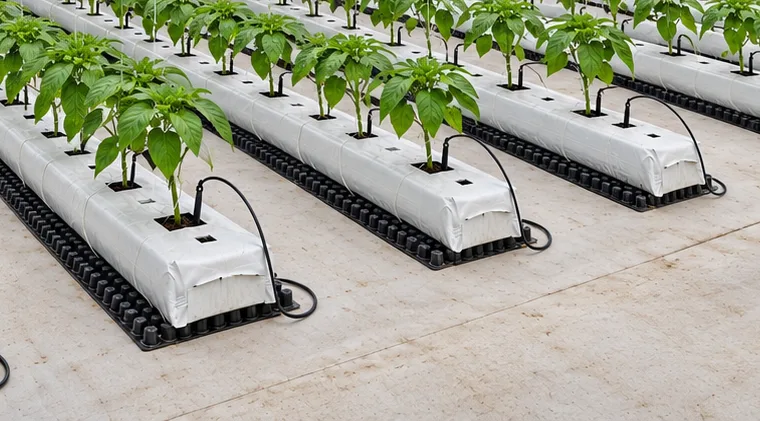
Planting holes and soaking
Planting holes are cut in the top of the sleeve and the slab is soaked with nutrient solution until it swells to full size.
 04
Drippers at every plant
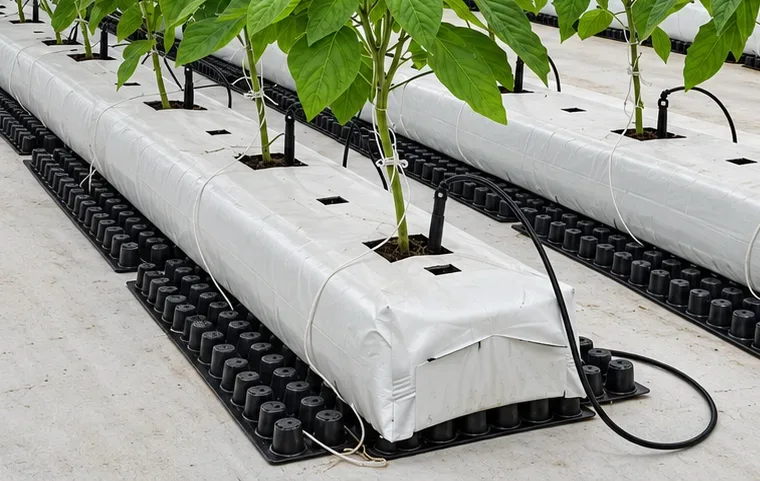
A drip stake goes into the slab beside each plant, so every plant gets the same measured feed.
 05
Drain cuts and run-off
Small cuts at the base of the sleeve let extra solution drain away, so roots never sit in water.
 06
Daily monitoring
Kryzen hydroBUILD automation reads EC and pH and shows them on your phone, so doses can be adjusted every day. See IoT and automation.
Growing media
Types of cocopeat: low EC vs high EC
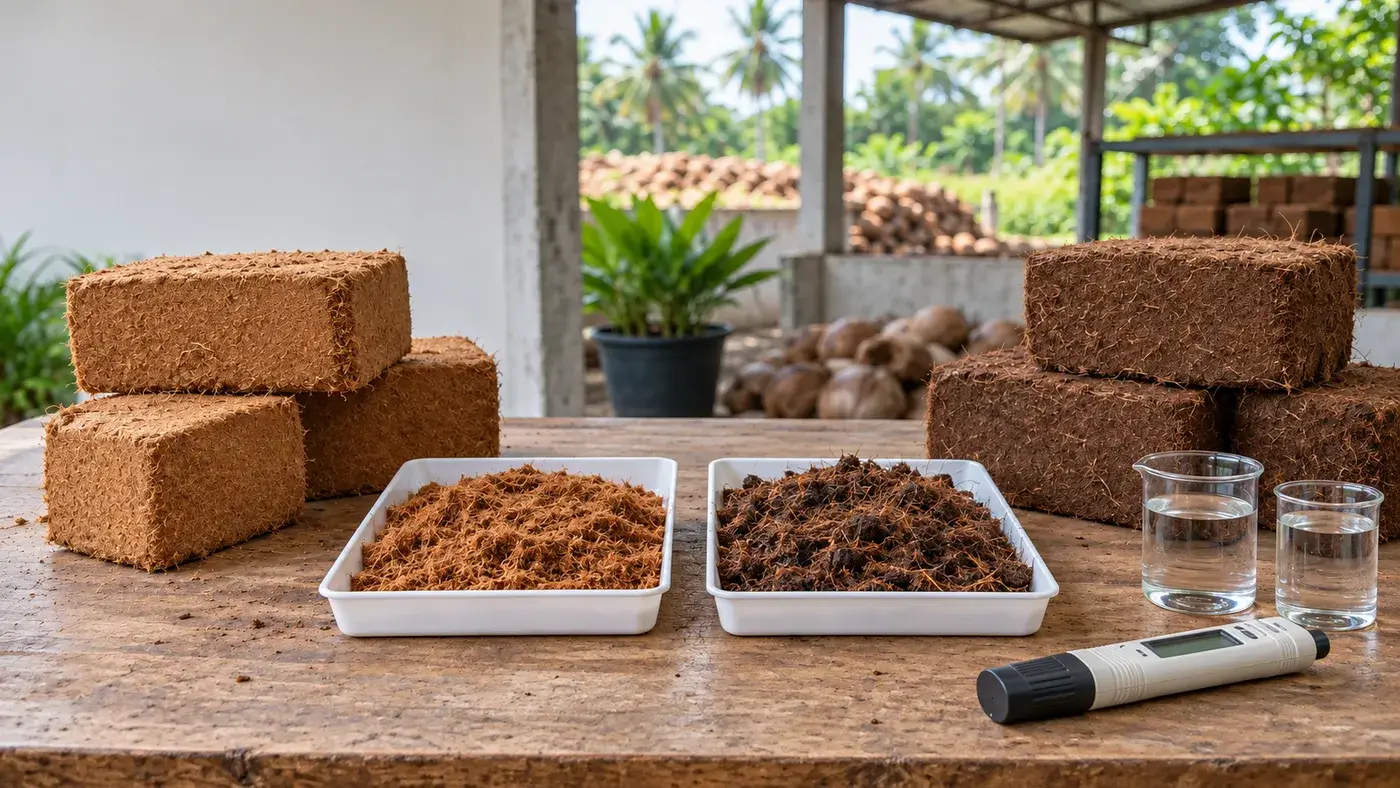
Not all cocopeat is the same. For hydroponics, Kryzen uses only low-EC washed cocopeat.
| Point | Low-EC cocopeat (washed) | High-EC cocopeat (unwashed) |
|---|---|---|
| Salt level (EC) | Low: below 0.5 mS/cm | High: above 1 mS/cm |
| Washing | Washed in fresh water to remove sodium and potassium salts | Not washed; natural salts stay in the cocopeat |
| Buffering | Buffered, so it does not lock up calcium and magnesium | Not buffered |
| pH | 5.5–6.5, ready for nutrient solution | Varies by batch |
| Effect on roots | Healthy roots; feed EC stays under your control | Salt stress, root burn and uneven growth |
| Use | Hydroponics and nurseries; used on every Kryzen farm | Not for hydroponics |
Cocopeat and coco fibre mix: what to buy
Good quality
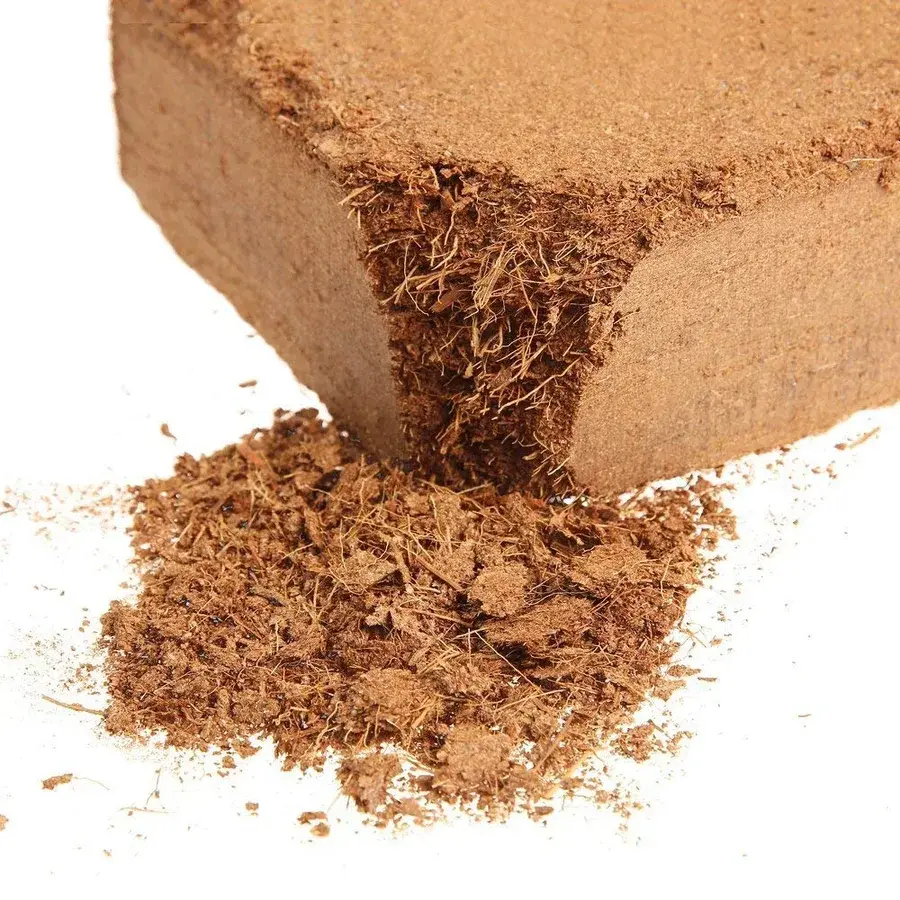
100% cocopeat
Holds water and air evenly. The right grade for grow slabs and grow bags.
Low water retention
75% cocopeat, 25% coco fibre (coir)
Drains too fast, so plants need more frequent feeds.
Poor quality
50% cocopeat, 50% coco fibre
Dries out quickly and gives uneven root growth.
Not for agriculture
25% cocopeat, 75% coco fibre
Mostly fibre. Used for mats, ropes and packing, not for crops.
Cocopeat comes in compressed blocks. Ask for the EC report and the cocopeat-to-fibre ratio before you buy.
Crop support
Trellising for tall crops
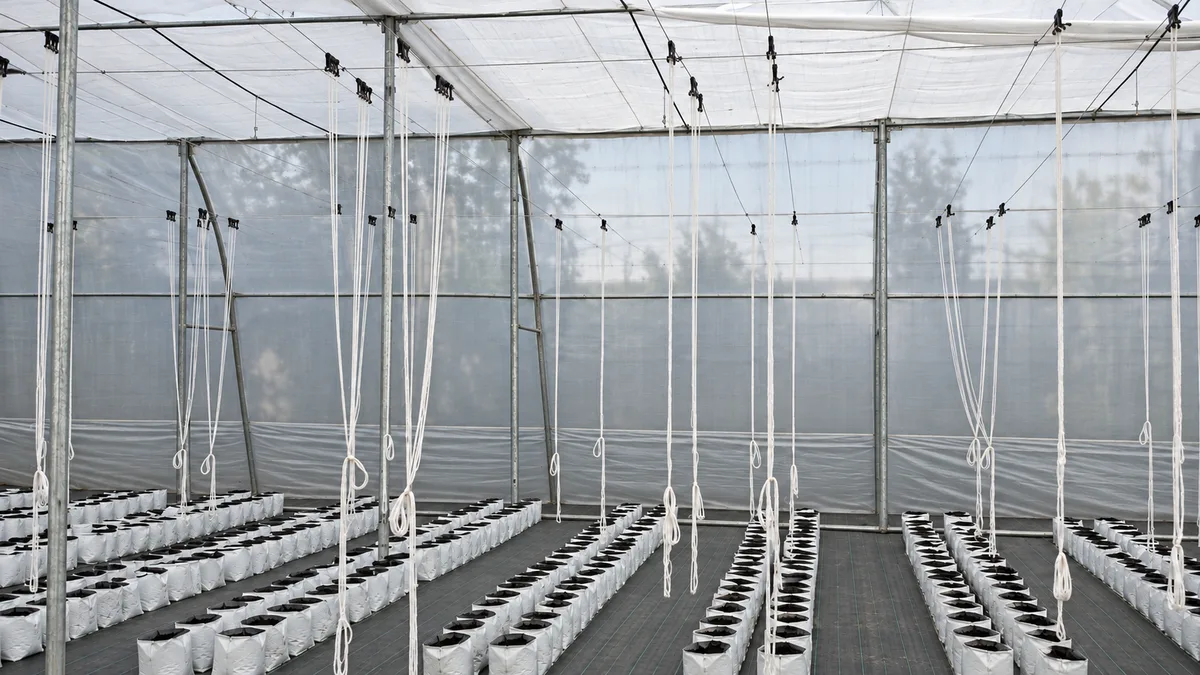
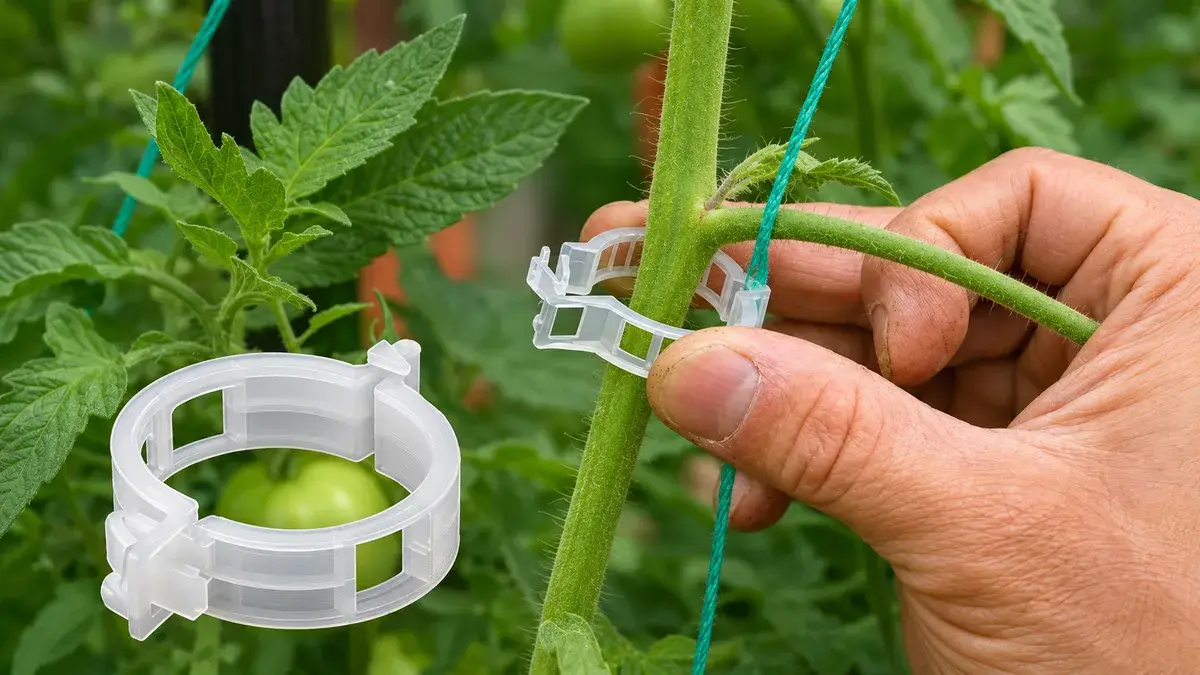
Capsicum, tomato and cucumber in grow slabs grow tall. Strings and clips keep every plant upright.
Support wires
Overhead wires run along every row, fixed to the polyhouse structure above the bags.
Hooks and strings
A string hangs from the wire down to each plant. Hooks hold spare string, so tall plants can be lowered as they grow.
Trellis clips
Plastic clips hold the stem to the string every few leaves without hurting the plant.
Why it matters
Upright plants get more light and air, fruits stay clean and off the ground, and harvest is faster.
Choose your system
Grow slab vs cocopeat grow bags
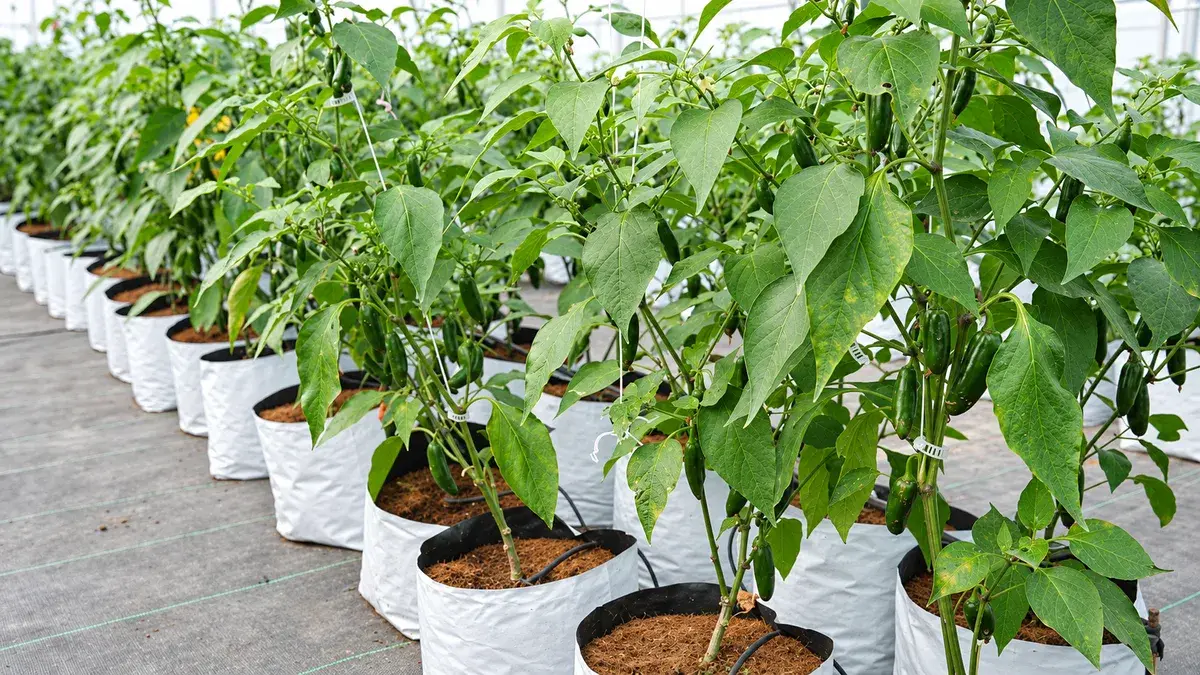
Both feed cocopeat by drip. The difference is a sealed, compressed slab versus loose cocopeat in bags.

| Point | Grow slab | Cocopeat grow bags |
|---|---|---|
| Media | Compressed low-EC cocopeat slab in a sealed sleeve | Loose low-EC cocopeat filled into bags |
| Setup | Lay, soak and cut planting holes | Fill each bag with cocopeat on site |
| Root zone | Long, flat slab shared by a few plants | One bag per plant or pair of plants |
| Drainage | Drain cuts at the base of the sleeve | Holes in the bag |
| Best for | Long-cycle capsicum, tomato and cucumber | Capsicum, cucumber and tomato |
Why build one
Advantages of cocopeat grow slabs
A clean, quick setup and an even root zone for long crops.
Clean, quick setup
Slabs arrive compressed and sealed. Lay them out, soak, plant.
Exact feeding by drip
Every plant gets the same measured solution, planned with our nutrient calculator.
Forgiving system
Cocopeat buffers water and nutrients, so short power cuts do not harm the crop.
No soil diseases or weeds
The sealed sleeve keeps roots off the soil, and weedmat keeps the floor clean.
Cool, healthy roots
The white outer face reflects heat; the black inner face keeps roots in the dark.
Clean, uniform produce
Fruits grow off the ground and stay clean, ready to grade and pack.
Easy crop change
Remove the old slab and lay a new one between crops, with no bed to dig or refill.
Climate-proof agriculture
Inside a polyhouse, heat, rain and pests stay out and harvests stay steady all year.
Technical details
Grow slab specifications
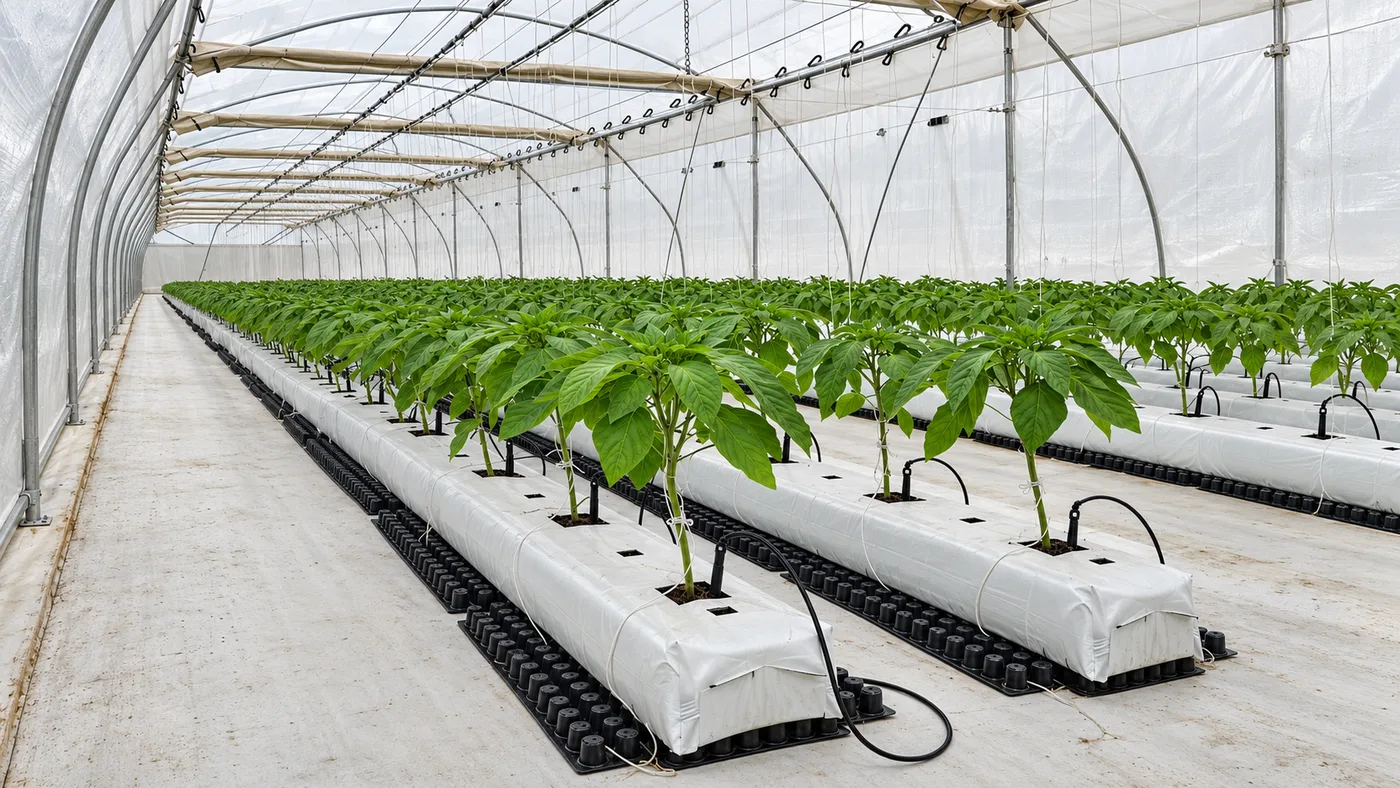
Slab layout and spacing are planned for your area and crop after a site inspection. Every value goes in writing in your quotation.

| Specification | Kryzen grow slab system |
|---|---|
| System | Drip-fed cocopeat grow slabs (substrate hydroponics) |
| Grow slab | Compressed low-EC washed cocopeat in a white-on-black UV sleeve |
| Planting | Planting holes cut in the sleeve; slab soaked before planting |
| Feed | Drip line with a drip stake at every plant, on a timer |
| Drainage | Drain cuts at the base of each slab |
| Slab support | Raised plastic slab supports keep slabs off the floor and let run-off drain |
| Floor | Weedmat between rows |
| Crop support | Overhead wires, strings and clips for tall crops |
| Monitoring | hydroBUILD EC and pH readings; doses planned with the Kryzen nutrient calculator |
Made by Kryzen
Our own factory. Our own build team.
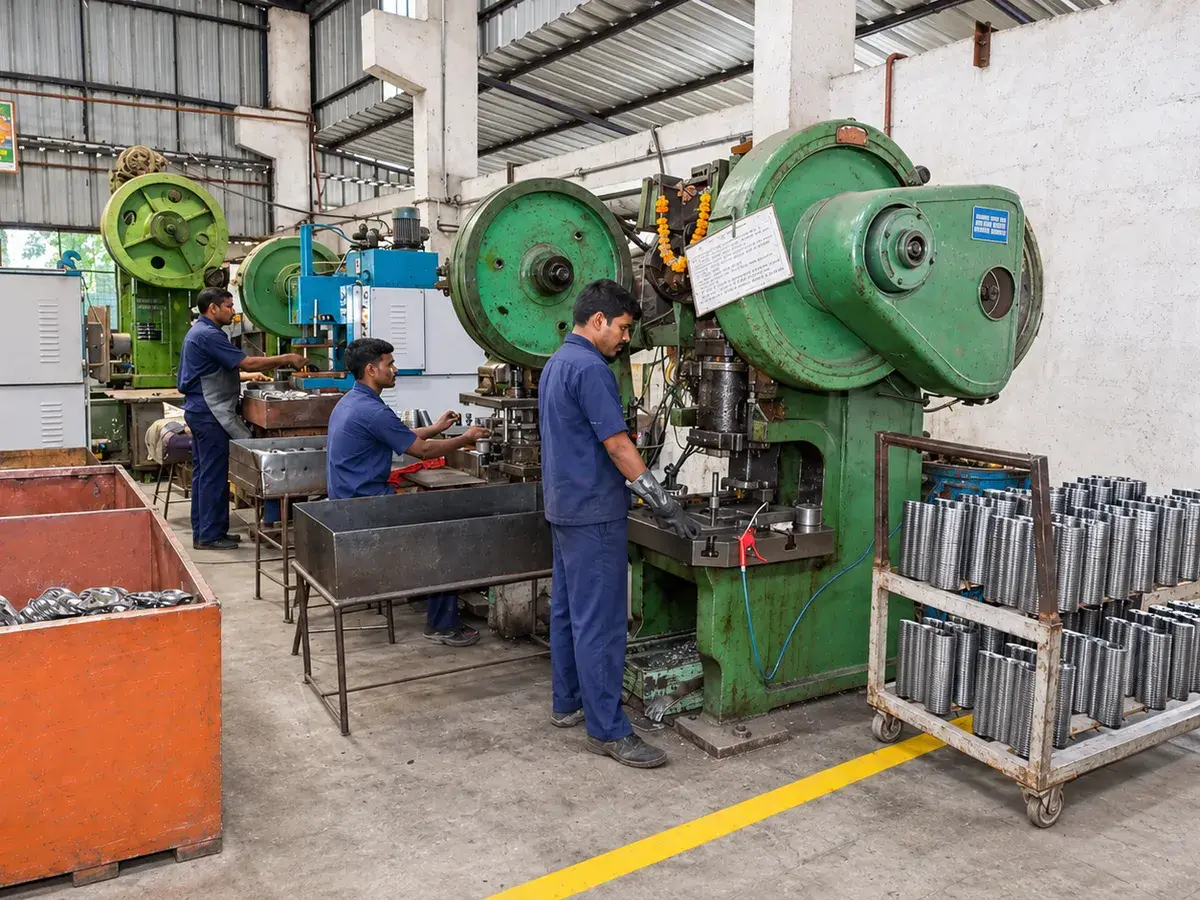
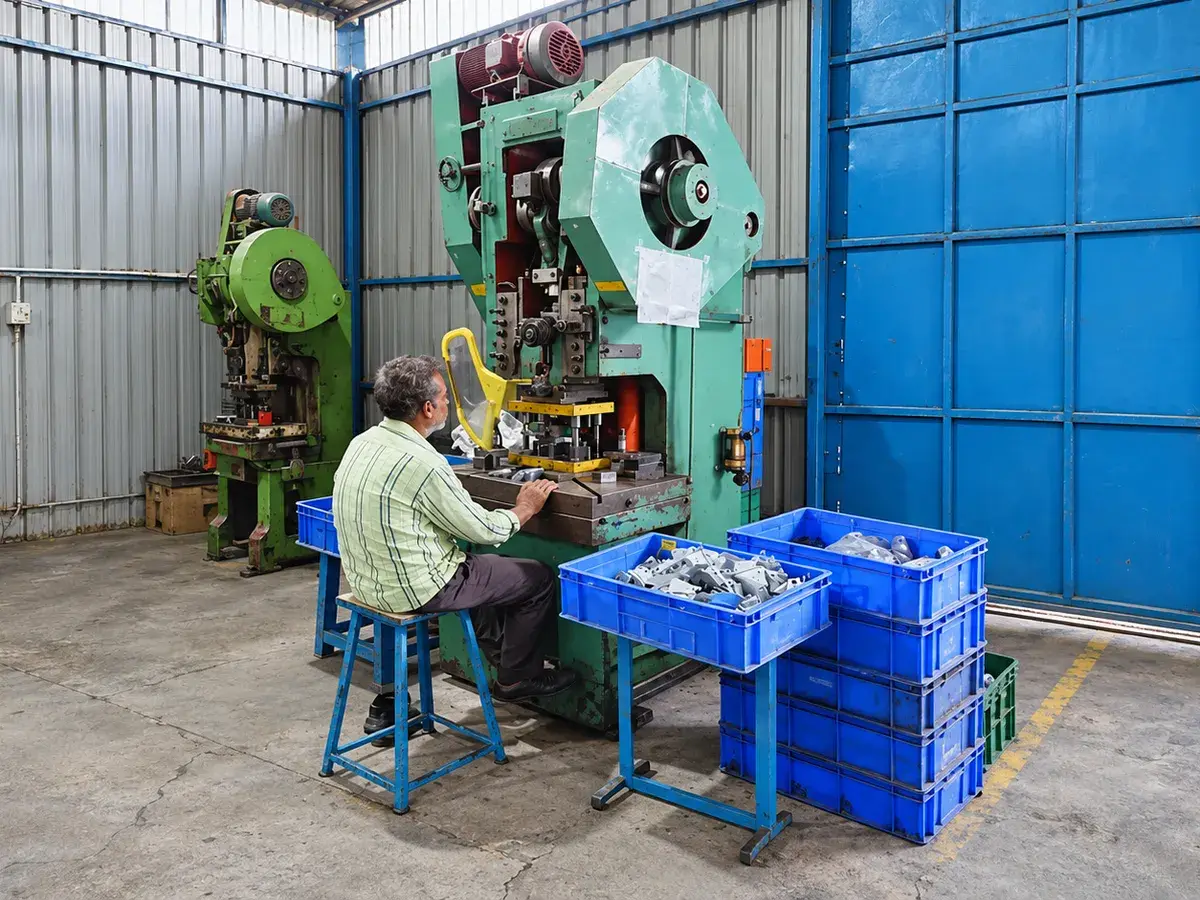
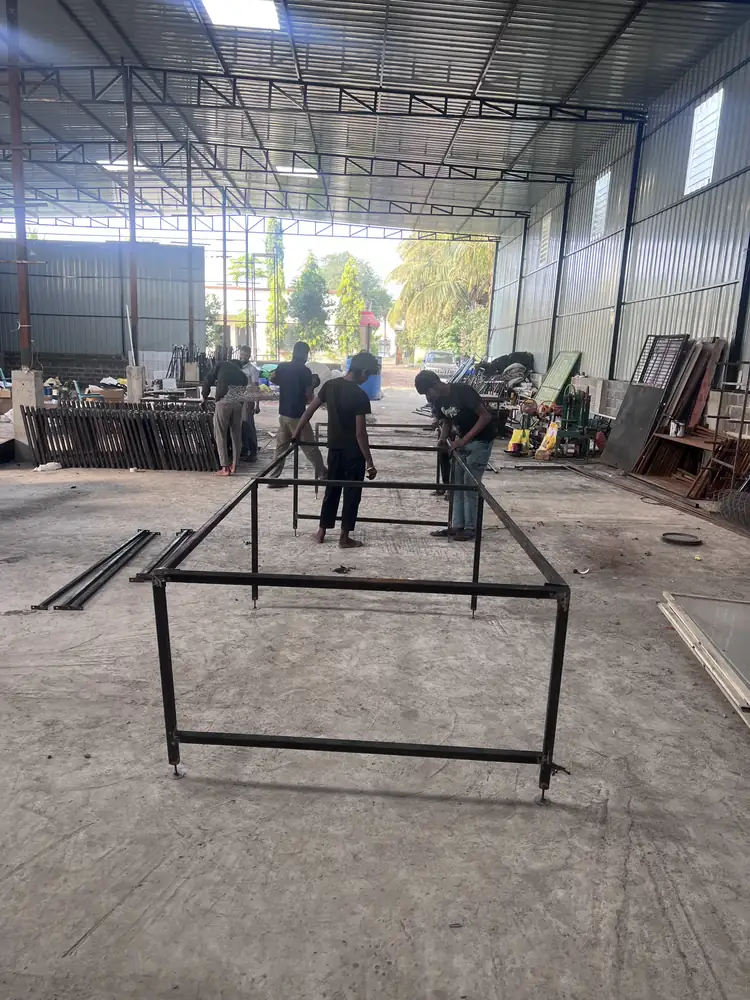
We cut, shape and quality-test the steel at our factory in Satara, Maharashtra, and our own construction team builds it on your land. You can follow every step live on your client portal at alpha.kryzen.com.









Cost and running
What a grow slab farm needs
Your quotation lists every item, and our team prepares a crop-wise projection for your farm before you build.
Steady power
Drip runs on a timer. Cocopeat covers short cuts; we connect your generator or solar backup for longer ones.
Good water
A water test before you start tells us how to plan the nutrient solution.
Daily EC and pH checks
Check the feed and the run-off from the slabs every day to keep the solution right.
A polyhouse
Grow slabs are set up inside a naturally ventilated or fan and pad polyhouse.
Plan your doses and your sales
Use the nutrient calculator to plan feeds for each crop. Current prices from Price Watcher go into your project report, and Buyers Connect helps you sell after harvest.
Included free
- 6 months of virtual agronomy
- 4-day training for your farm team
- Hydroponic Masterclass logins
- Farm management software
- Buyers Connect
Worth ₹1.08 lakh
Compare
Grow slab vs soil farming
Soil farming costs less to start. Grow slabs use less water and fertiliser, avoid soil disease and give cleaner, more even produce.
| Point | Soil farming | Grow slab |
|---|---|---|
| Water use | High; flood or open irrigation | Low; measured drip to each plant |
| Yield per m² | Normal | Higher; roots get the right feed |
| Soil diseases and weeds | Common | None in the slab; weedmat on the floor |
| Fruit quality | Mixed; soil splash | Clean and uniform |
| Fertiliser use | Broadcast; much is lost | Exact doses through drip |
| Setup cost | Low | Higher; see your quotation |
Subsidy and finance
Subsidy for your grow slab farm
Polyhouses for hydroponic farms built to National Horticulture Board (NHB) and National Horticulture Mission (NHM) norms can apply for government subsidy. A bank loan is usually part of the project, and the subsidy is paid after the project is checked.

NHB subsidy provider
Kryzen is a registered National Horticulture Board subsidy provider for all states.

NHM state subsidy provider
Enrolled with the National Horticulture Mission in Maharashtra and Karnataka for state horticulture schemes.
Project report for your bank
We prepare the detailed project report (DPR) your bank and subsidy file need, with cost, finance and profit projections.
Subsidy amounts depend on the scheme, your state and current government guidelines. The final decision is made by the government department.
Other hydroponic systems
Not only grow slabs
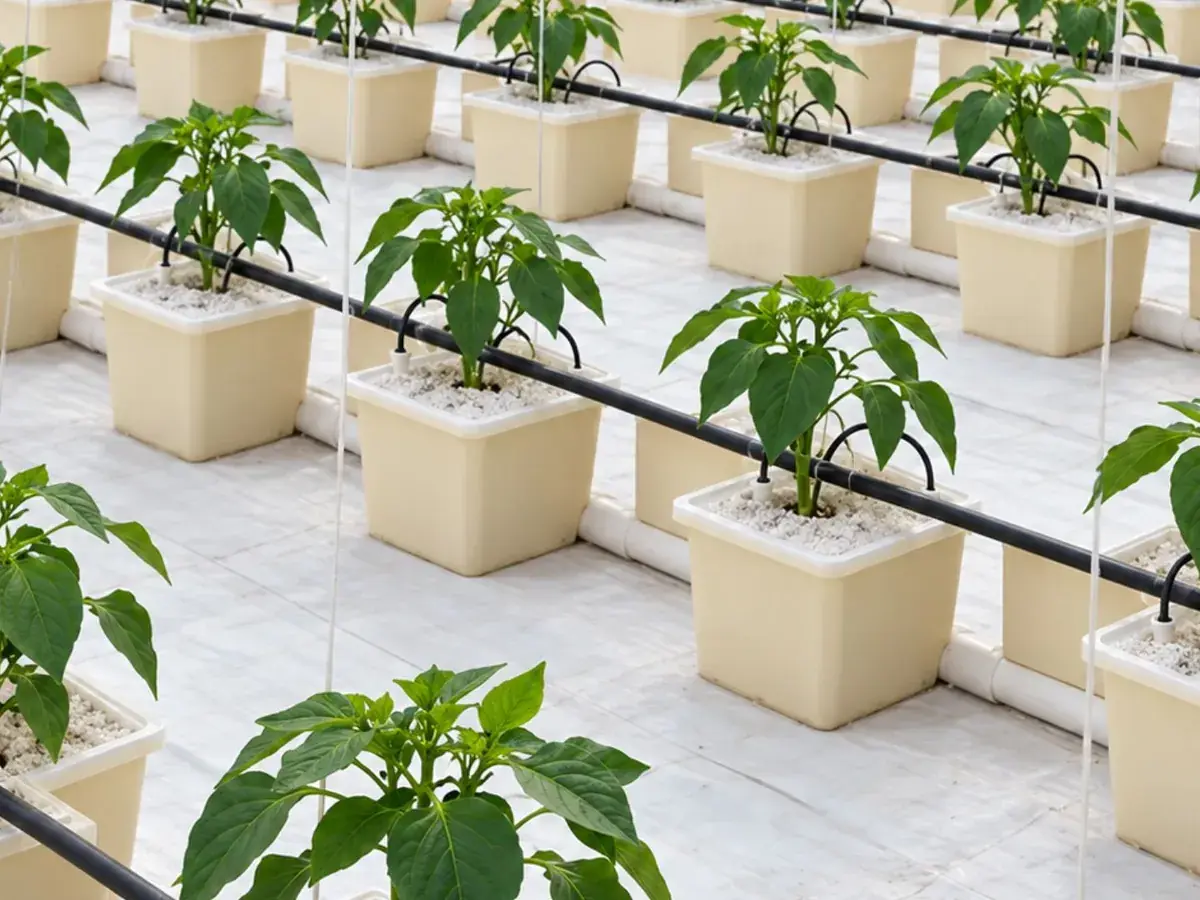
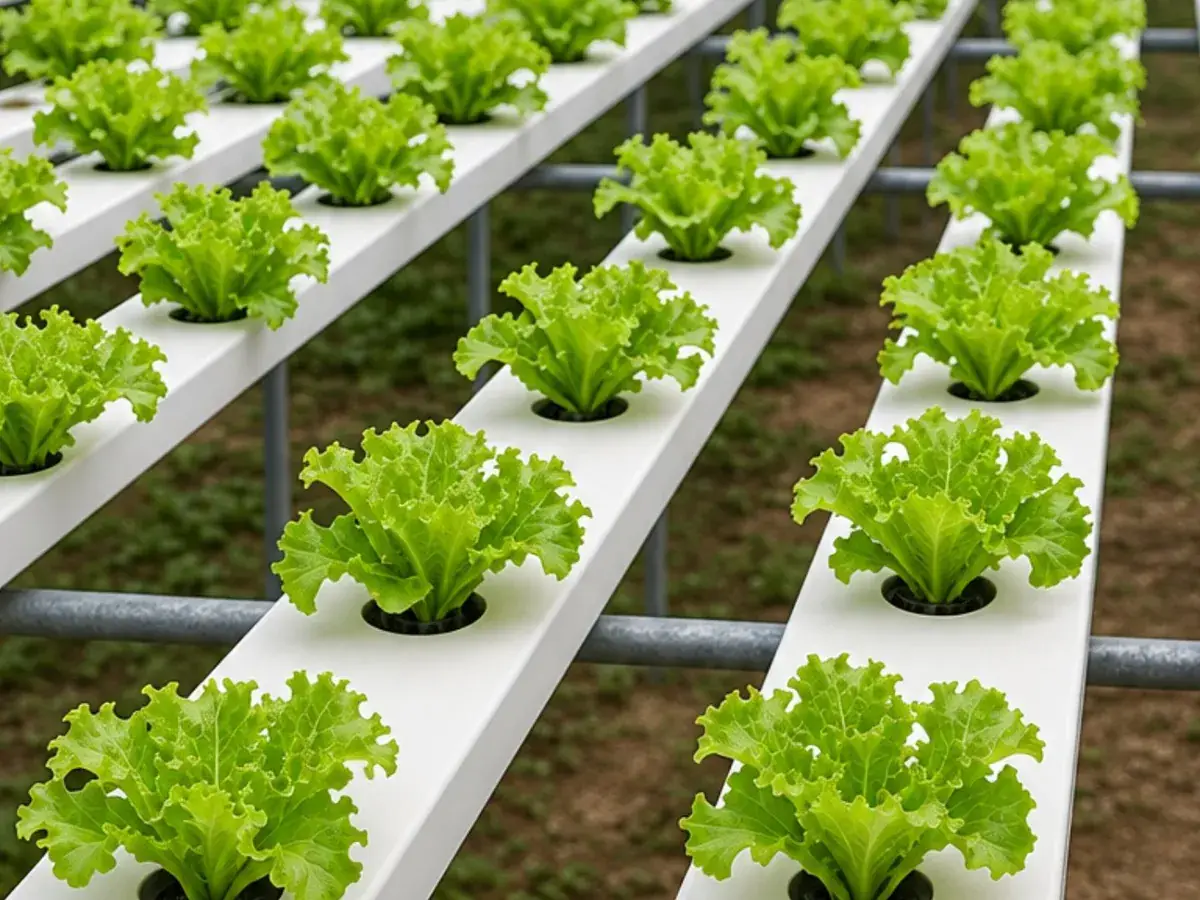
Mix systems in one polyhouse to grow fruiting crops and leafy greens together.

How we build
From first call to first harvest
Ten steps, one team. Most projects are built in 45 to 90 days after material reaches the site.
 1
Free online consultation
We discuss your land, water, budget and goals on a video or phone call.
 2
Site inspection
Our team checks level, slope, sunlight, soil, water, power and road access.
 3
Design and quotation
We design for your climate and crops, and share a detailed quotation.
 4
Project report and finance
We prepare the DPR for your bank loan and subsidy file.
 5
Subsidy and loan
We help you apply for NHB or NHM subsidy and your bank loan, with the documents each office needs.
 6
Manufacturing
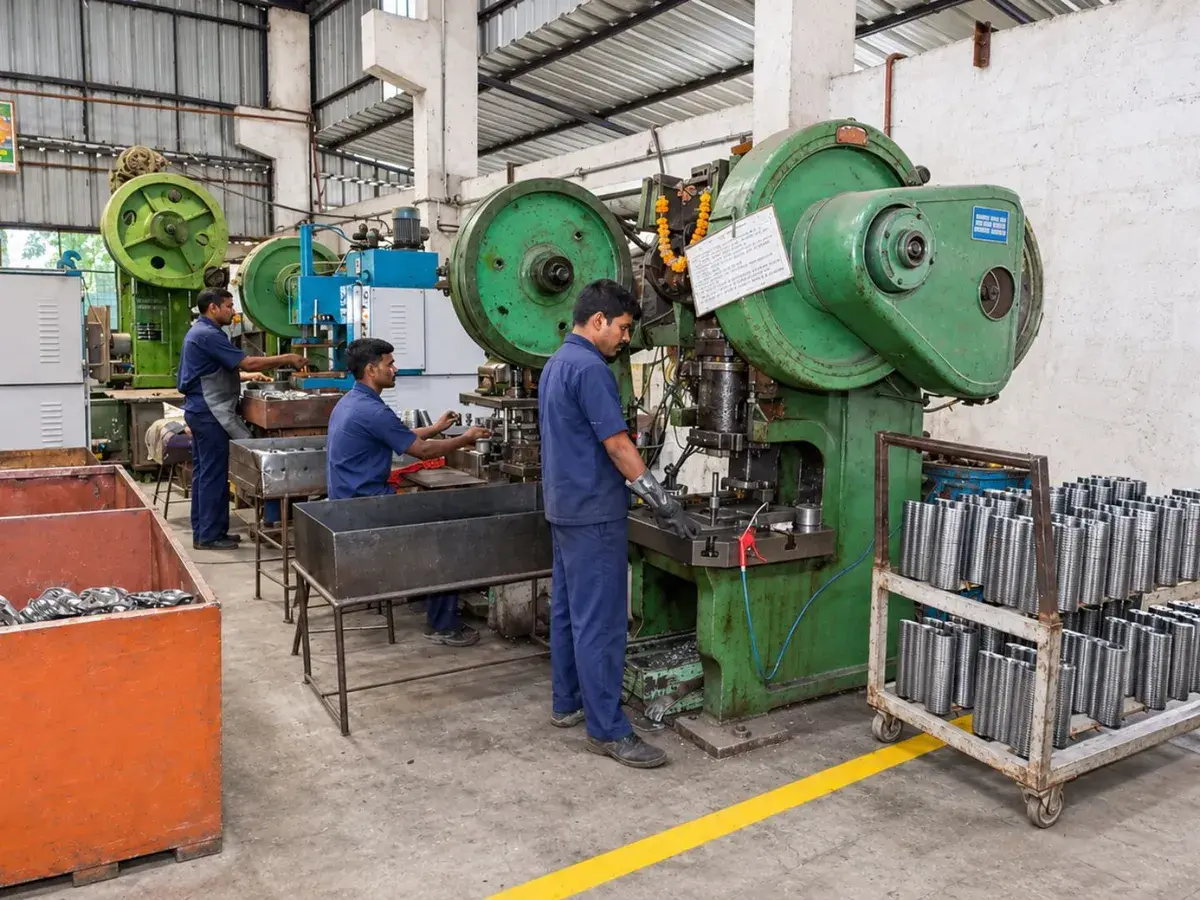
We cut, shape and quality-test the material at our factory in Satara.
 7
Construction
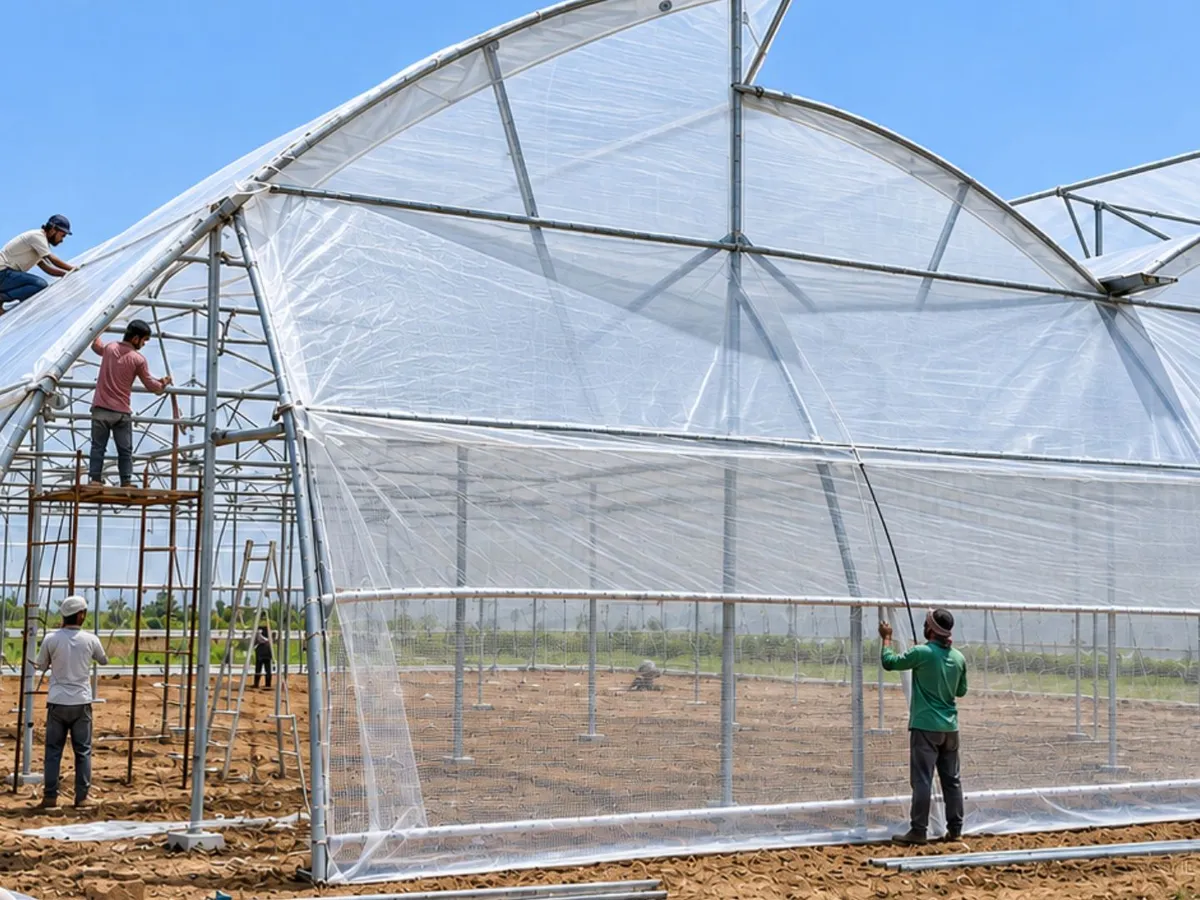
Our team builds the foundations, structure and growing systems on your land.
 8
Testing and handover
We test every system and hand over a working farm.
 9
Training and agronomy
Hands-on training for your team and 6 months of virtual agronomy support.
 10
Harvest management
We help you plan harvests, grading and sales, with market prices from Price Watcher and buyers through Buyers Connect.