
Protected cultivation · Climate-controlled polyhouse
Fan and pad polyhouse
A closed polyhouse cooled by wet pads and exhaust fans. It holds the temperature and humidity your crop needs, even in hot, dry summers. Designed, made in our own factory and built on your land by Kryzen.
350+farms built by Kryzen across India
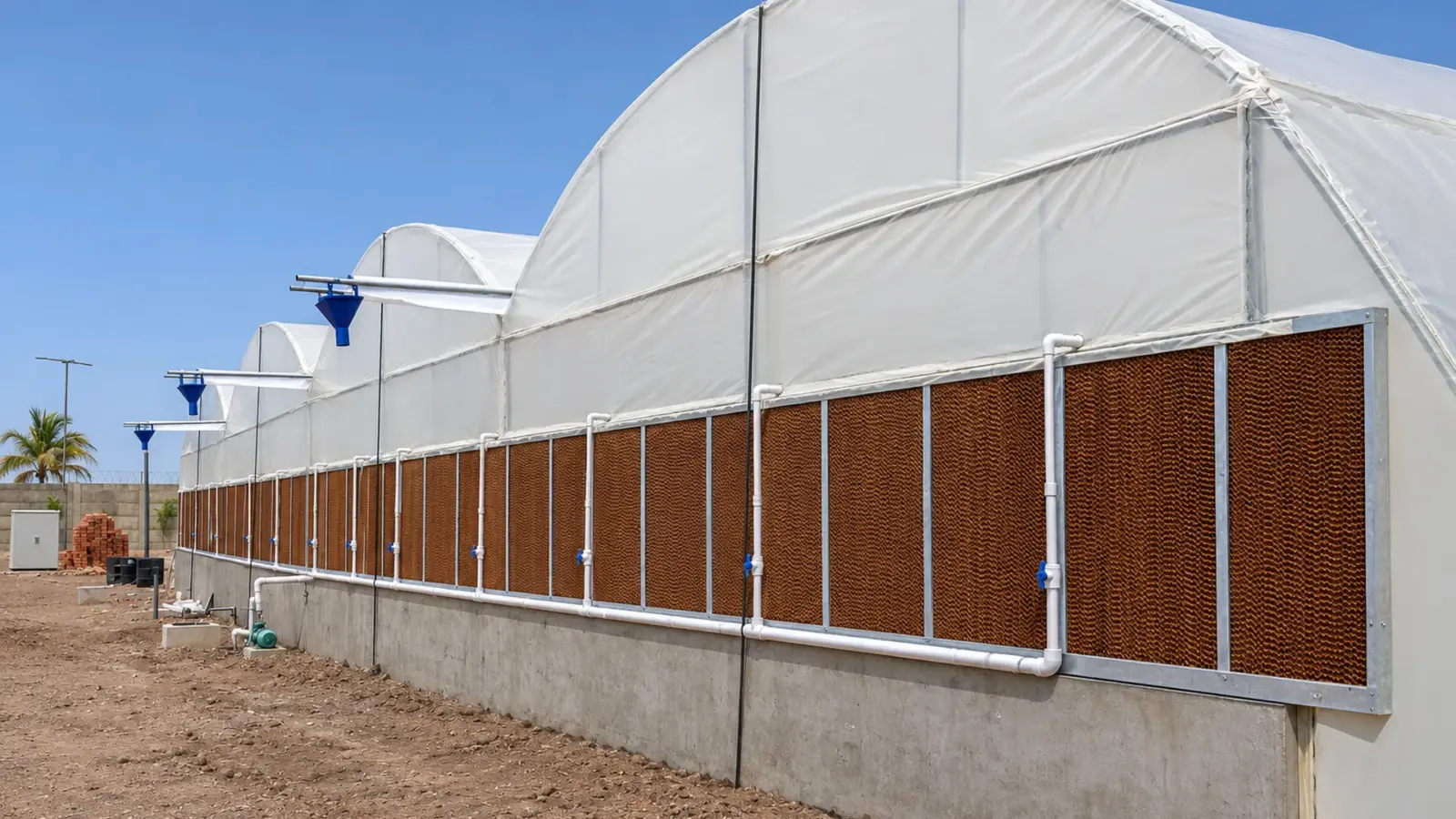
Active evaporative cooling
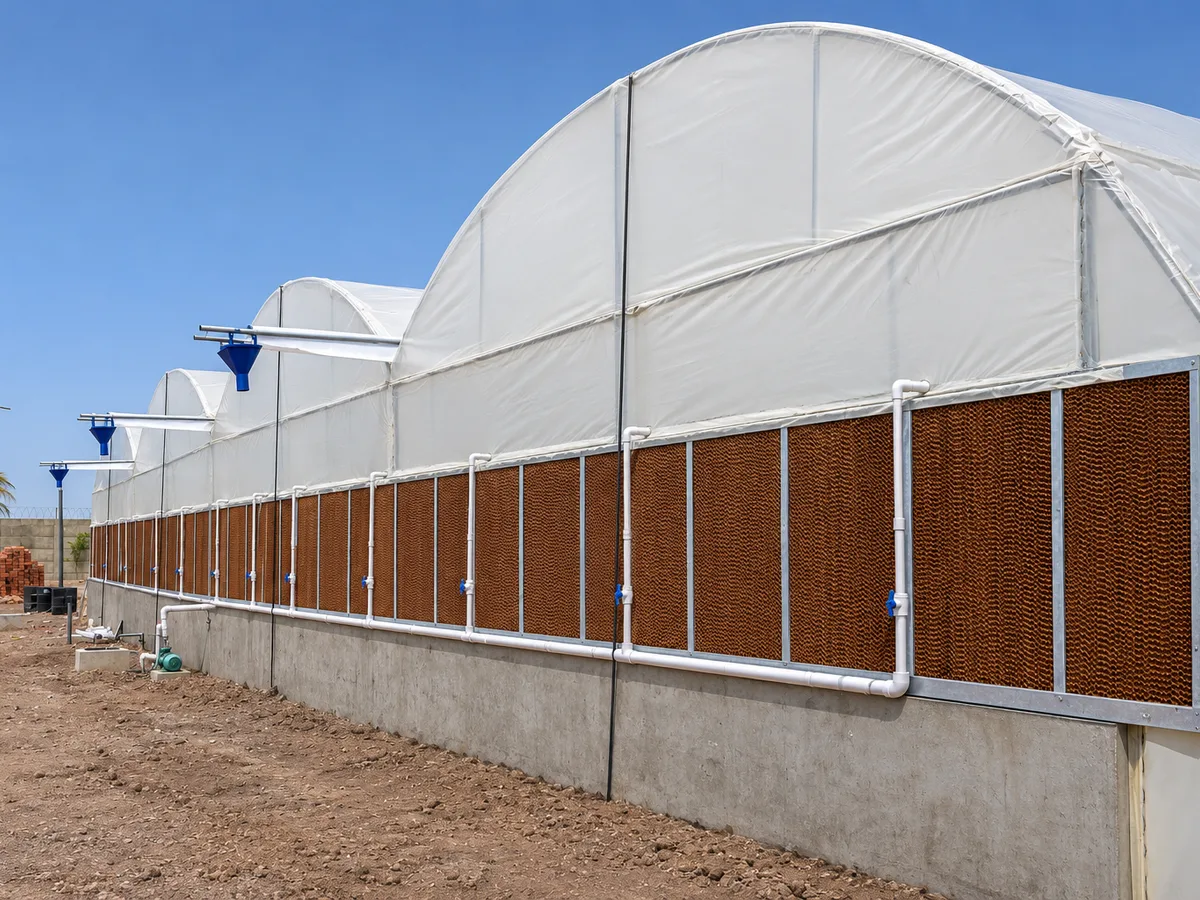
Wet pads and exhaust fans keep the house cooler than the air outside, most of all in dry heat.
Closed, insect-proof house
No open roof vents. Air enters only through the pads, so far fewer pests get in.
Premium crops all year
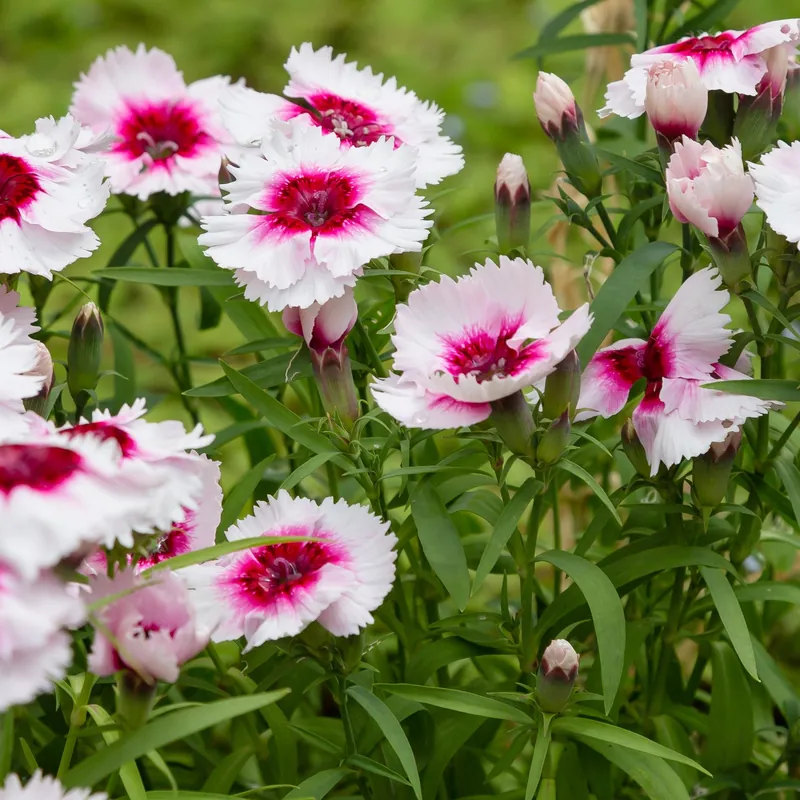
Roses, gerbera, orchids and exotics in their ideal range, even through Indian summers.
What is a fan and pad polyhouse?
A polyhouse that cools itself with wet pads and fans
Quick answer
A fan and pad polyhouse is a closed greenhouse cooled by evaporation. Exhaust fans on one wall pull outside air through wet cellulose pads on the other wall. The air cools as the water evaporates, keeping sensitive crops like rose, gerbera and orchid in their ideal range. It costs more to build and run than a naturally ventilated polyhouse.
It is also called a climate-controlled or controlled-environment polyhouse. Unlike a naturally ventilated polyhouse, it does not wait for the wind: the fans move air through the house all the time.
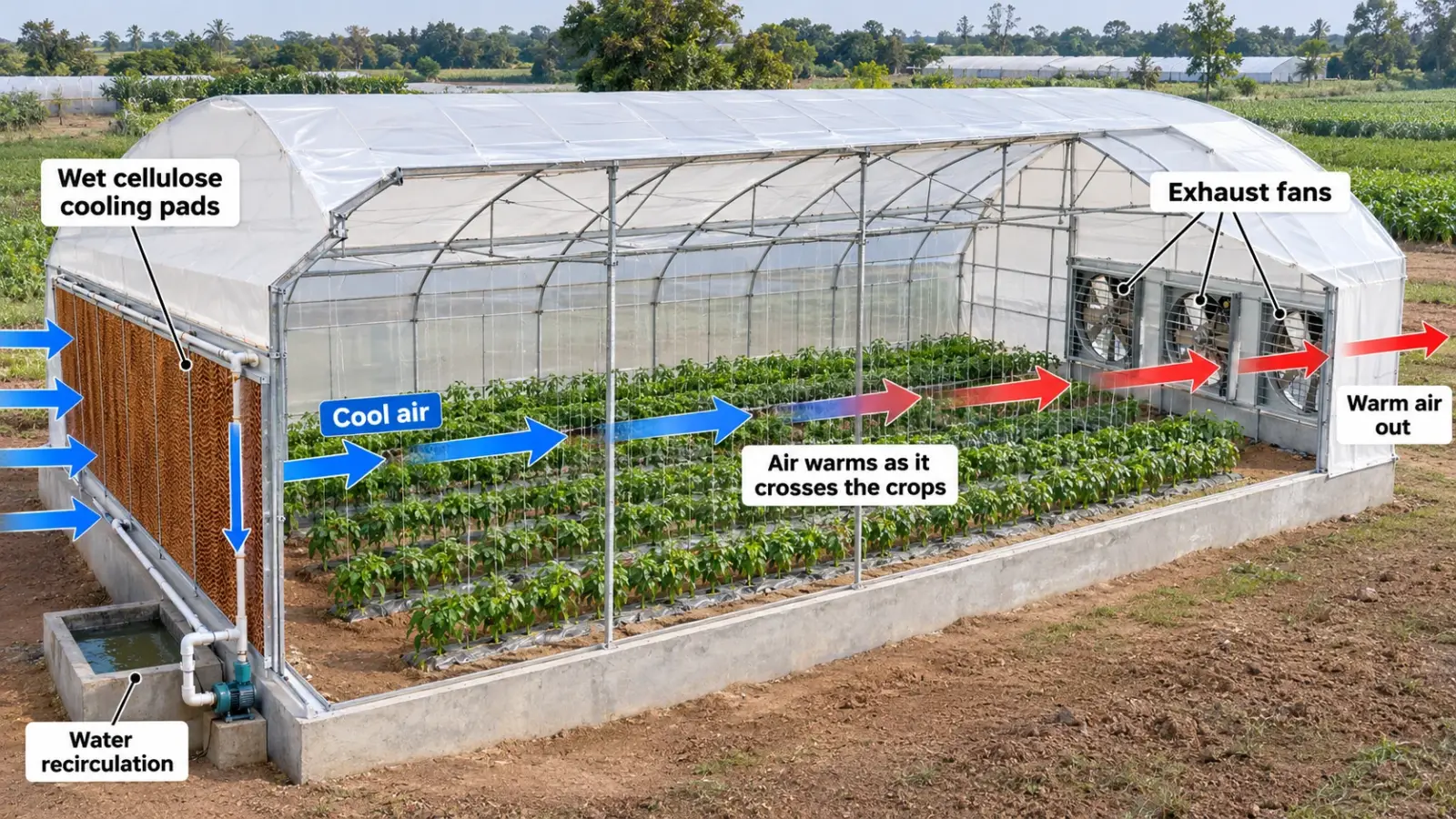
How fan and pad cooling works
 01
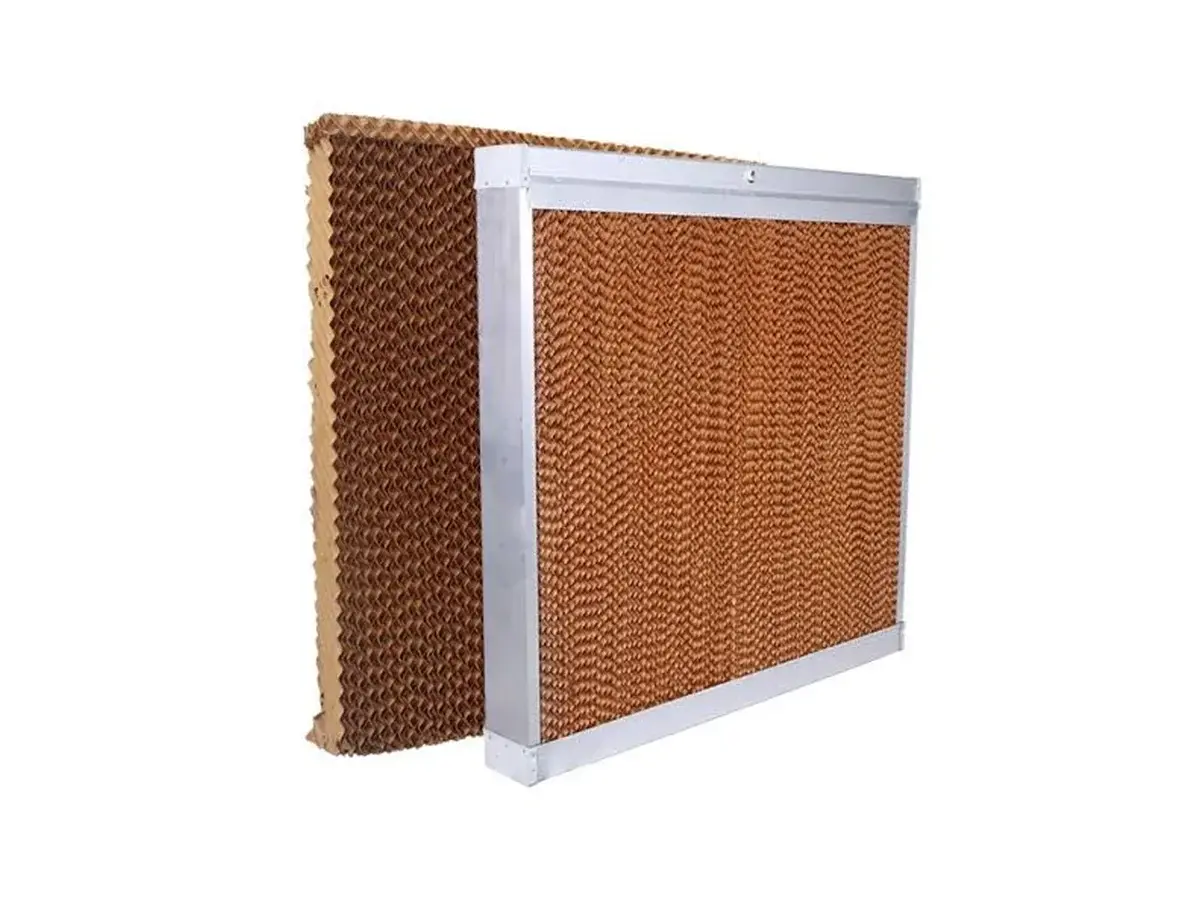
Cooling pads
Cellulose honeycomb pads cover one end wall. Water runs over them all day.
 02
Exhaust fans
Large fans on the opposite end wall pull air out and keep it moving through the house.
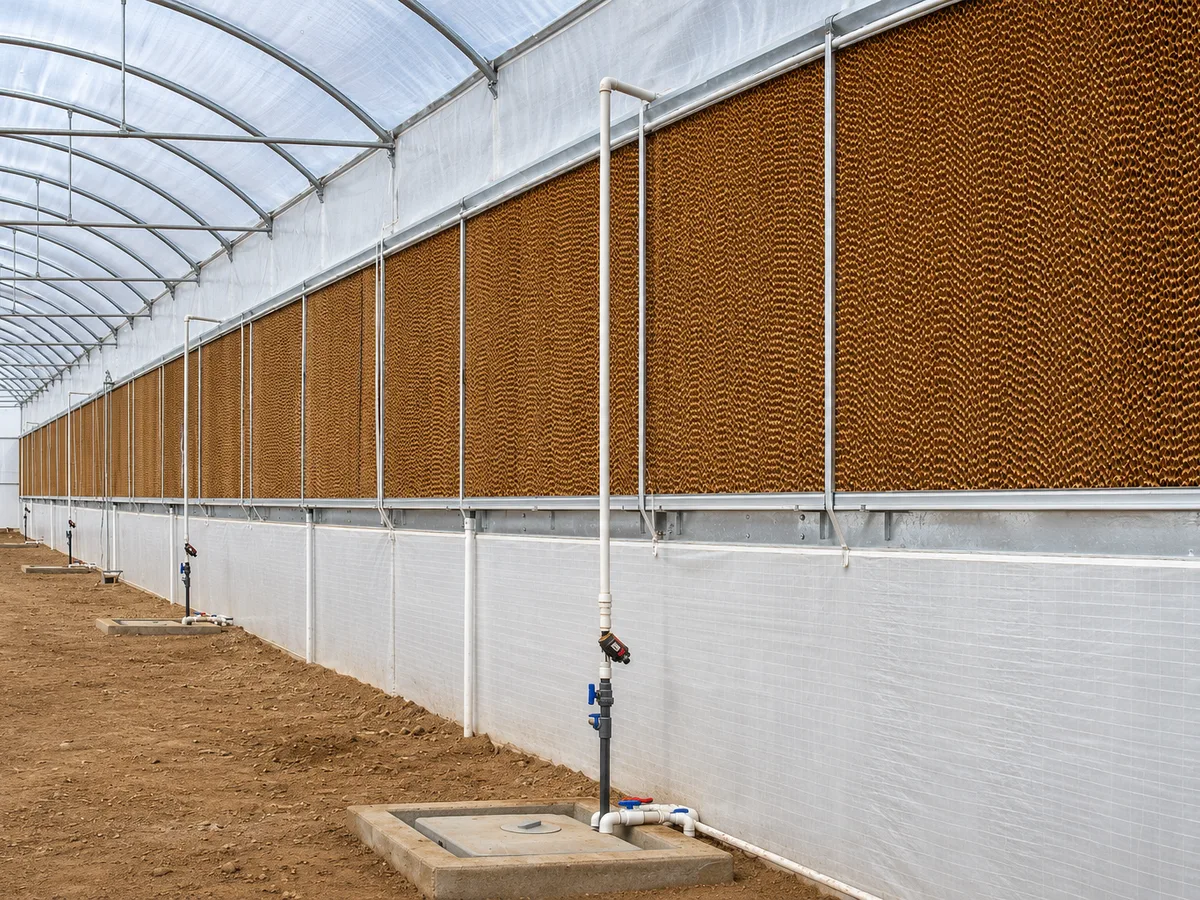 03
Cool air across the crop
Outside air is pulled in through the wet pads, cools as the water evaporates and sweeps over the plants.
 04
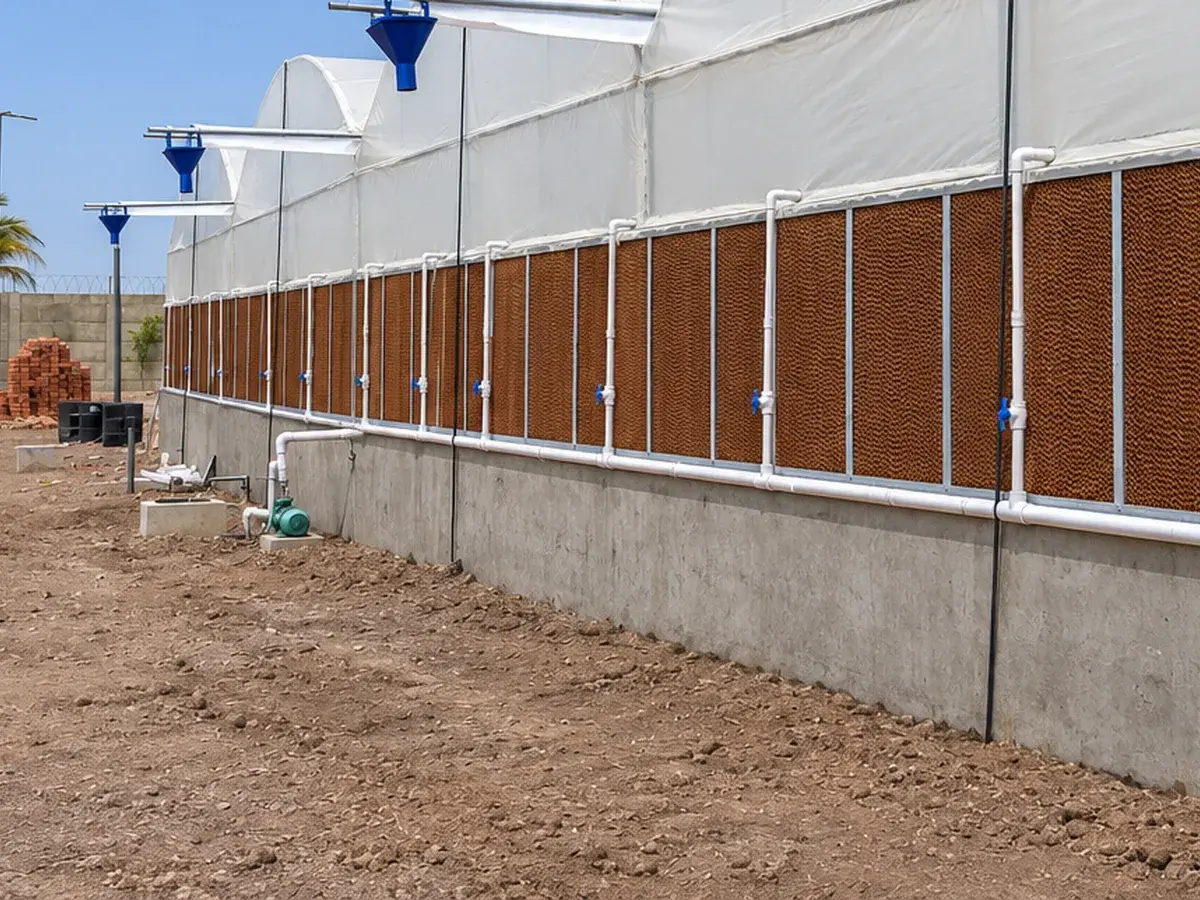
Pad water system
A pump and tank keep the pads evenly wet and send the extra water back to the tank.
 05
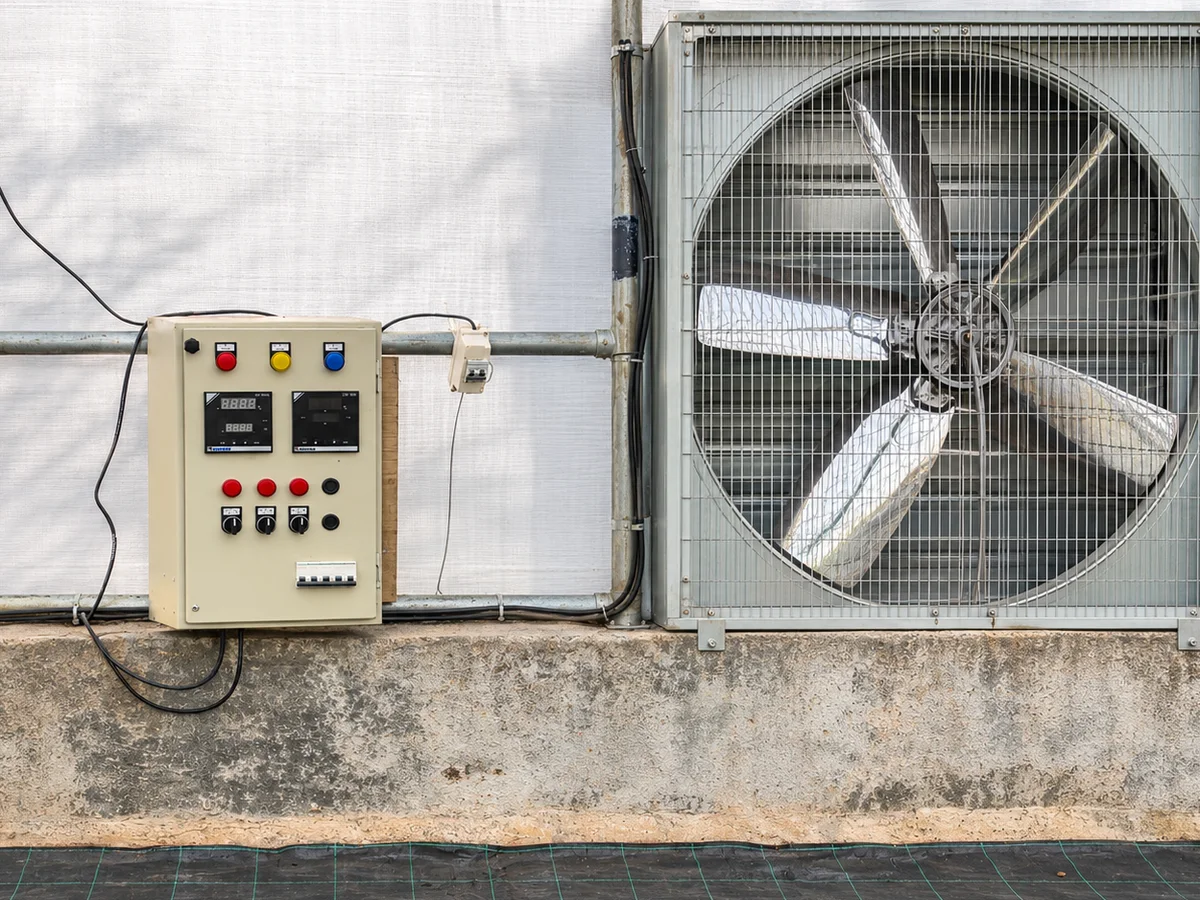
Climate controls
Fans, pad pump, foggers and curtains are switched to hold the temperature and humidity your crop needs.
 06
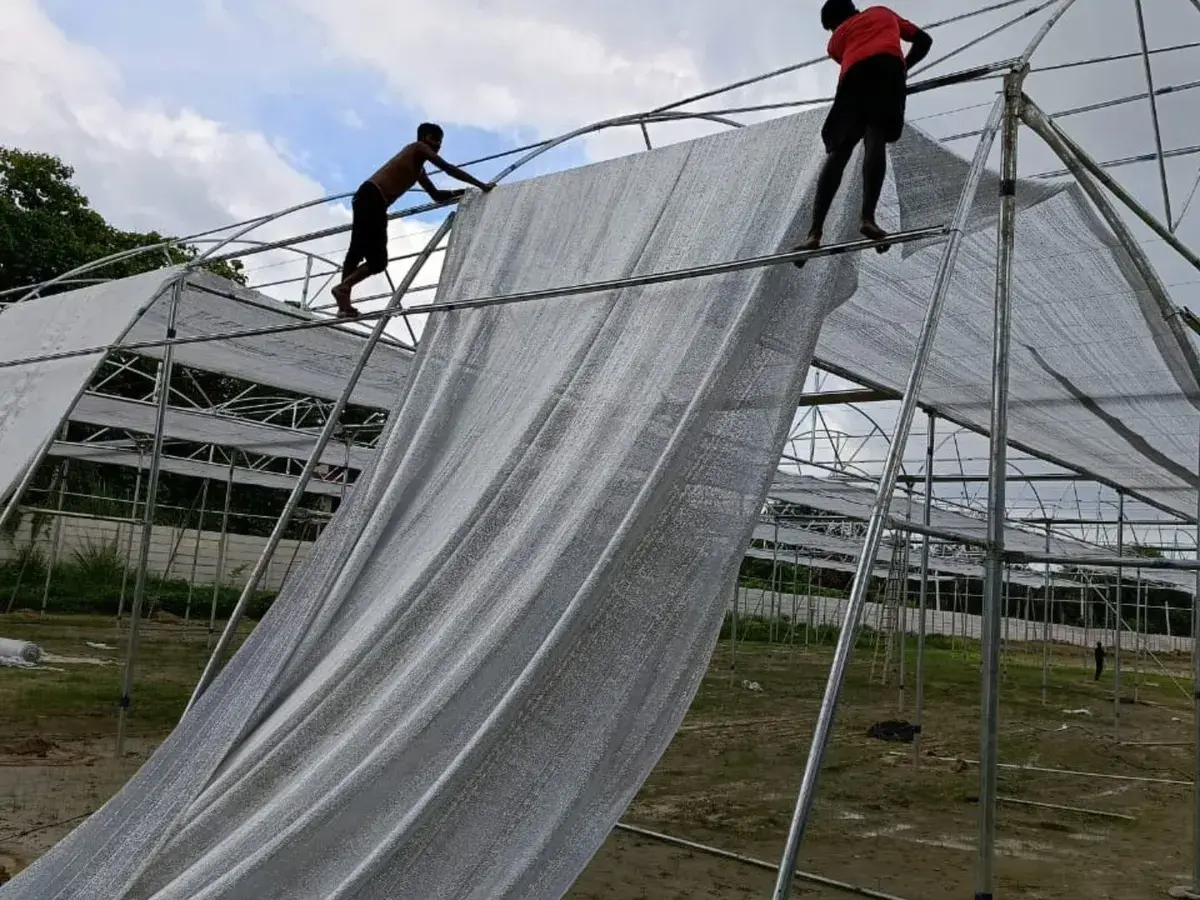
Shade and aluminet
Shade net or retractable aluminet cuts strong sun, so the cooling system has less heat to remove.
Evaporative cooling works best in dry heat. In very humid weather the pads cool the air less, so we check your local climate before recommending fan and pad.
Is it right for you?
When to choose fan and pad
Fan and pad is the right choice for some crops and climates, and more than you need for others. Here is how we decide with you.
Choose fan and pad when
- Summer temperatures in your area regularly cross what your crop can take
- You grow roses, gerbera, orchids, carnation or other crops that need a narrow range
- You sell to premium, export or wedding-season buyers who pay for grade
- You have reliable 3-phase power, a backup generator and enough water for the pads
An NVPH may be enough when
- Your crop is coloured capsicum, cucumber or tomato in a moderate climate
- Your area is humid most of the year, where evaporative cooling works less well
- Power supply is unreliable or expensive
- You want the lower build and running cost of natural ventilation
Why build one
Advantages of a fan and pad polyhouse
Precise climate for crops that pay for it.
Precise climate
Temperature and humidity stay in a narrow range that you set for your crop.
Export-quality flowers
Grow roses, gerbera, carnation and orchids to the grade premium buyers pay for.
Grows through hot summers
Crops keep growing through heat that would stress them in an open-vent polyhouse.
Fewer pests
A closed house with insect net on every opening and no open roof vents.
Planned harvests
Steady conditions let you time harvests for festivals, weddings and export orders.
Higher value per m²
Premium crops and year-round production earn more from every square metre.
Subsidy eligible
Built to NHB and NHM norms, so your project can apply for government support.
Climate-proof agriculture
Heat, rain, hail and cold nights stay outside. Your crop grows in steady conditions all year.
What’s inside
Built part by part for steady cooling
The same GI steel and film as our NVPH, plus the pad wall, fan wall and water system that do the cooling.
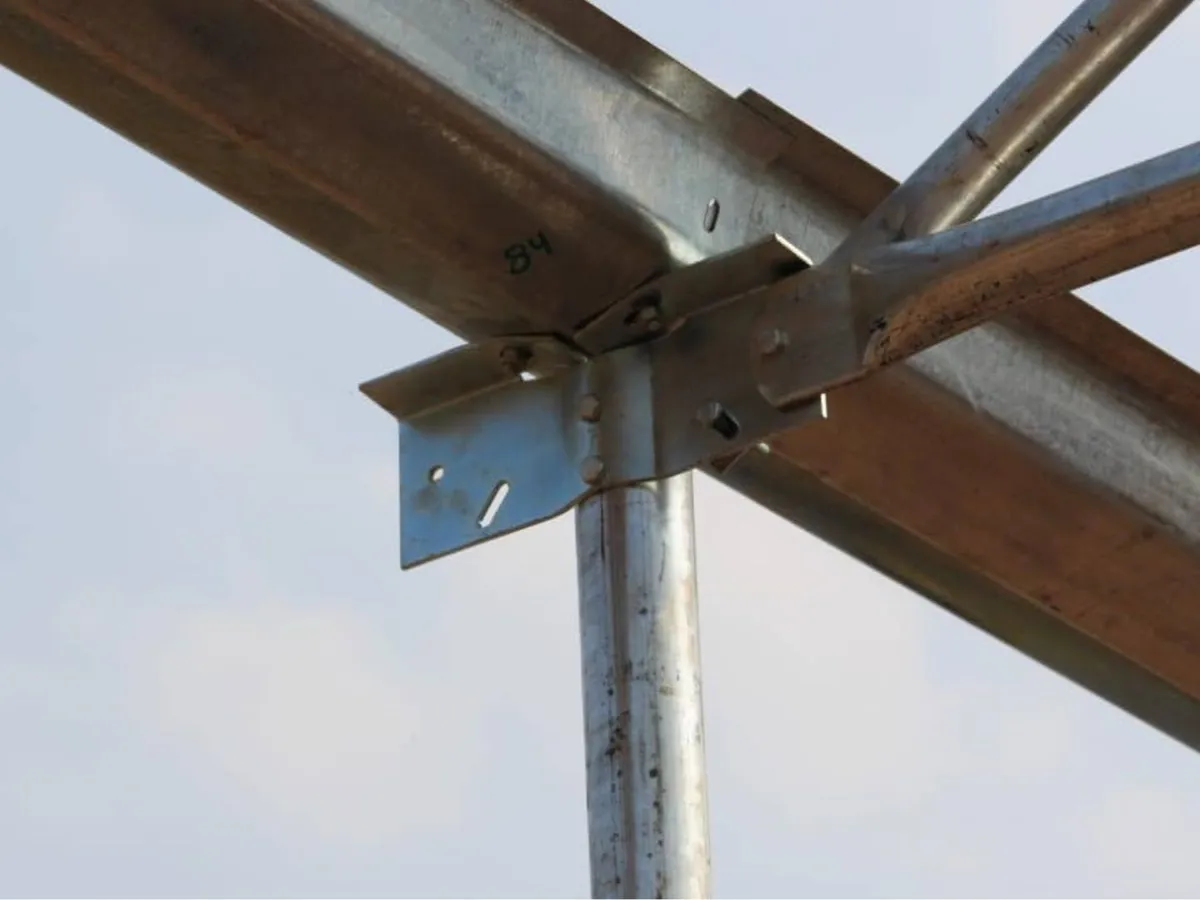
GI steel frame
2 mm wall in every member, 375–400 GSM galvanisation, on deep concrete foundations.
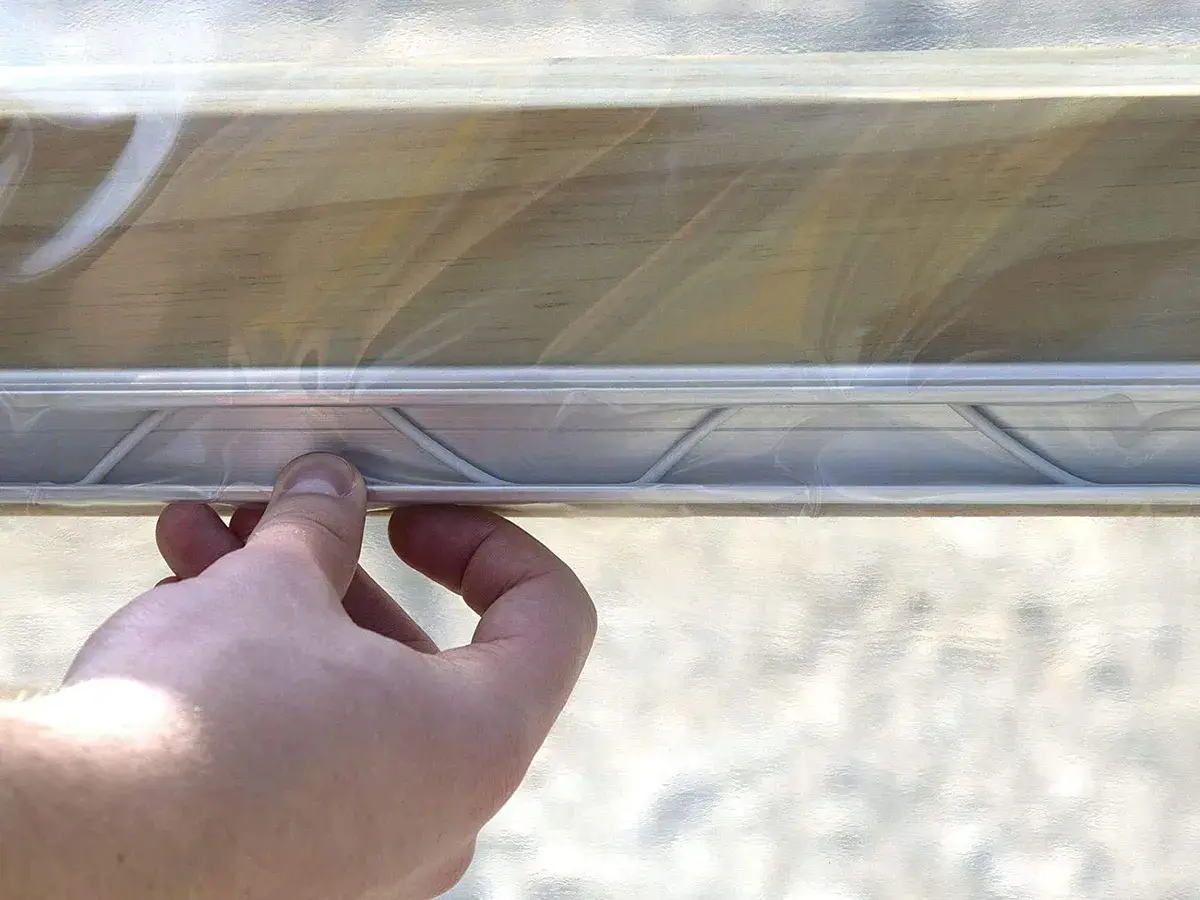
UV-stabilised roof film
200 micron, 5-layer film in four types, so you can match the light to your crop.
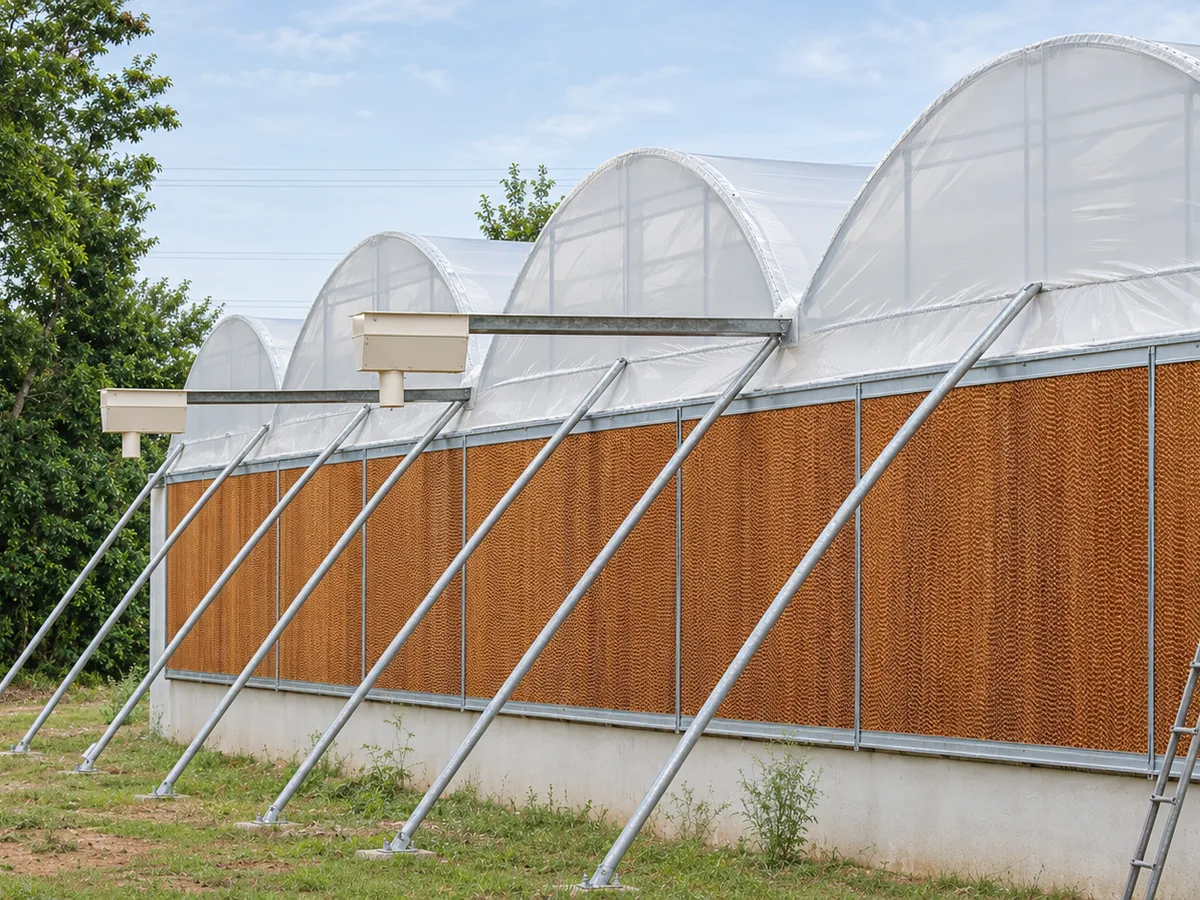
Cooling pad wall
Cellulose honeycomb pads in a frame along one end wall, with a water header and gutter.
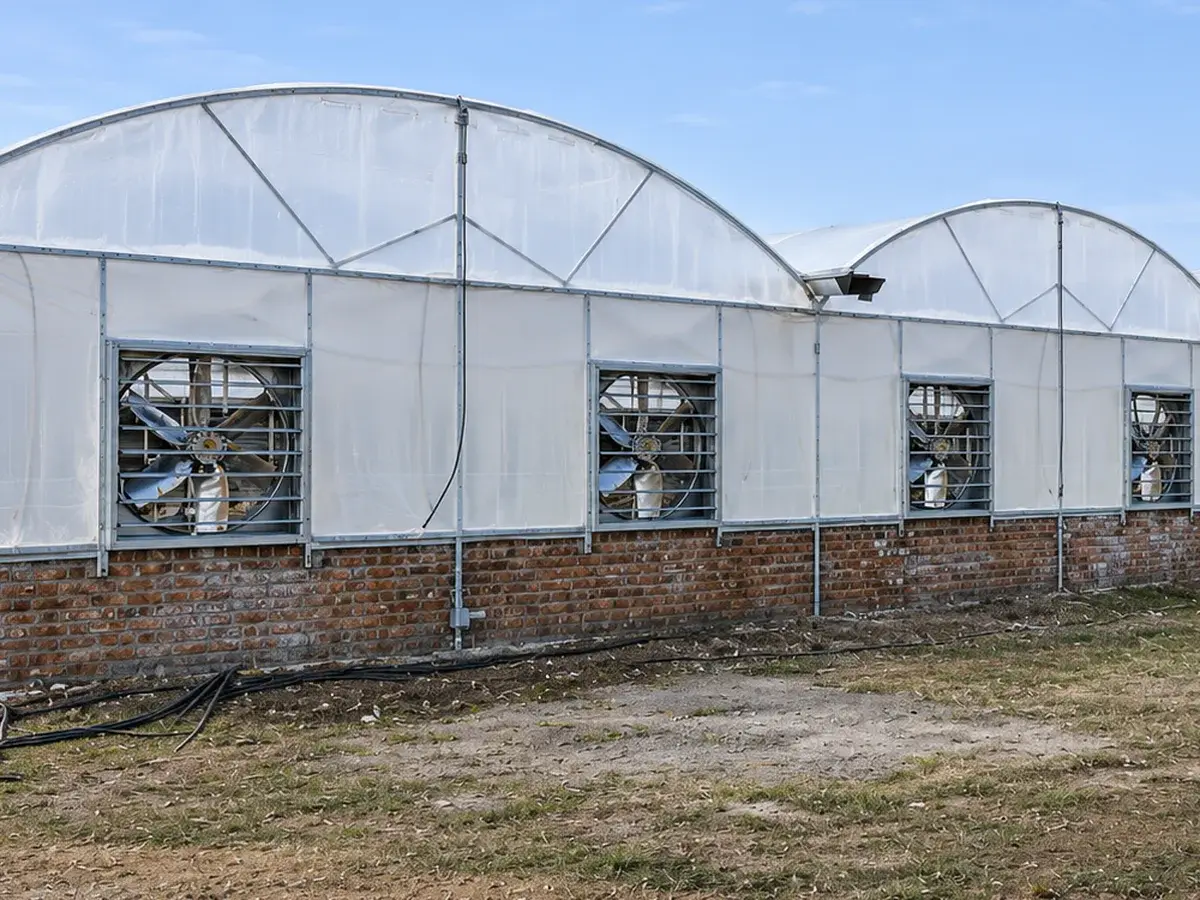
Exhaust fan wall
Heavy-duty exhaust fans with shutters on the opposite end wall, sized to the house.
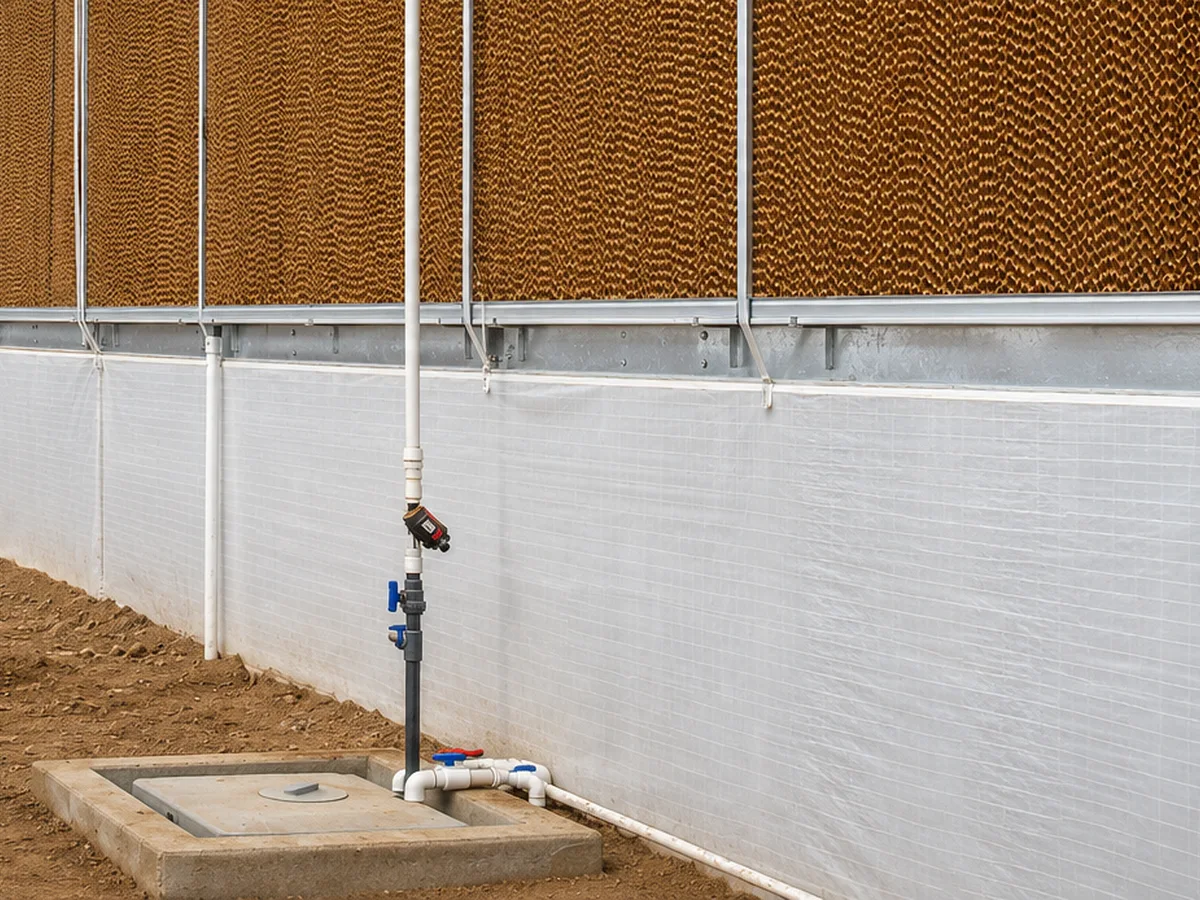
Pump and water tank
Recirculating pad water with a pump, tank and filter, so water is reused.
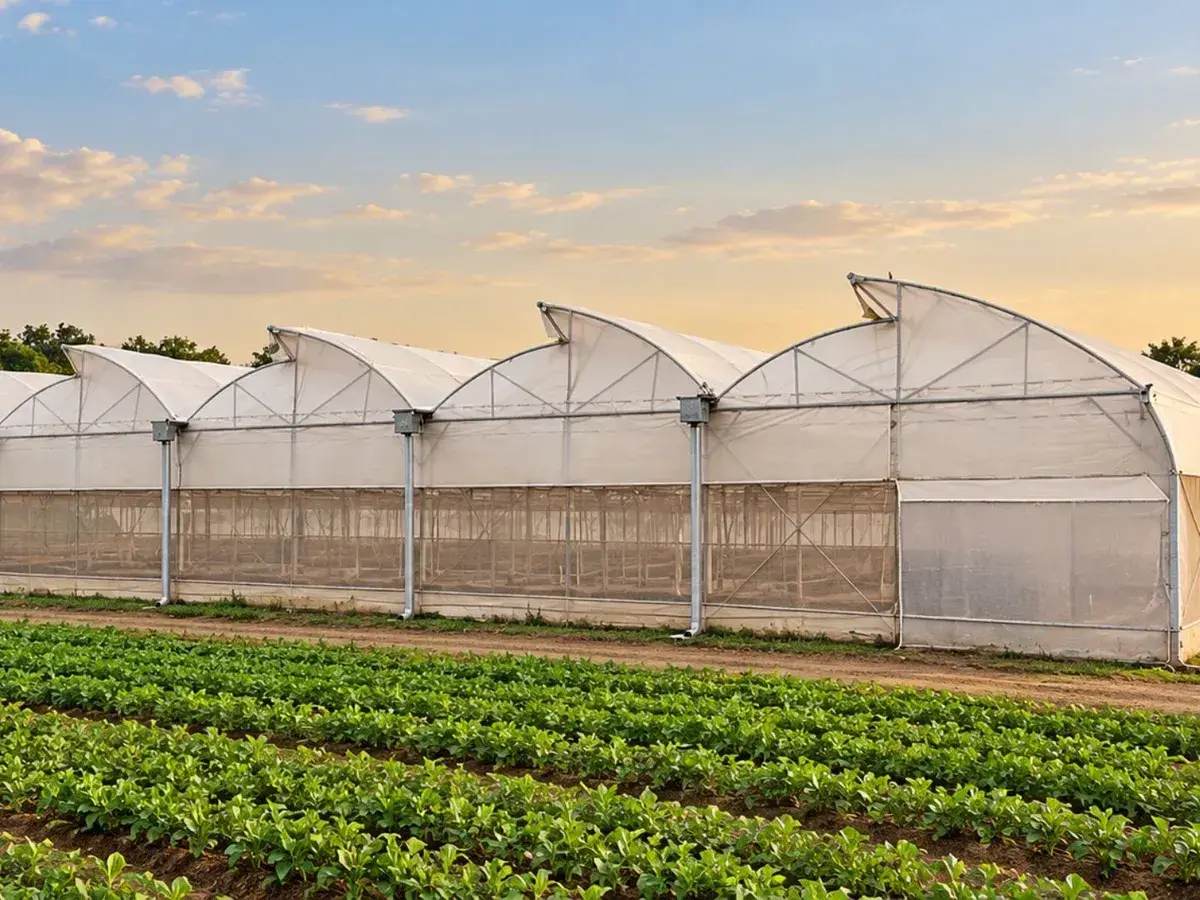
Sealed, insect-proof openings
40-mesh UV insect net on every opening, so air enters only through the pads.
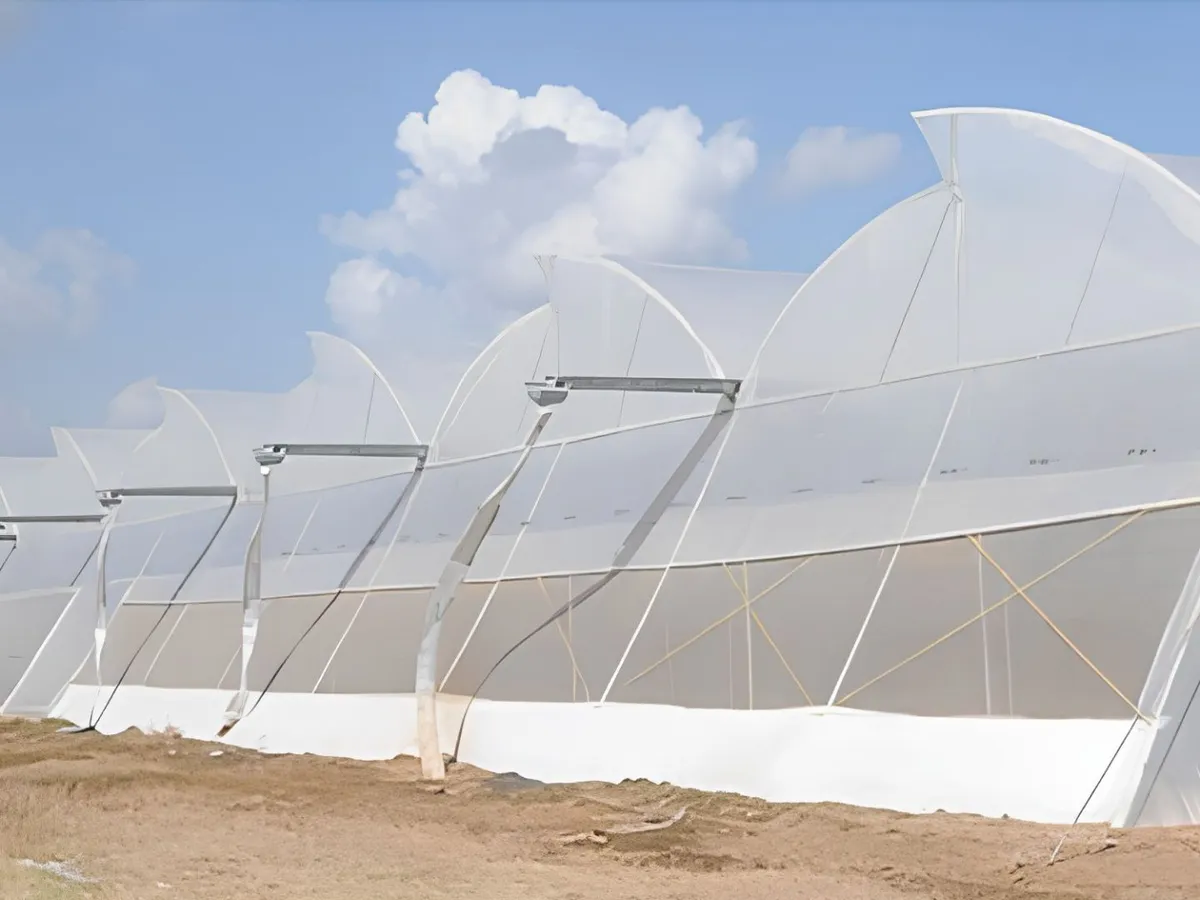
Shade and curtains
Shade net or retractable aluminet inside, and curtains to close the house when needed.
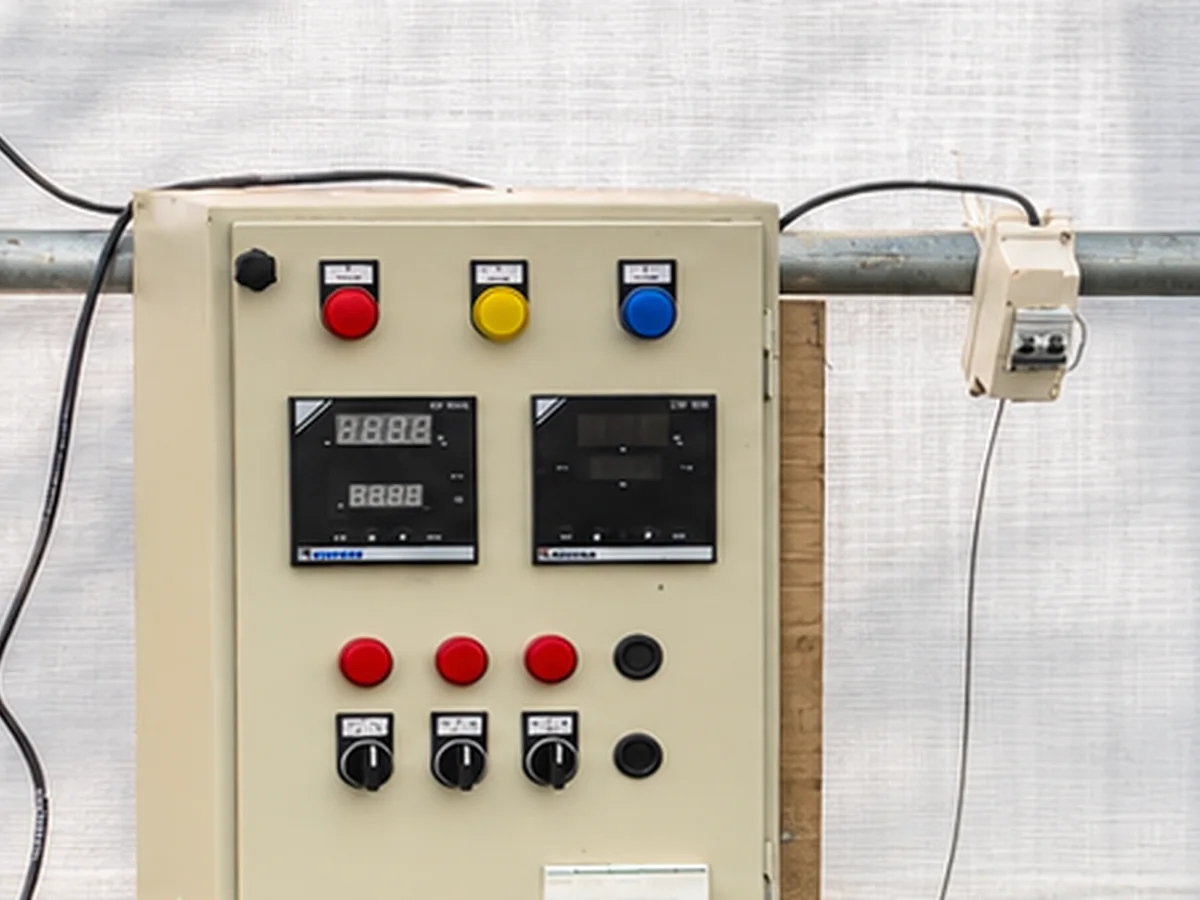
Control panel
Electrical panel for fans, pumps and foggers, with sensors where your crop needs them.
Polyfilm types
Choose the right film for your crop
Every Kryzen fan and pad polyhouse is covered with 200 micron, 5-layer, UV-stabilised film. Pick the type that gives your crop the light it needs. Our team will recommend one for your crop and region.
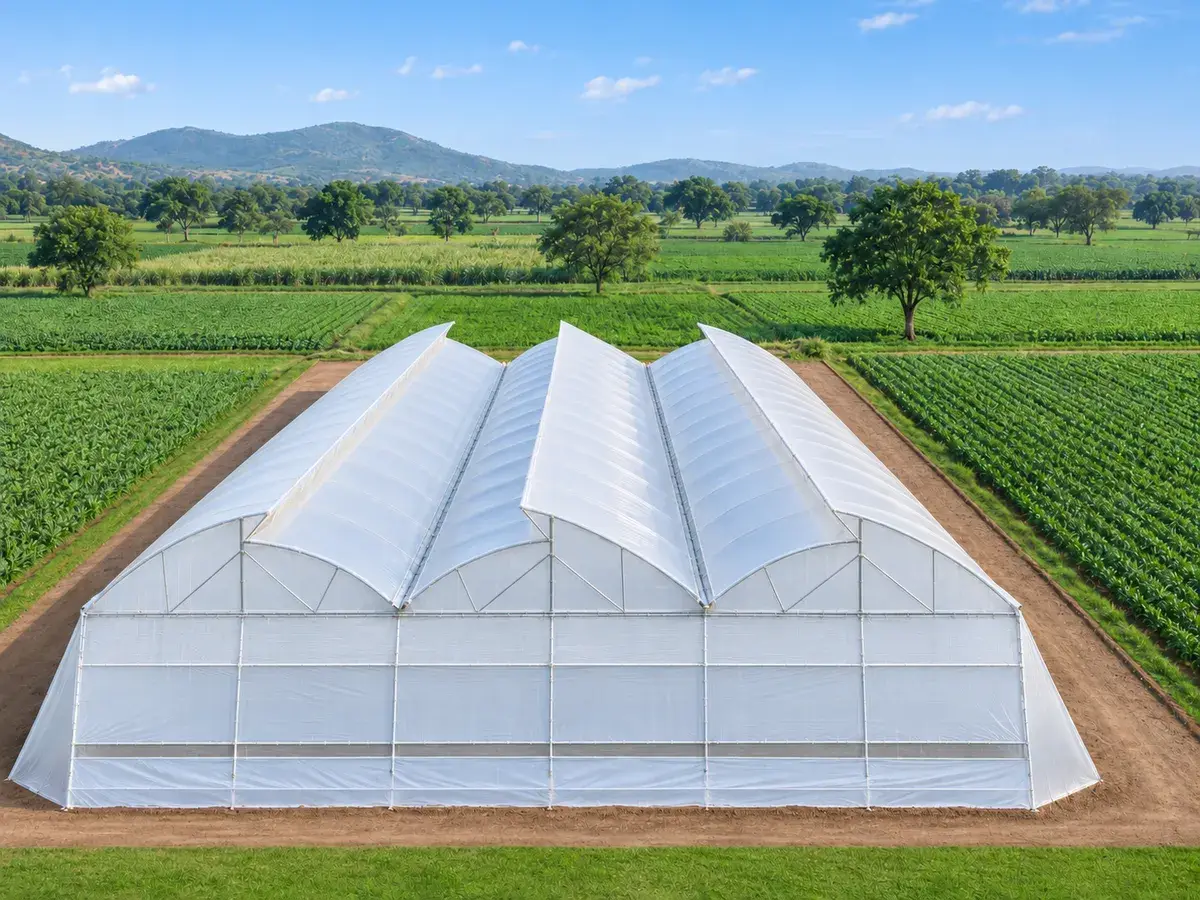 Widely used · Recommended
White Diffused
White diffused polyfilm
200-micron, 5-layer greenhouse film combining light diffusion, anti-drip and anti-dust properties. Distributes incoming sunlight more evenly across the crop canopy, supporting uniform light exposure for capsicum, cucumber, gerbera and other horticultural crops.
Light transmission87%Light diffusion62%UV life3 yrs*- Best for
- Capsicum, gerbera, carnation, cucumber (not for roses)
- Best region
- Across India
Full technical specs
Film usage Greenhouse cover Manufacturing technology 5-layer Thickness 200 micron UV stabilised Yes Light transmission 87% Light diffusion 62% UV life 3 years* Anti-drip Yes Anti-dust Yes Available width 4.5 m, 5.5 m, 7 m and 9 m Available length 600–900 m jumbo roll, or cut to size Area recommended Across India Crops recommended Capsicum, gerbera, carnation, cucumber (not for roses) Delivery time Immediate 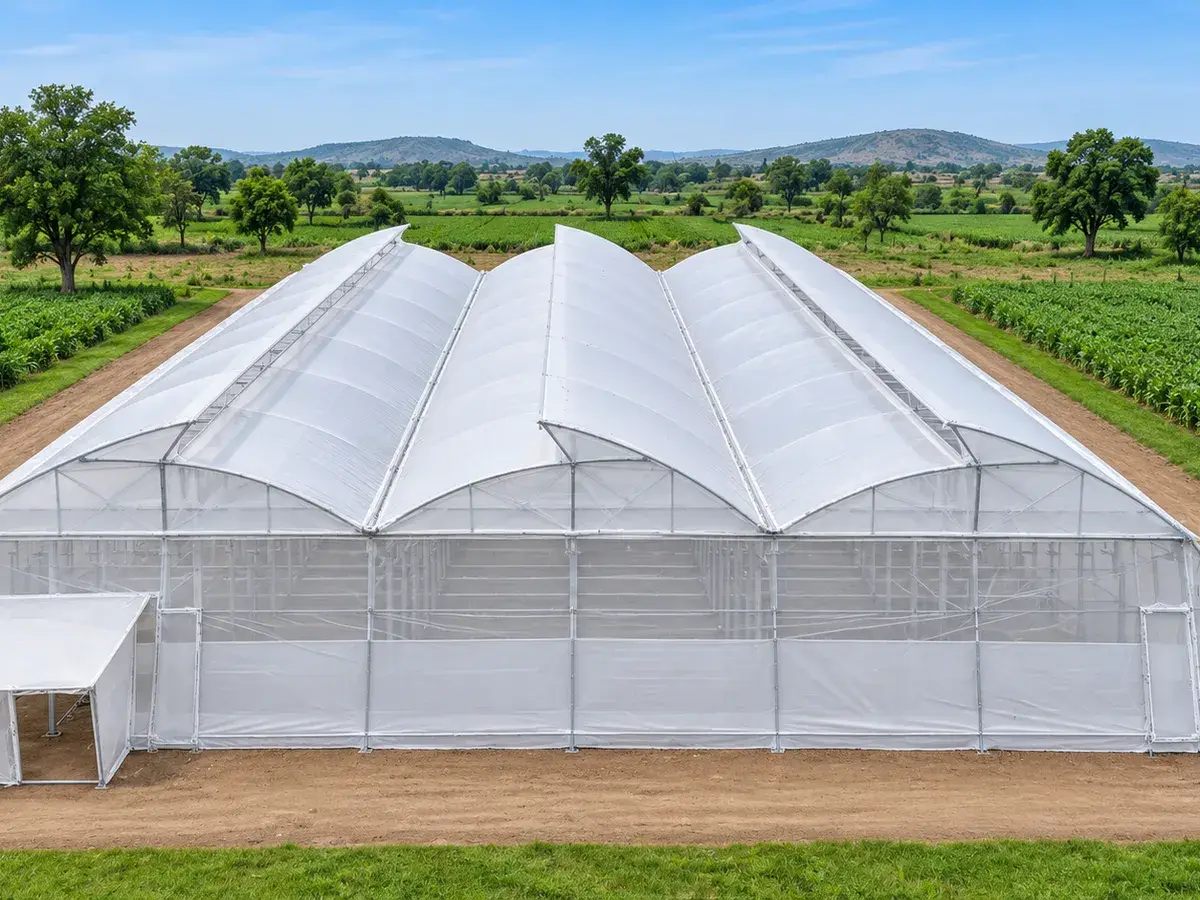
Clear
Driplock Clear
200-micron, 5-layer UV-stabilised greenhouse film with 90% light transmission and anti-drip properties. Designed to make the most of available sunlight in cool climates and low-light regions, for carnations, nursery plants and protected horticultural crops.
Light transmission90%Light diffusion25%UV life3 yrs*- Best for
- Carnation, nursery stock (not for roses)
- Best region
- Hilly regions with low winter light
Full technical specs
Manufacturing technology 5-layer Thickness 200 micron UV stabilised Yes Light transmission 90% Light diffusion 25% UV life 3 years* Anti-drip Yes Anti-dust Yes Available width 4.5 m, 5.5 m, 7 m and 9 m Available length 600–900 m jumbo roll, or cut to size Area recommended Hilly regions with low winter light Crops recommended Carnation, nursery stock (not for roses) 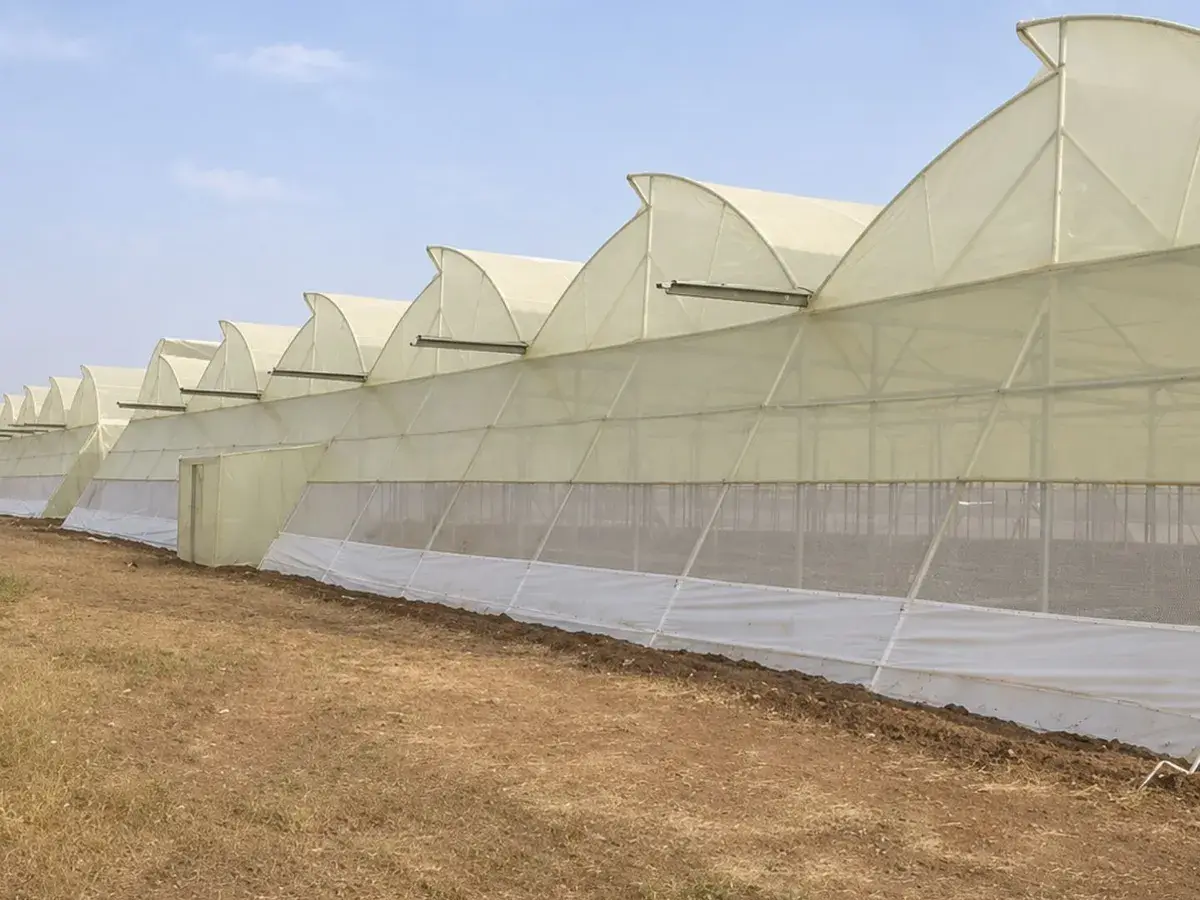
Diffused Yellow
Suncover 205N · Floriculture special
200-micron UV-stabilised greenhouse covering film with 88% light transmission and a light yellowish tint. Gives crops a high level of sunlight with a durable protective cover, and suits flowers including roses.
Light transmission88%Light diffusion60%UV life3 yrs*- Best for
- All crops, including roses (not bicolour roses)
- Best region
- Across India
Full technical specs
Film usage Greenhouse cover Manufacturing technology 5-layer Thickness 200 micron UV stabilised Yes Light transmission 88% Light diffusion 60% UV life 3 years* UV blocking Yes Anti-sulphur Yes Anti-dust Yes Available width 4.5 m, 5.5 m, 7 m and 9 m Available length 600–900 m jumbo roll, or cut to size Area recommended Across India Crops recommended All crops, including roses (not bicolour roses) 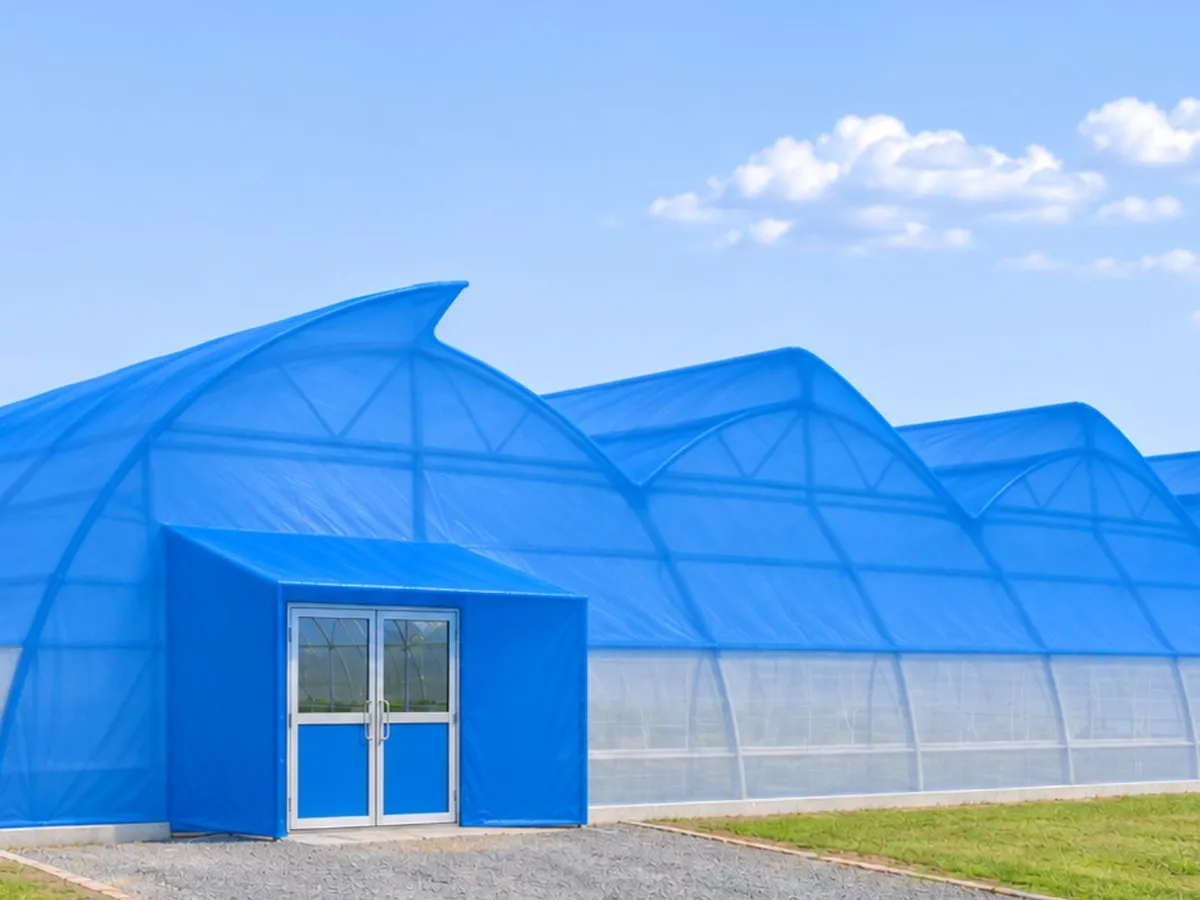
Diffused Blue
Driplock Diffused Blue
200-micron UV-stabilised greenhouse film with 77% light transmission, light diffusion and anti-drip protection. Spreads sunlight across the crop canopy and manages condensation in nurseries, leafy vegetables, horticulture and floriculture.
Light transmission77%Light diffusion60%UV life3 yrs*- Best for
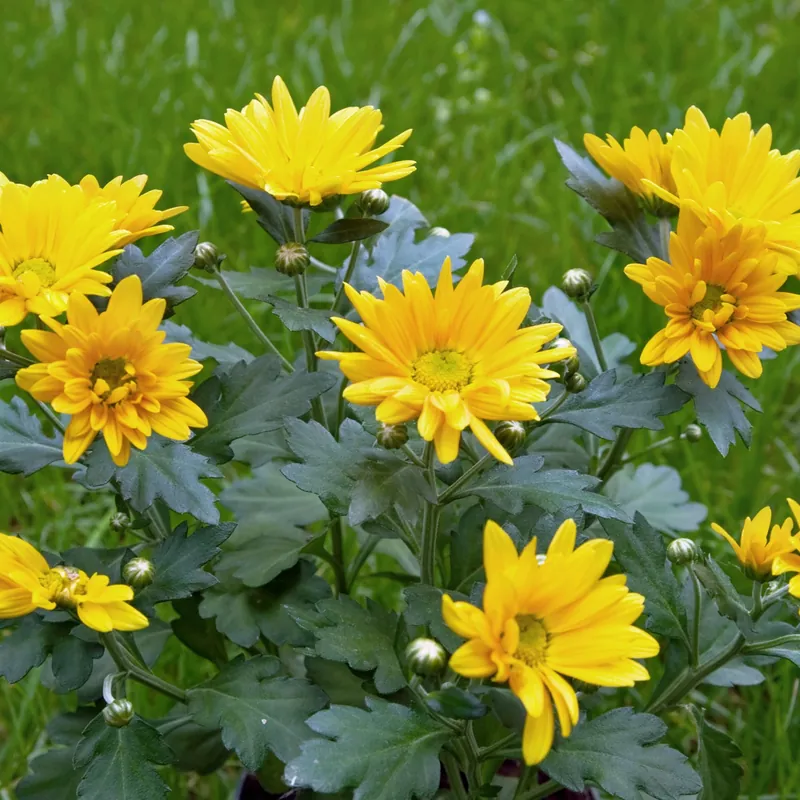
- Tomato, bell pepper, cucumber, strawberry, roses, lettuce, broccoli, chrysanthemum
- Best region
- Across India
Full technical specs
Film usage Greenhouse cover Manufacturing technology 5-layer Thickness 200 micron UV stabilised Yes Light transmission 77% Light diffusion 60% UV life 3 years* UV blocking Yes Anti-sulphur Yes Anti-drip Yes Anti-dust Yes Thermic Yes Available width 4.5 m, 5.5 m, 7 m and 9 m Available length 600–900 m jumbo roll, or cut to size Area recommended Across India Crops recommended Tomato, bell pepper, cucumber, strawberry, roses, lettuce, broccoli, chrysanthemum and more Delivery time Immediate
Compare all four films
| White Diffused | Clear | Diffused Yellow | Diffused Blue | |
|---|---|---|---|---|
| Light transmission | 87% | 90% | 88% | 77% |
| Light diffusion | 62% | 25% | 60% | 60% |
| Anti-drip | Yes | Yes | – | Yes |
| Anti-dust | Yes | Yes | Yes | Yes |
| Anti-sulphur | – | – | Yes | Yes |
| UV blocking | – | – | Yes | Yes |
| Thermic | – | – | – | Yes |
| Best region | Across India | Hilly regions with low winter light | Across India | Across India |
| Best for | Capsicum, gerbera, carnation, cucumber (not for roses) | Carnation, nursery stock (not for roses) | All crops, including roses (not bicolour roses) | Tomato, bell pepper, cucumber, strawberry, roses, lettuce, broccoli, chrysanthemum |
All films: 5-layer, 200 micron, UV-stabilised. Widths 4.5 m, 5.5 m, 7 m and 9 m. Length 600–900 m jumbo roll, or cut to size. *UV life of about 3 years; actual life depends on sunlight, sprays and site conditions.
Technical details
Fan and pad specifications
Every value goes in writing in your quotation.
Pad area and fan numbers are worked out for your house size, crop and local climate after a site inspection.
| Specification | Kryzen fan and pad polyhouse |
|---|---|
| Structure | Multi-span, gutter-connected GI steel structure |
| Steel | Galvanised iron (GI), 2 mm wall in all members |
| Galvanisation | 375–400 GSM |
| Roof film | 200 micron, 5-layer, UV-stabilised; white diffused, clear, diffused yellow or diffused blue |
| Cooling pads | Cellulose honeycomb pads on one end wall, sized to house length and climate |
| Exhaust fans | Heavy-duty exhaust fans with shutters on the opposite end wall, number set by house volume |
| Pad water | Recirculating system with pump, tank, header pipe and return gutter |
| Insect net | 40 mesh, UV-stabilised, on every opening |
| Shading | Shade net, or retractable aluminet as an add-on |
| Foggers | Add-on, for extra humidity in dry heat |
| Controls | Electrical panel for fans, pumps and foggers; sensor-based control as needed |
| Entrance | Ante-room with double door |
| Power | 3-phase supply and backup generator, arranged by you |
Made by Kryzen
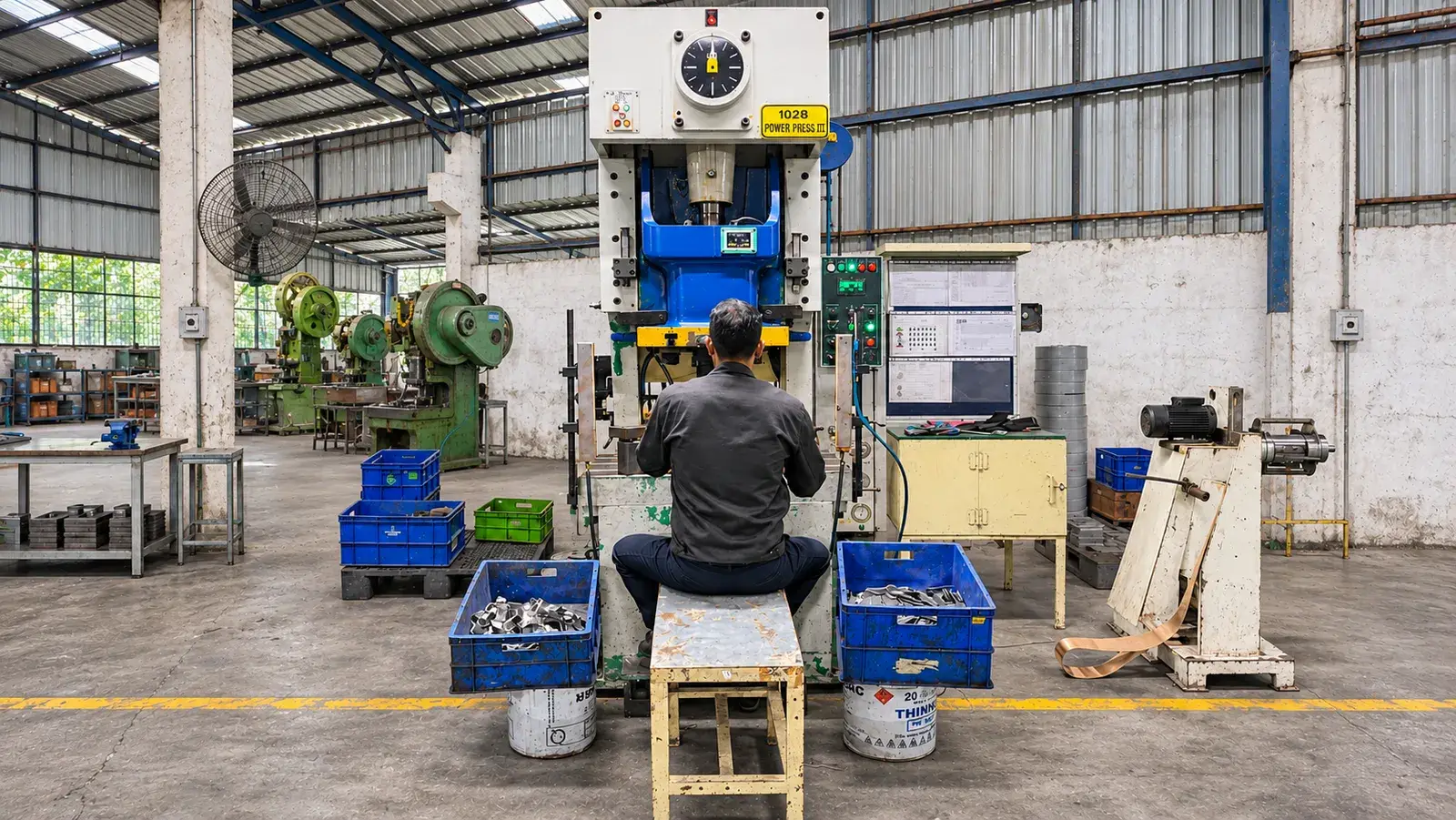
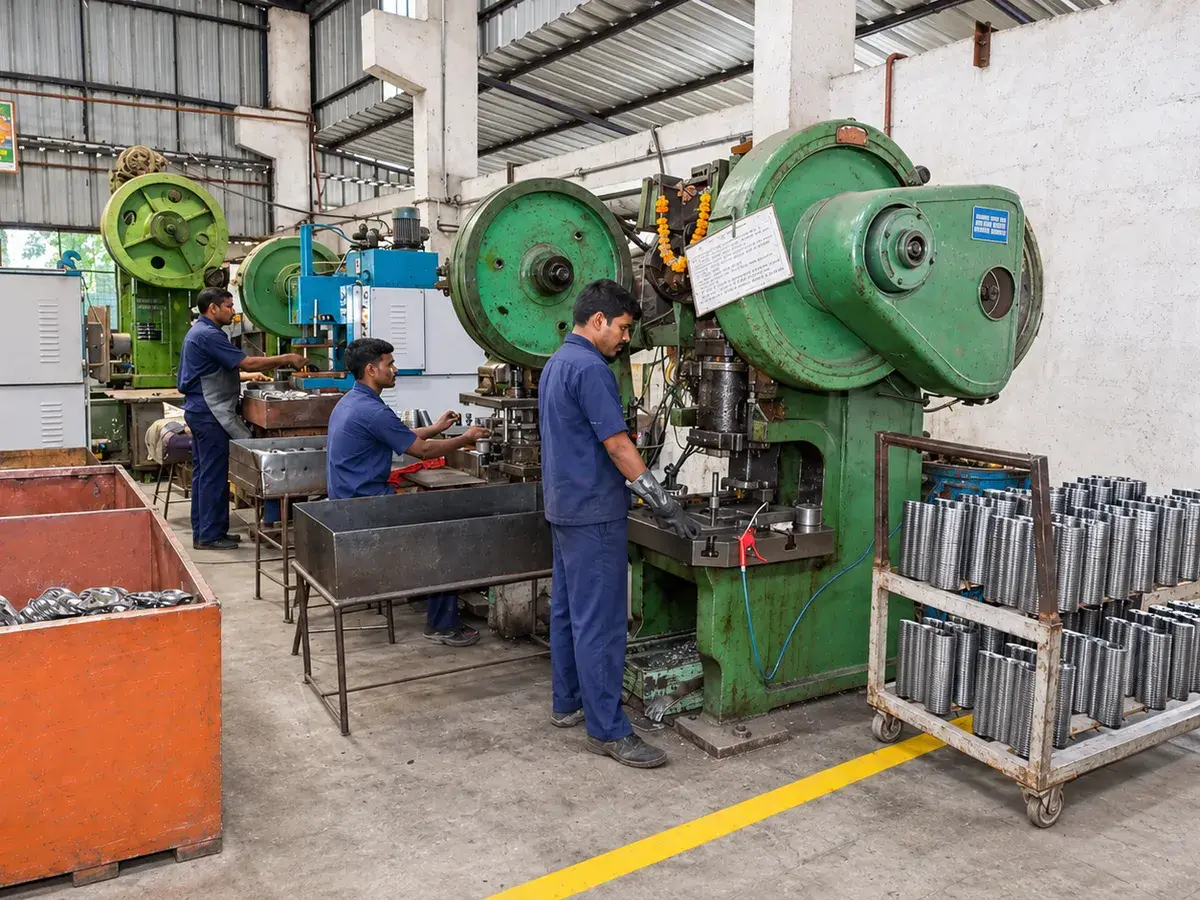
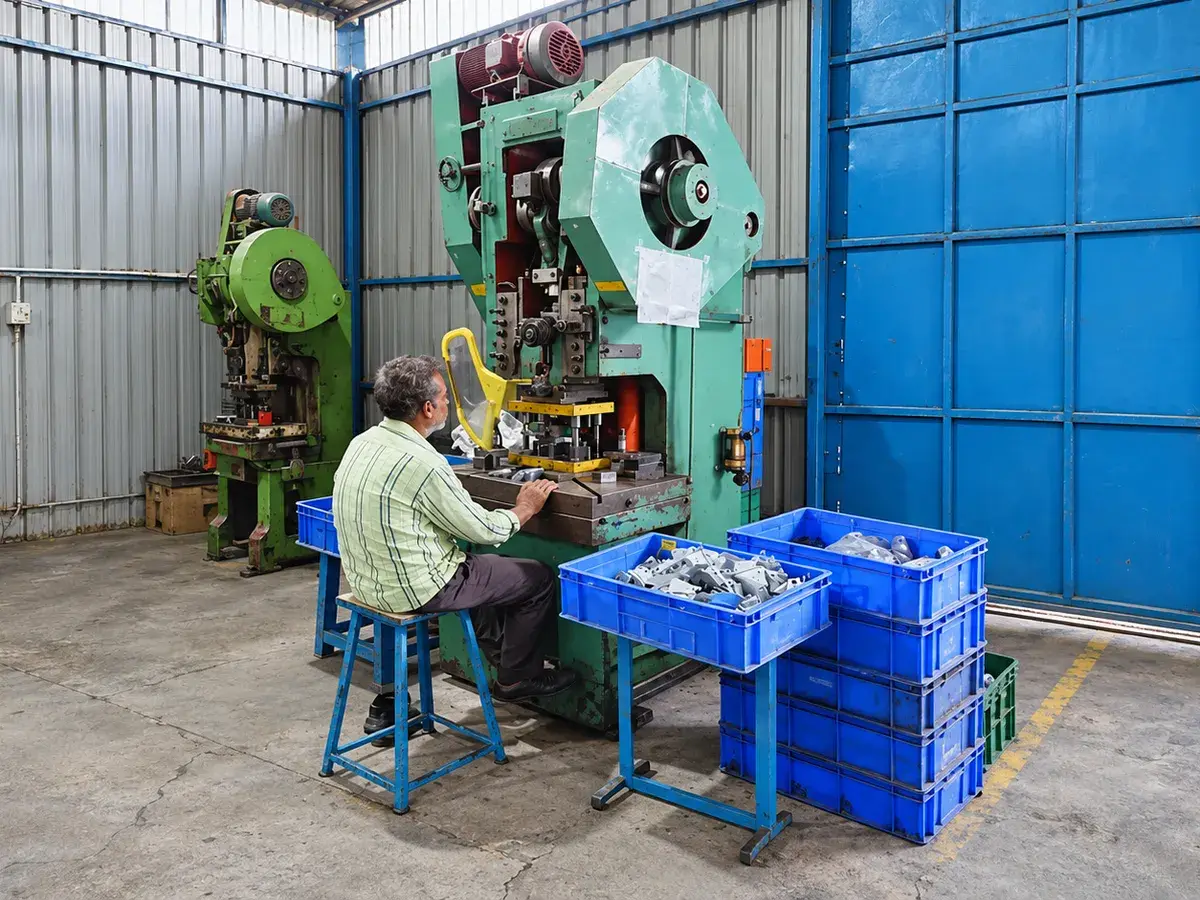
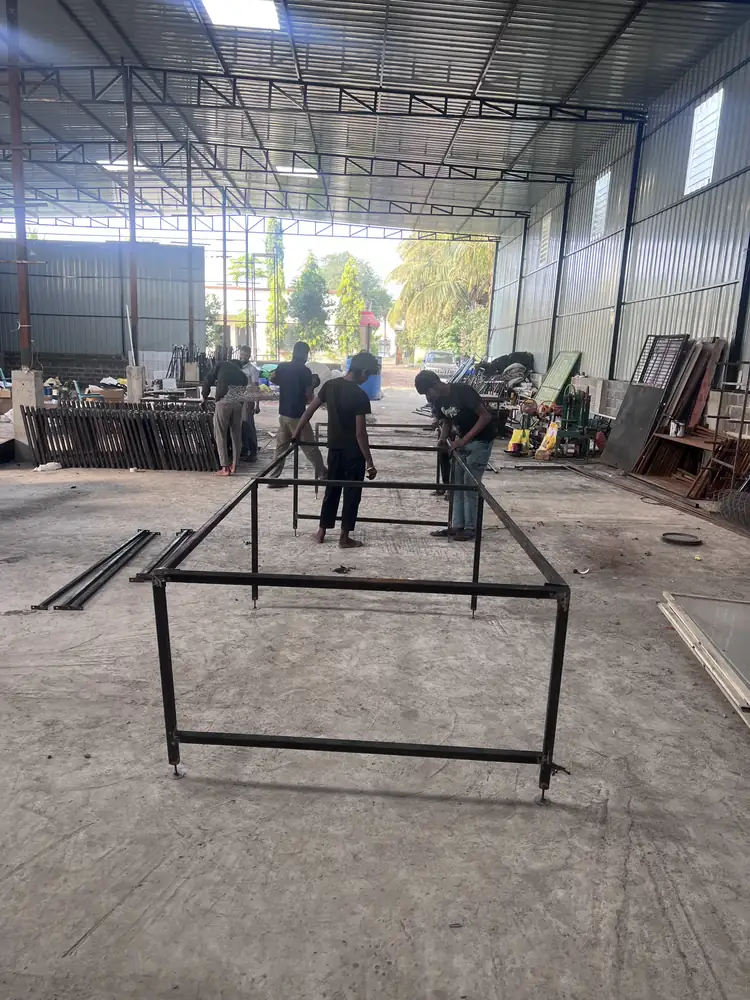
Our own factory. Our own build team.
We cut, shape and quality-test the steel at our factory in Satara, Maharashtra, and our own construction team builds it on your land. You can follow every step live on your client portal at alpha.kryzen.com.





Go soil-less
You can also grow soil-less inside a fan and pad polyhouse
Add a hydroponic system inside the same structure. No soil-borne disease, exact nutrition for every plant, and higher yield from the same area. We design and install the system with your polyhouse.

Cocopeat grow bags
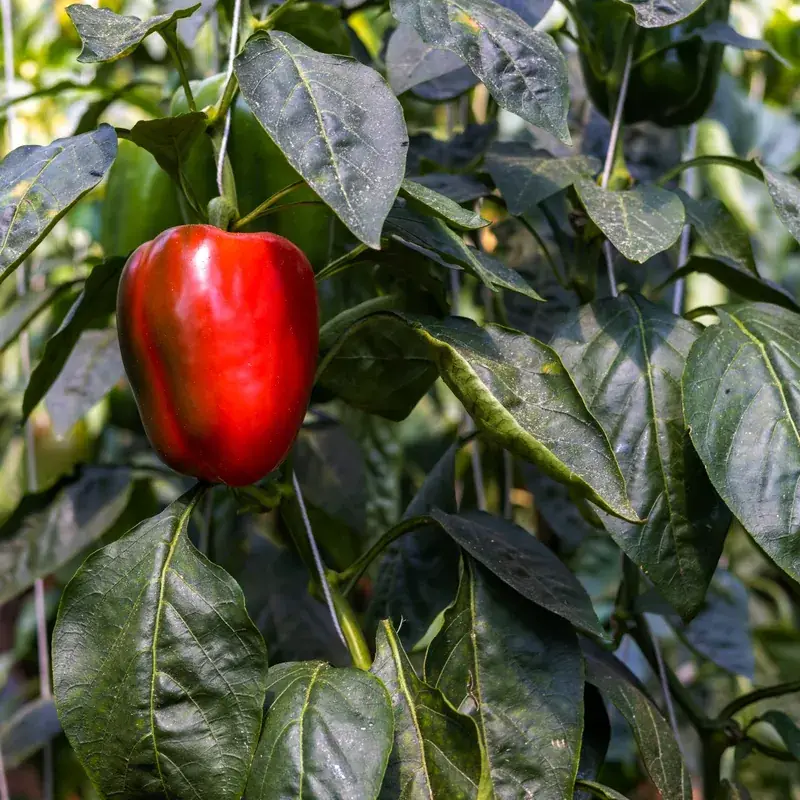
Capsicum, cucumber and tomato in washed cocopeat, fed by drip.
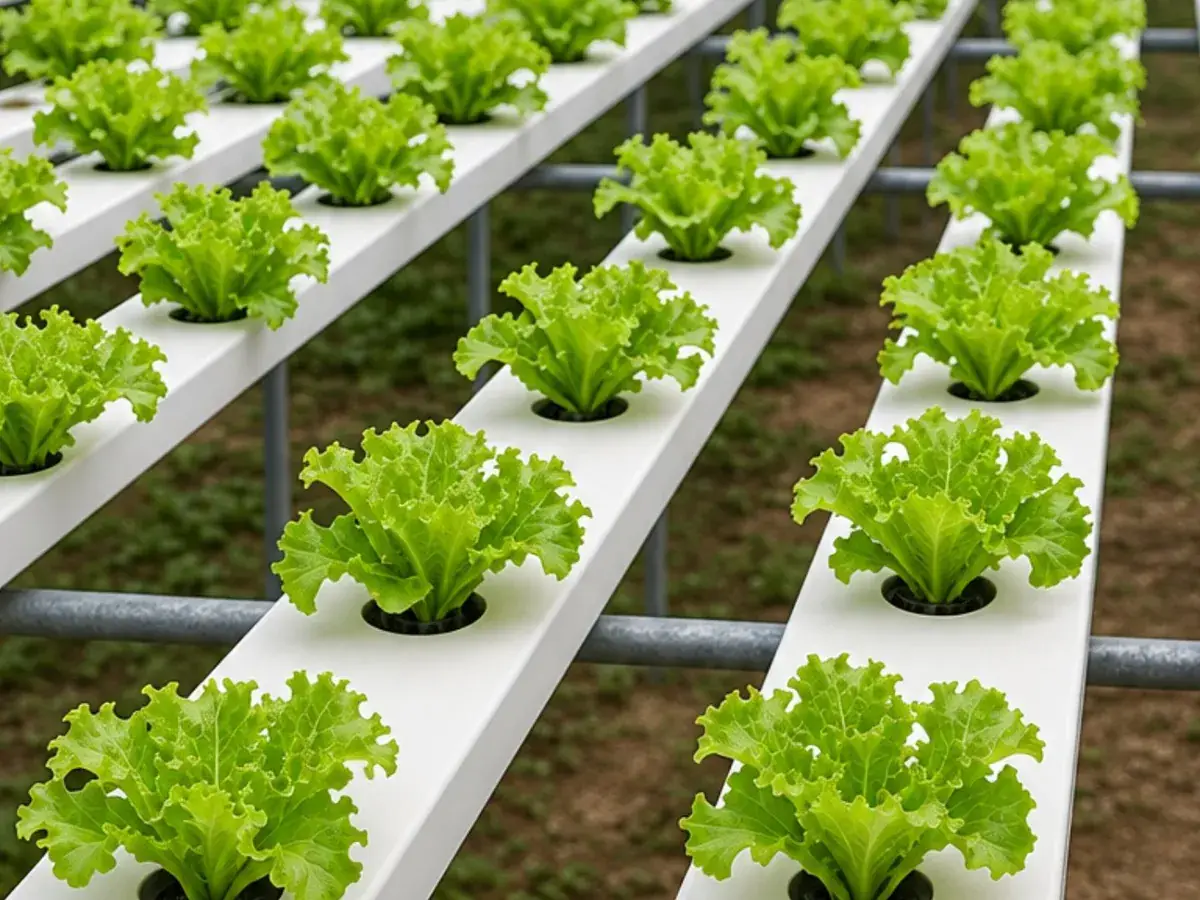
NFT flatbed
Lettuce, leafy greens and herbs in food-grade channels.
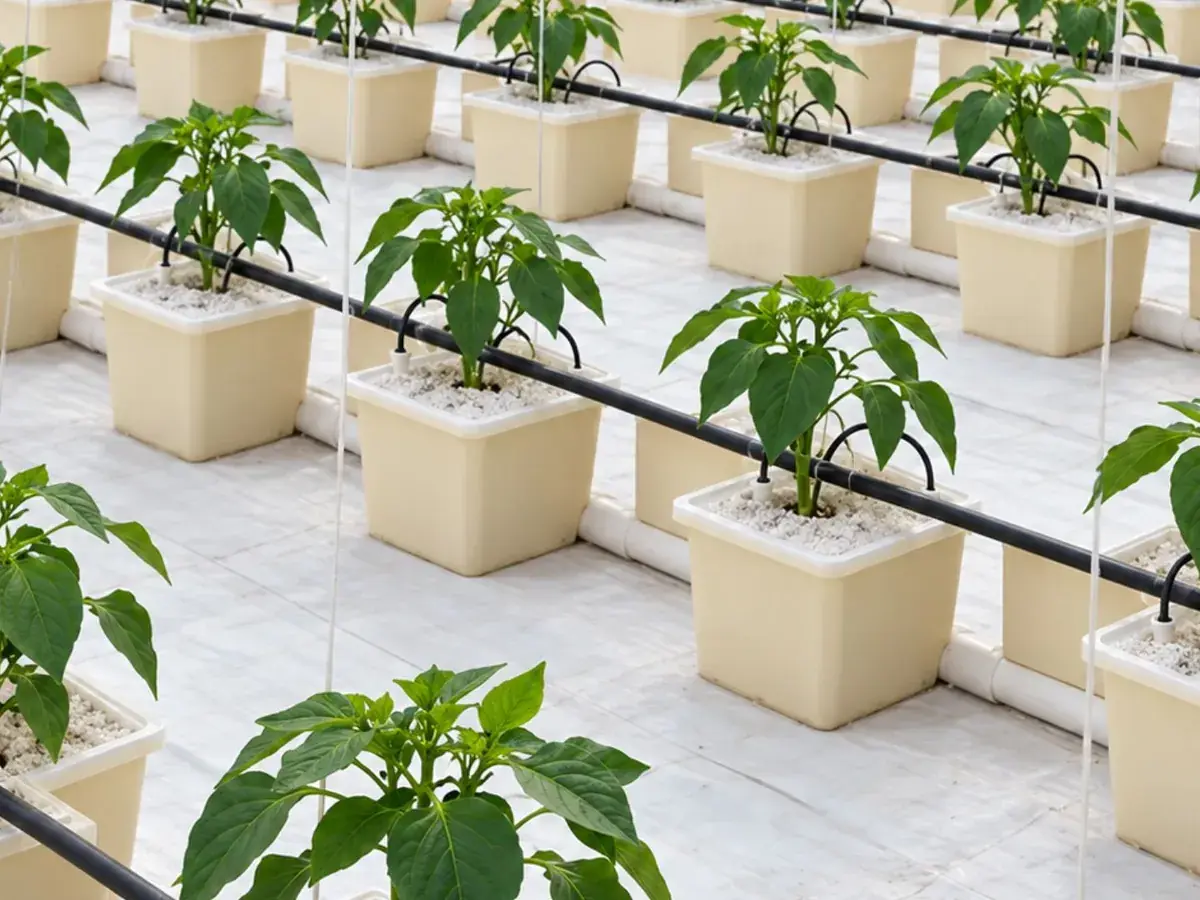
Dutch bucket
Vine crops in buckets that recirculate the nutrient solution.
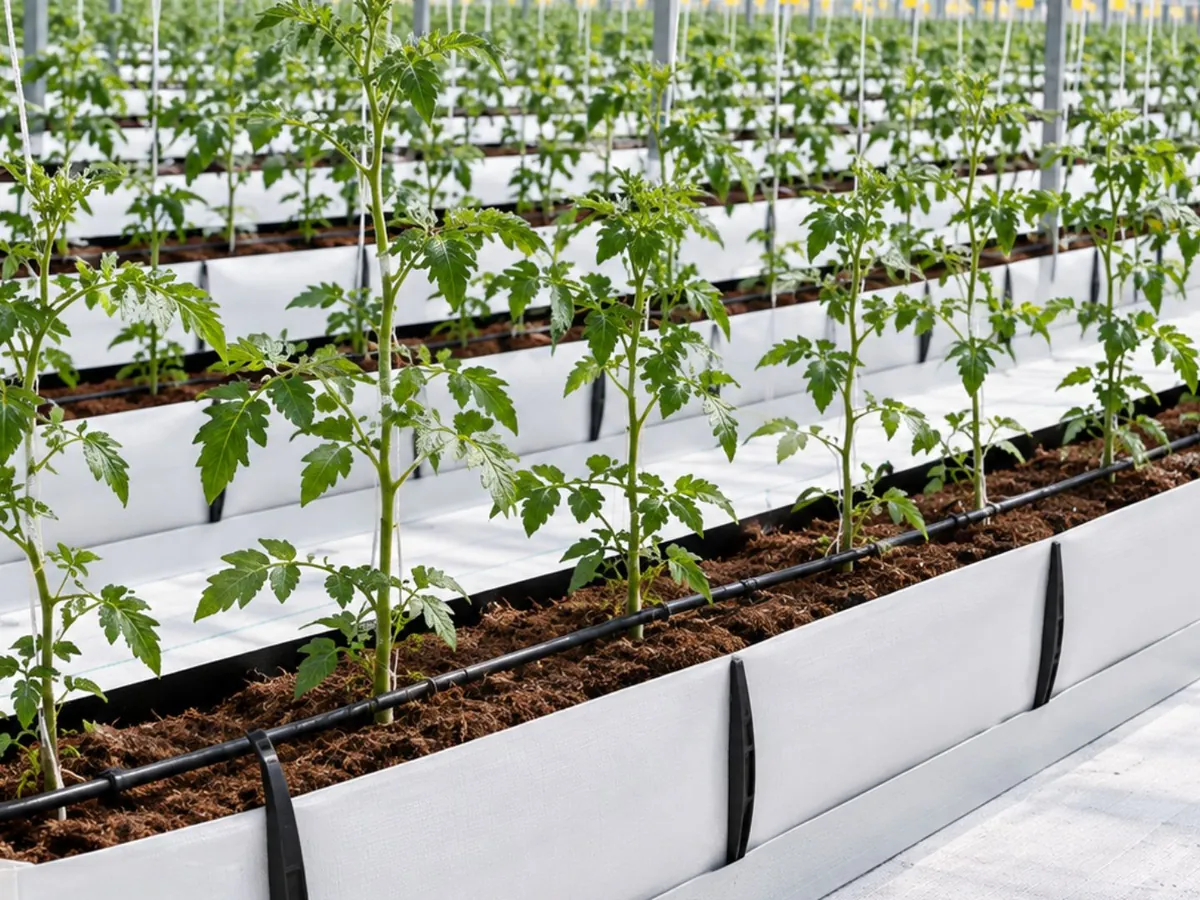
Trough
Strawberry and leafy crops in raised troughs at working height.
Every soil-less farm comes with our nutrient calculator and agronomy wiki.
Cost and profit in 1 acre fan and pad
What a fan and pad polyhouse costs to build and run
1 acre is 4,047 m². Estimated from the 2026 Kryzen NVPH quotation, with the cooling system added in proportion to the government cost norms (₹1,500 vs ₹1,000 per m²). GST and the estimated subsidy are shown separately. Ask us for a quotation for your size and site.
| Item | 1 acre | 2 acres | 3 acres |
|---|---|---|---|
| Covered area | 4,047 m² | 8,094 m² | 12,141 m² |
| Polyhouse structure, engineering, foggers, drip and panels (as NVPH) | ₹53.5 lakh | ₹1.07 crore | ₹1.60 crore |
| Fan and pad cooling: exhaust fans, cooling pads, pumps and controls (estimate) | ₹26.7 lakh | ₹53.5 lakh | ₹80.2 lakh |
| Project price (before GST) | ₹80.2 lakh | ₹1.60 crore | ₹2.41 crore |
| GST (18%) | ₹14.4 lakh | ₹28.9 lakh | ₹43.3 lakh |
| Total invoice value | ₹94.6 lakh | ₹1.89 crore | ₹2.84 crore |
| Estimated NHM/MIDH subsidy (2,500 m² limit) | − ₹18.75 lakh | − ₹18.75 lakh | − ₹18.75 lakh |
| Cost after subsidy | ₹75.9 lakh | ₹1.71 crore | ₹2.65 crore |
Monthly running cost, per acre
About ₹71,000
- Labour (2 full-time workers × ₹12,000)₹24,000
- Seedlings₹8,000
- Fertiliser and crop protection₹8,000
- Electricity (exhaust fans, pad pumps, irrigation)₹25,000
- Pad water and upkeep₹3,000
- Packaging₹3,000
Expected revenue, gerbera
₹3.2–8 lakh/monthly
Per acre in a fan and pad polyhouse. It depends on variety, season, market price and how well the crop is managed.
Subsidy has an area limit
- NHM / MIDH: the government pays 50% of the fan and pad cost norm (₹1,500 to ₹1,800 per m², depending on size), but only on up to 2,500 m² per farmer. That is about 0.6 acre, so the most you can get is about ₹18.75 lakh, even if your polyhouse is bigger.
- NHB: projects bigger than 2,500 m² can apply for a credit-linked subsidy of 50% of the eligible project cost, up to ₹100 lakh per project. A bank loan is part of the project.
Cash flow and break-even over 12 years
Cumulative cash position of a 1-acre fan and pad polyhouse, with and without the NHM/MIDH subsidy. Pick a crop below, then move the sliders to see how capacity use and your loan change it.
- With subsidy
- Without subsidy
- Before break-even
- After break-even
Crops suitable for fan and pad: pick one to set the revenue range
These are tentative numbers.
Want to know your own calculations? Book the site inspection kit and our team of experts will find out your break-even period.
Illustration only, not a guarantee. Based on the 1-acre project price plus 18% GST, an NHM/MIDH subsidy of ₹18.75 lakh (50% of ₹1,500/m² on up to 2,500 m²) received after year 1, subject to approval, revenue for the crop you pick per acre per month, scaled from the low end of its range at 50% capacity use to the high end at 95%, running cost of about ₹71,000 per acre a month in year 1 rising by the opex increase you select each year, crop rates rising by the crop rate increase you select each year, and a polyfilm and cooling pad change of ₹3.5 lakh per acre every 3 years. Year 1 counts 9 months of sales. Crop revenue ranges are Kryzen estimates per acre per month. Tax free: agricultural income is generally exempt from income tax in India under Section 10(1); check your case with a tax adviser.
What you earn depends on your crop
Income changes with the crop, season and market. Before you build, our team prepares a crop-wise projection for your land in your project report, using current market prices from Price Watcher. After harvest, Buyers Connect helps you sell.
Included free
- 6 months of virtual agronomy
- 4-day training for your farm team
- Hydroponic Masterclass logins
- Farm management software
- Buyers Connect
Worth ₹1.08 lakh
Compare
Fan and pad vs open-field farming
An open field costs nothing to cover, but the weather decides what you can grow. A fan and pad polyhouse lets you grow premium crops in any season.


| Point | Open field | Fan and pad polyhouse |
|---|---|---|
| Temperature control | None | Held in a set range |
| Rain, hail and strong sun | Crop exposed | Fully protected |
| Pests | High, with more spraying | Low: closed house |
| Crops possible | Seasonal only | Premium flowers and exotics all year |
| Electricity | Low | High: fans and pumps |
| Upfront cost | Low | Highest of the three polyhouse types |
Fan and pad vs nethouse
Fan and pad polyhouse or nethouse?
A nethouse is the lowest-cost protected structure. A fan and pad polyhouse costs much more, but holds the temperature in a set range so premium crops grow in any season.
| Point | Fan and pad polyhouse | Nethouse |
|---|---|---|
| Covering | Closed film house with exhaust fans and wet cooling pads | Shade net roof and insect net sides |
| Climate control | Active cooling, tight control | Some cooling from shade |
| Rain and cold | Fully protected | Partly protected |
| Electricity | Highest: fans and pumps | Least |
| Build cost | Highest | Lowest |
| Best for | Roses, gerbera, orchids, exotics, hot dry regions | Cucumber, green capsicum, tomato, leafy greens, nursery |
Fan and pad vs NVPH
Fan and pad or naturally ventilated polyhouse?
An NVPH cools itself with vents and curtains and costs less to build and run. Fan and pad suits heat-sensitive flowers and exotics, and hot, dry regions.
| Point | Fan and pad polyhouse | NVPH |
|---|---|---|
| Covering | Closed film house with exhaust fans and wet cooling pads | UV film roof, roll-up curtains and insect net |
| Climate control | Active cooling, tight control | Natural ventilation, shade net, optional foggers |
| Rain and cold | Fully protected | Protected |
| Electricity | Highest: fans and pumps | Low: mainly irrigation |
| Build cost | Highest | Medium |
| Best for | Roses, gerbera, orchids, exotics, hot dry regions | Coloured capsicum, cucumber, tomato, flowers |
Already have a team who can build?
Buy your polyhouse material from us
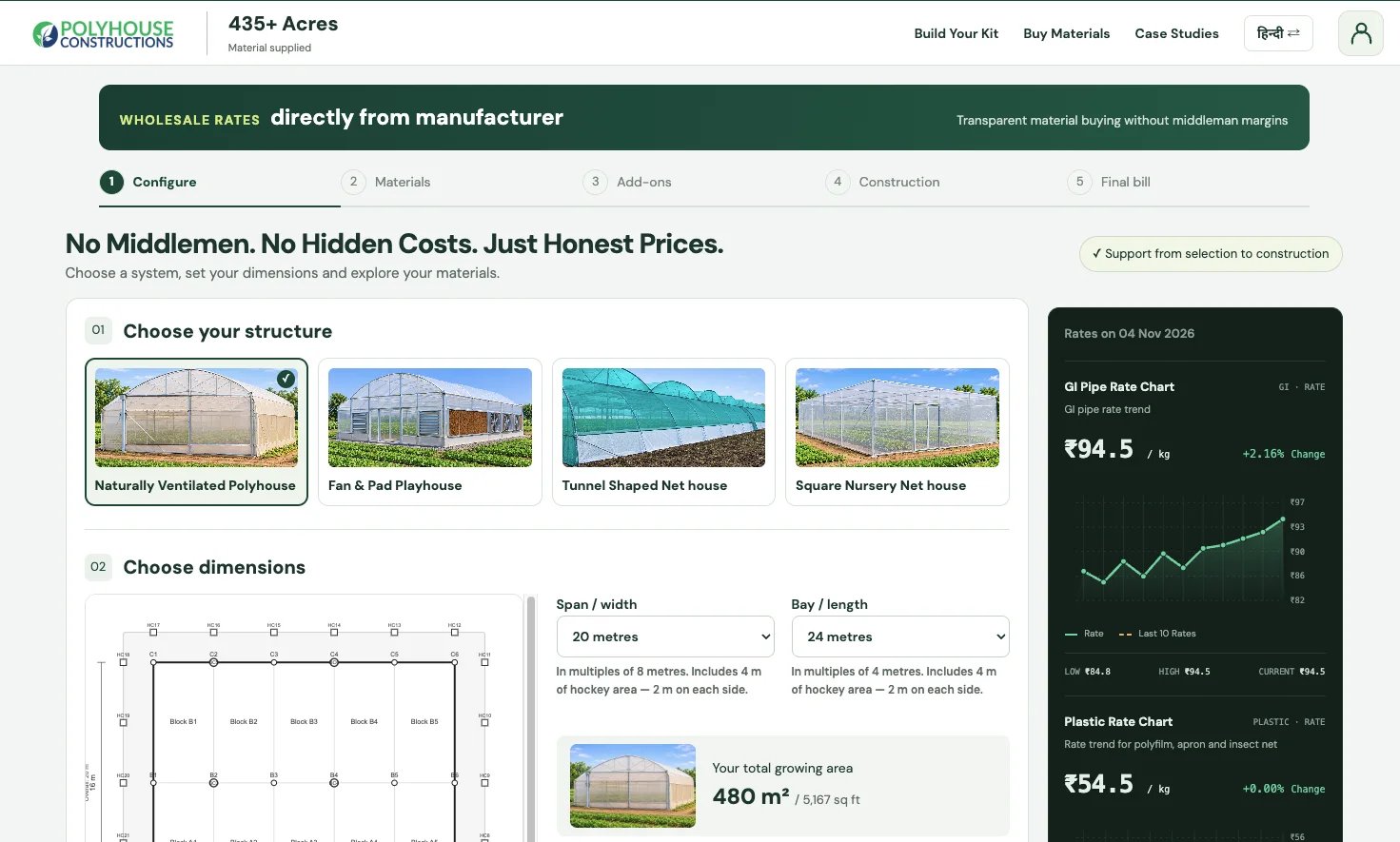
No middlemen. No hidden costs. Just honest prices.
India’s first and only fully transparent material purchase for protected cultivation. The same material we use on our own projects, from our factory.
- 1Choose a system
- 2Set your dimensions
- 3Explore your materials
Subsidy on fan and pad
Government subsidy for your fan and pad polyhouse
A fan and pad polyhouse can get assistance under the Mission for Integrated Development of Horticulture (MIDH), through your state's National Horticulture Mission (NHM), or under the National Horticulture Board (NHB) for larger projects.
NHM / MIDH subsidy

NHM state subsidy providerEnrolled with the National Horticulture Mission in Maharashtra and Karnataka for state horticulture schemes.
- Assistance rate50% of the cost normSubject to the government cost norm and approval.
- Fan and pad polyhouseCost norm ₹1,500–1,800/m²₹1,800 up to 500 m², ₹1,600 up to 1,008 m², ₹1,500 up to 2,500 m². At 50%, about ₹18.75 lakh for 2,500 m².
- Area limitUp to 2,500 m² per farmerAbout 0.6 acre. A bigger polyhouse still gets subsidy on 2,500 m² only.
- Design eligibilityApproved category sets the rateWe confirm the classification of your design before you apply.
NHB subsidy

NHB subsidy providerKryzen is a registered National Horticulture Board subsidy provider for all states.
- Project sizeAbove 2,500 m² of covered areaFor bigger farms that go past the NHM / MIDH limit.
- Assistance rate50% of eligible project costCredit-linked, so a bank loan is part of the project. Up to ₹100 lakh per project.
Subsidy has an area limit
- NHM / MIDH: the government pays 50% of the fan and pad cost norm (₹1,500 to ₹1,800 per m², depending on size), but only on up to 2,500 m² per farmer. That is about 0.6 acre, so the most you can get is about ₹18.75 lakh, even if your polyhouse is bigger.
- NHB: projects bigger than 2,500 m² can apply for a credit-linked subsidy of 50% of the eligible project cost, up to ₹100 lakh per project. A bank loan is part of the project.
Subsidy figures are indicative. The final amount depends on the approved design, covered area, eligible cost, location and applicable scheme rules.
How we build
From first call to first harvest
Ten steps, one team. Most projects are built in 45 to 90 days after material reaches the site.
 1
Free online consultation
We discuss your land, water, budget and goals on a video or phone call.
 2
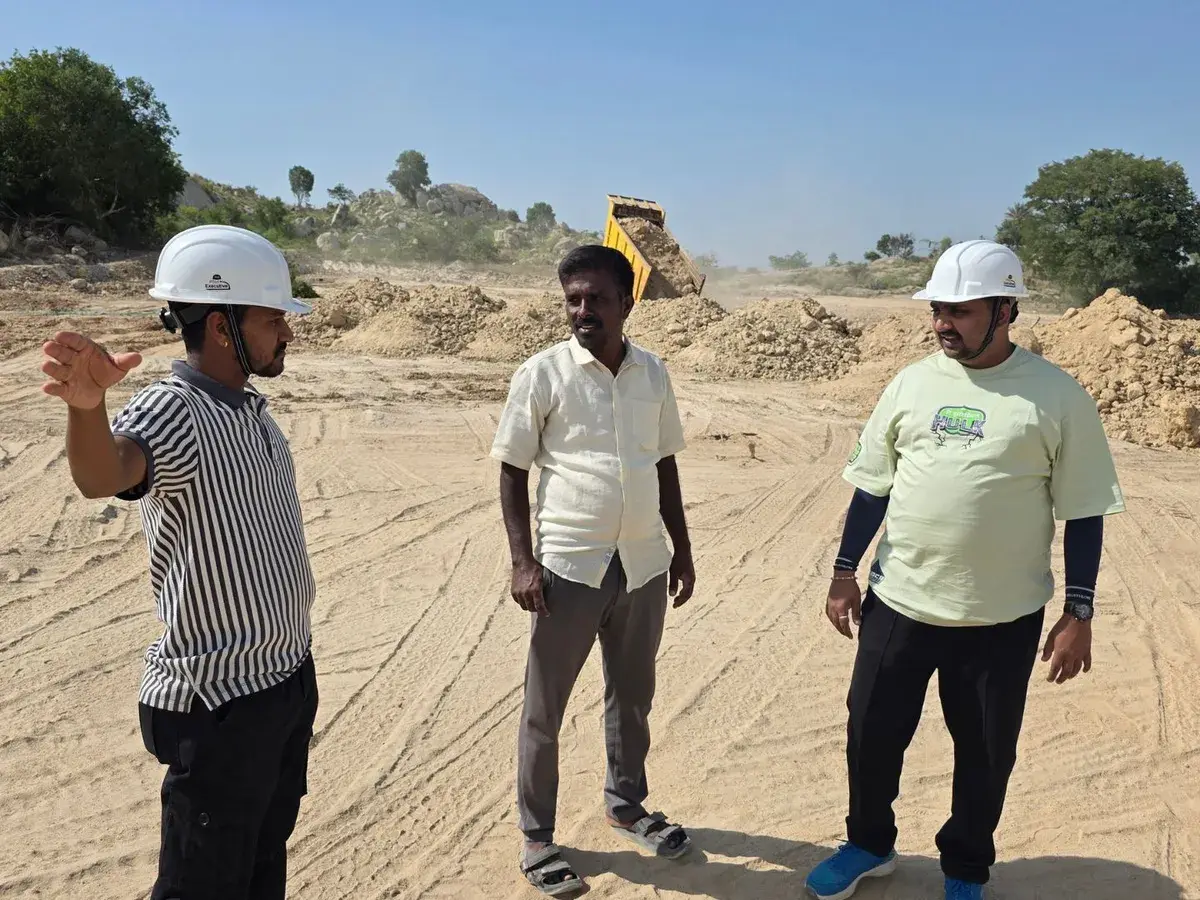
Site inspection
Our team checks level, slope, sunlight, soil, water, power and road access.
 3
Design and quotation
We design for your climate and crops, and share a detailed quotation.
 4
Project report and finance
We prepare the DPR for your bank loan and subsidy file.
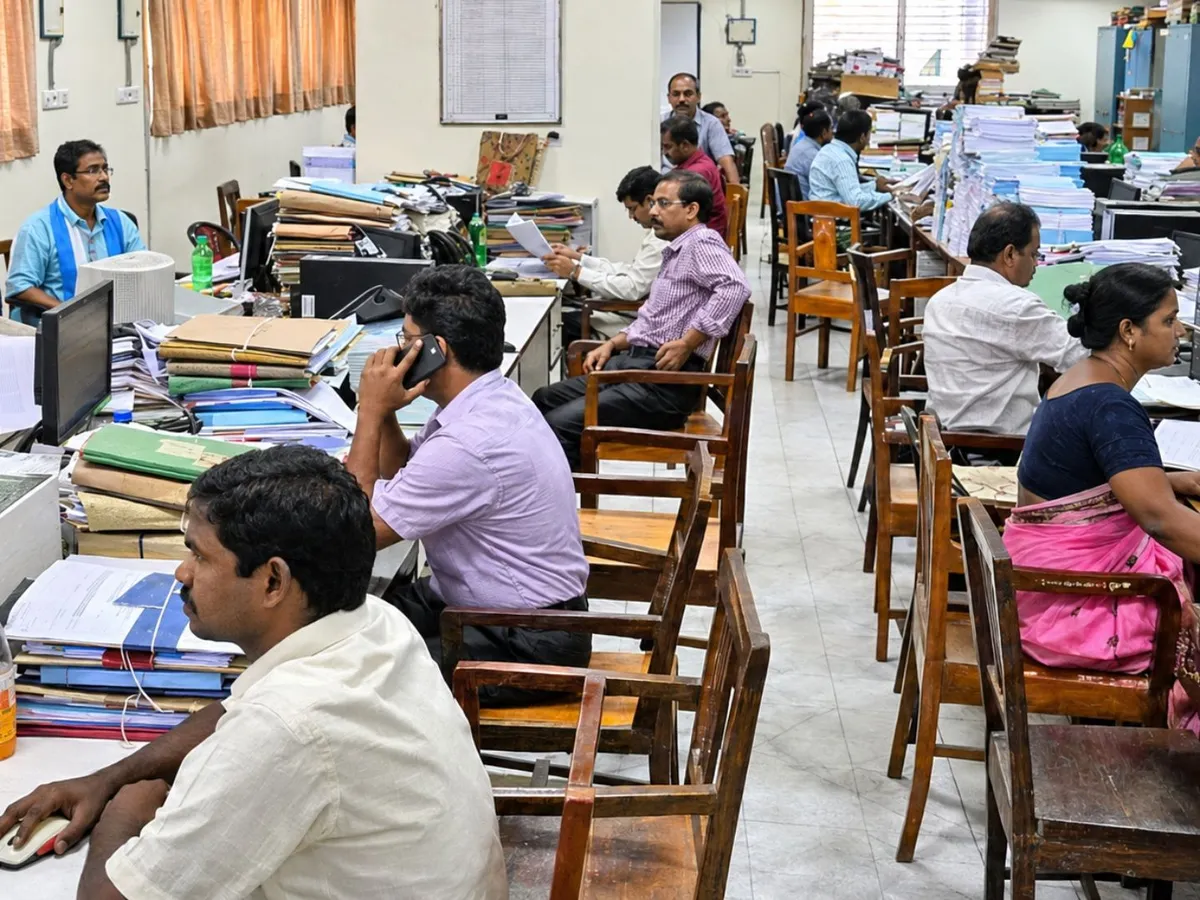 5
Subsidy and loan
We help you apply for NHB or NHM subsidy and your bank loan, with the documents each office needs.
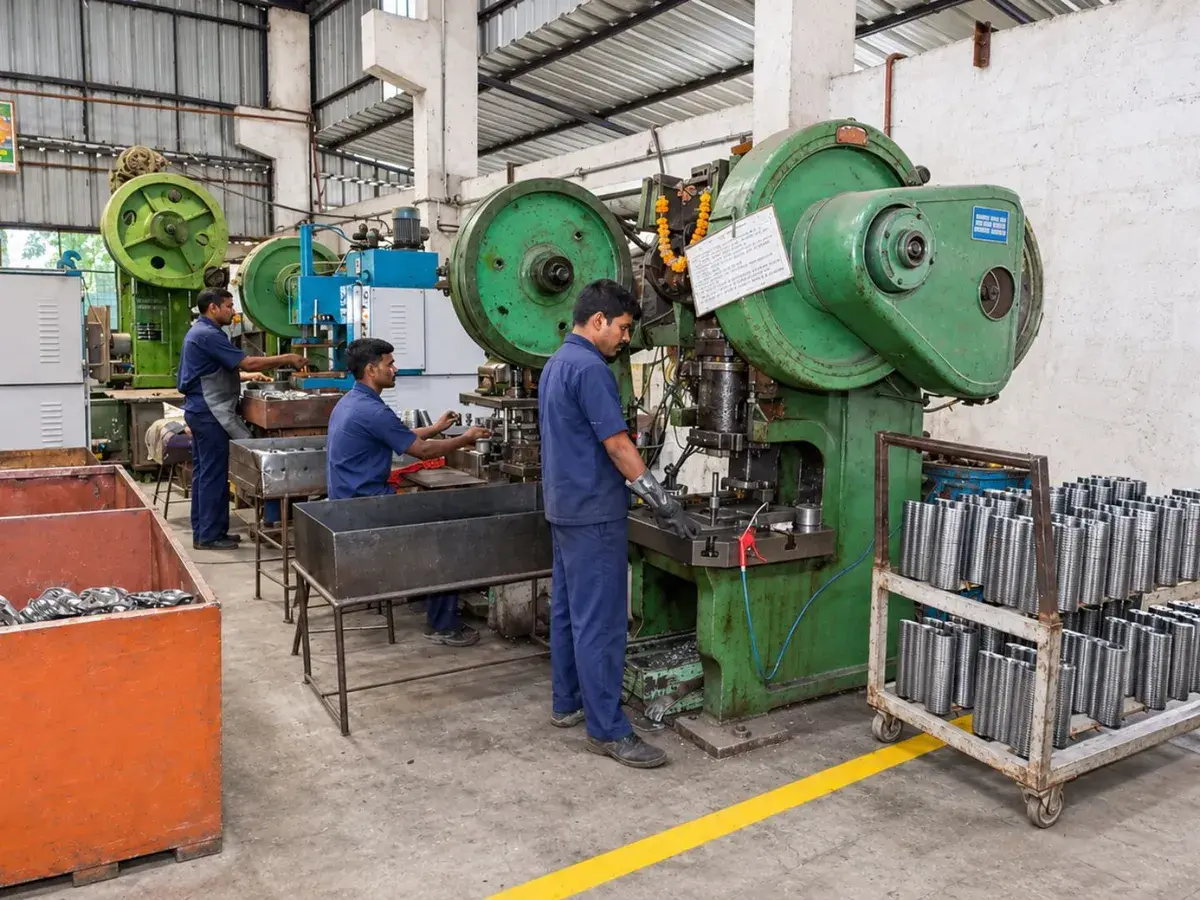 6
Manufacturing
We cut, shape and quality-test the material at our factory in Satara.
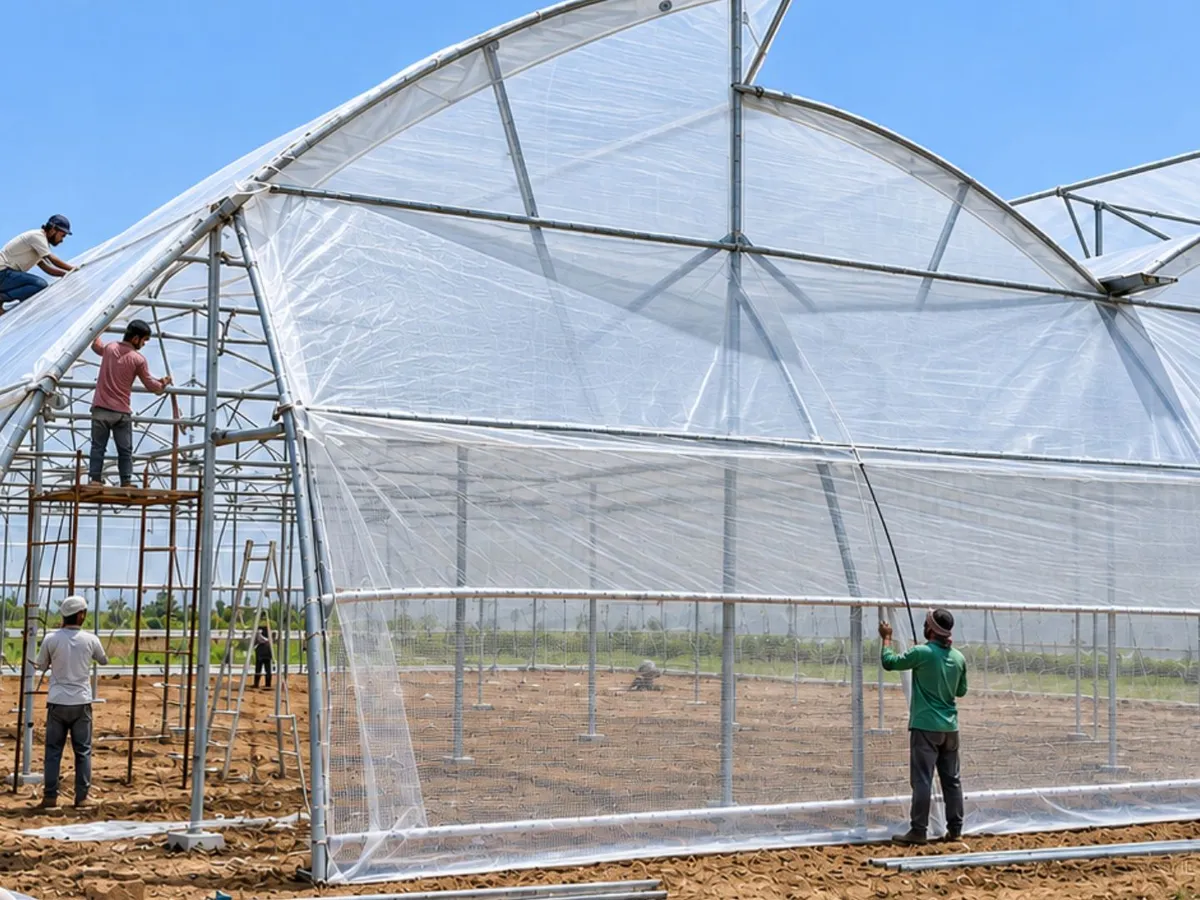 7
Construction
Our team builds the foundations, structure and growing systems on your land.
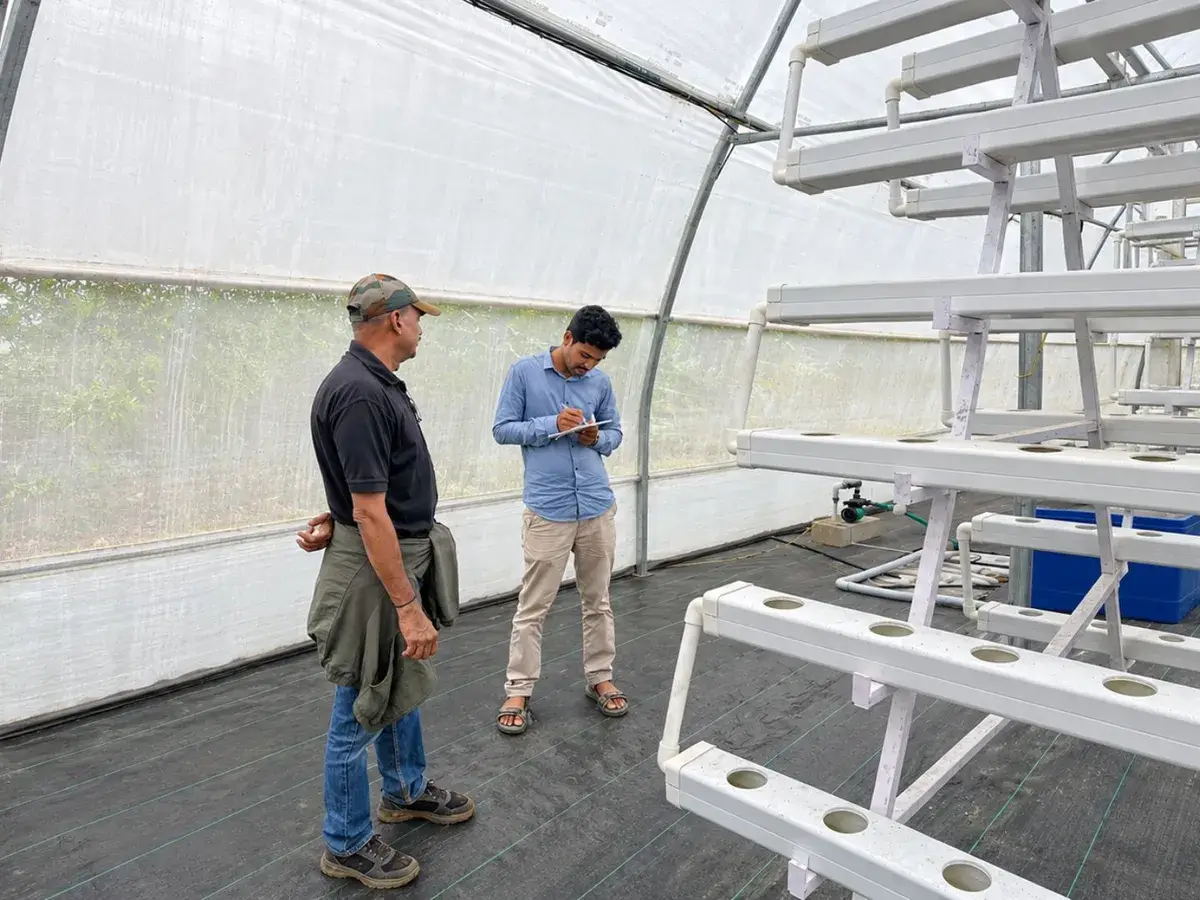 8
Testing and handover
We test every system and hand over a working farm.
 9
Training and agronomy
Hands-on training for your team and 6 months of virtual agronomy support.
 10
Harvest management
We help you plan harvests, grading and sales, with market prices from Price Watcher and buyers through Buyers Connect.