Hydroponic cultivation
Hydroponic farming
Hydroponics grows plants without soil. Roots get water, air and nutrients directly, so crops grow faster, use far less water and give cleaner produce. Kryzen designs, builds and supports commercial hydroponic farms across India.
What is hydroponics?
Farming without soil
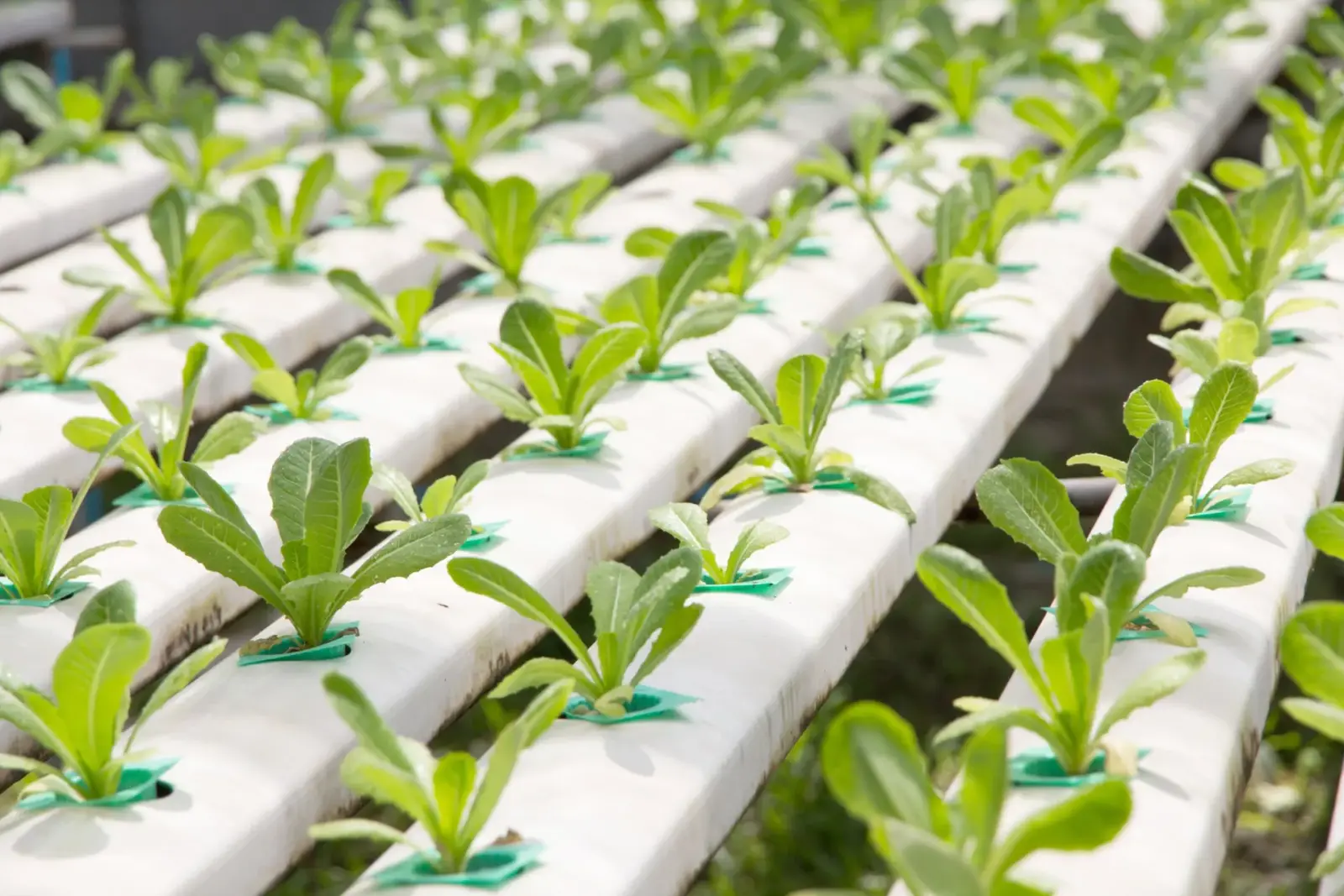
Hydroponics is a way of growing plants without soil. Plants sit in channels, buckets or bags of cocopeat, and a nutrient solution of water with dissolved fertiliser feeds the roots. You control what the plant gets: nutrients, pH (acidity) and EC (salt strength). This removes most soil problems, such as soil-borne disease, weeds and uneven fertility.
How a hydroponic farm works
- 1Water tank
Clean water is mixed with hydroponic nutrients.
- 2Dosing
Pumps or a doser keep EC and pH at the right level.
- 3Delivery
The solution flows through channels or drips to each plant.
- 4Return or drain
In NFT and ebb and flow the solution returns to the tank; in grow bags a little drains out.
- 5Protection
Most commercial hydroponic farms sit inside a polyhouse or nethouse.
Advantages of hydroponics
Why farmers switch to hydroponics
Far less water
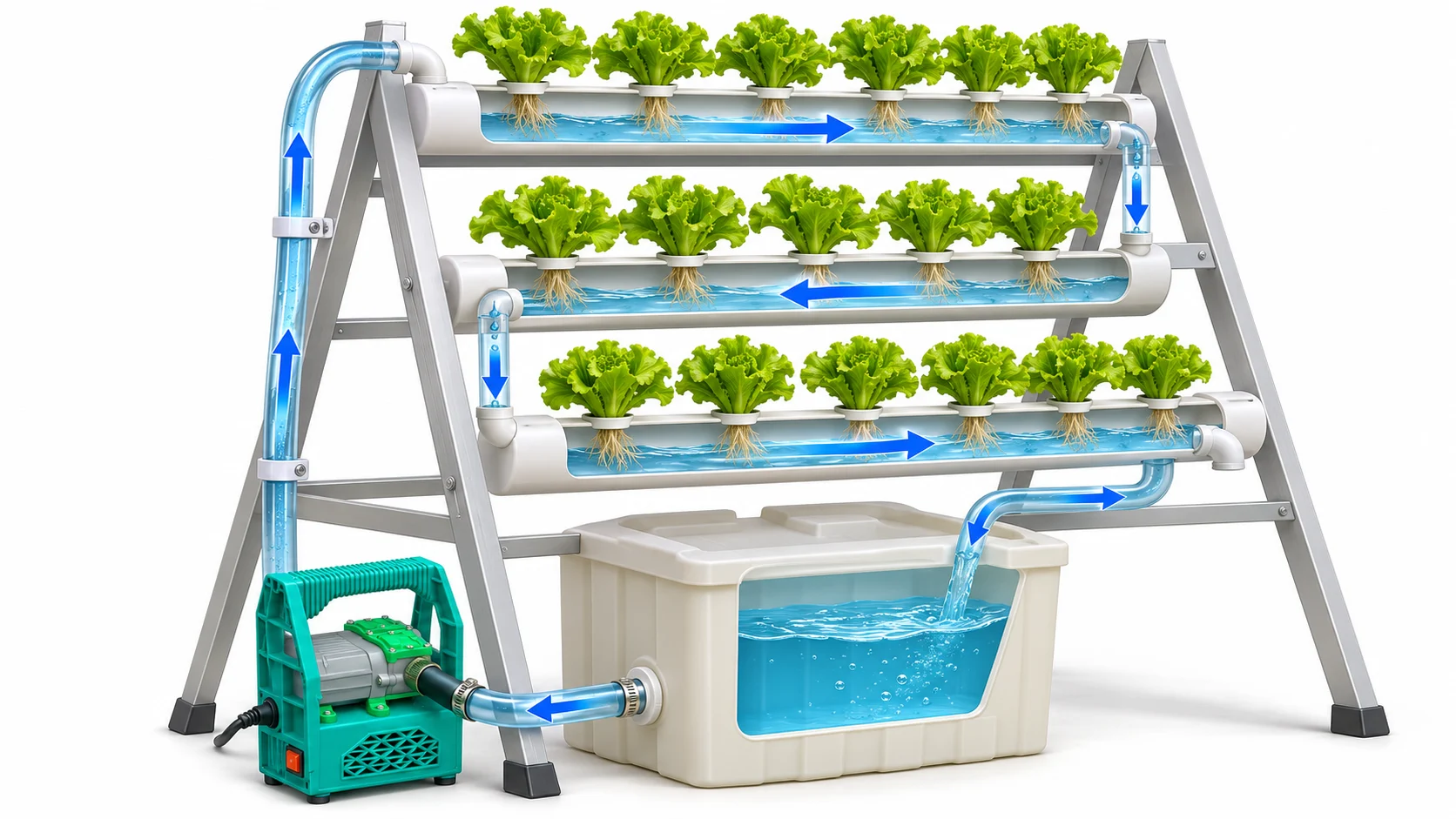
Recirculating systems reuse the nutrient solution, so they use a fraction of the water of soil farming.
Faster growth
Roots get exactly what they need, so crops grow faster and you fit in more cycles a year.
No soil needed
Farm on poor, saline or rocky land, or even on a roof.
Cleaner produce
No soil and a protected structure mean fewer pests and fewer sprays.
More yield per m²
Plants are spaced and fed precisely, so every square metre produces more.
Year-round production
Inside a polyhouse you grow through every season, not just one.
Types of hydroponics
Seven hydroponic systems we build
Each system suits different crops. Pick the one that matches your crop and market.
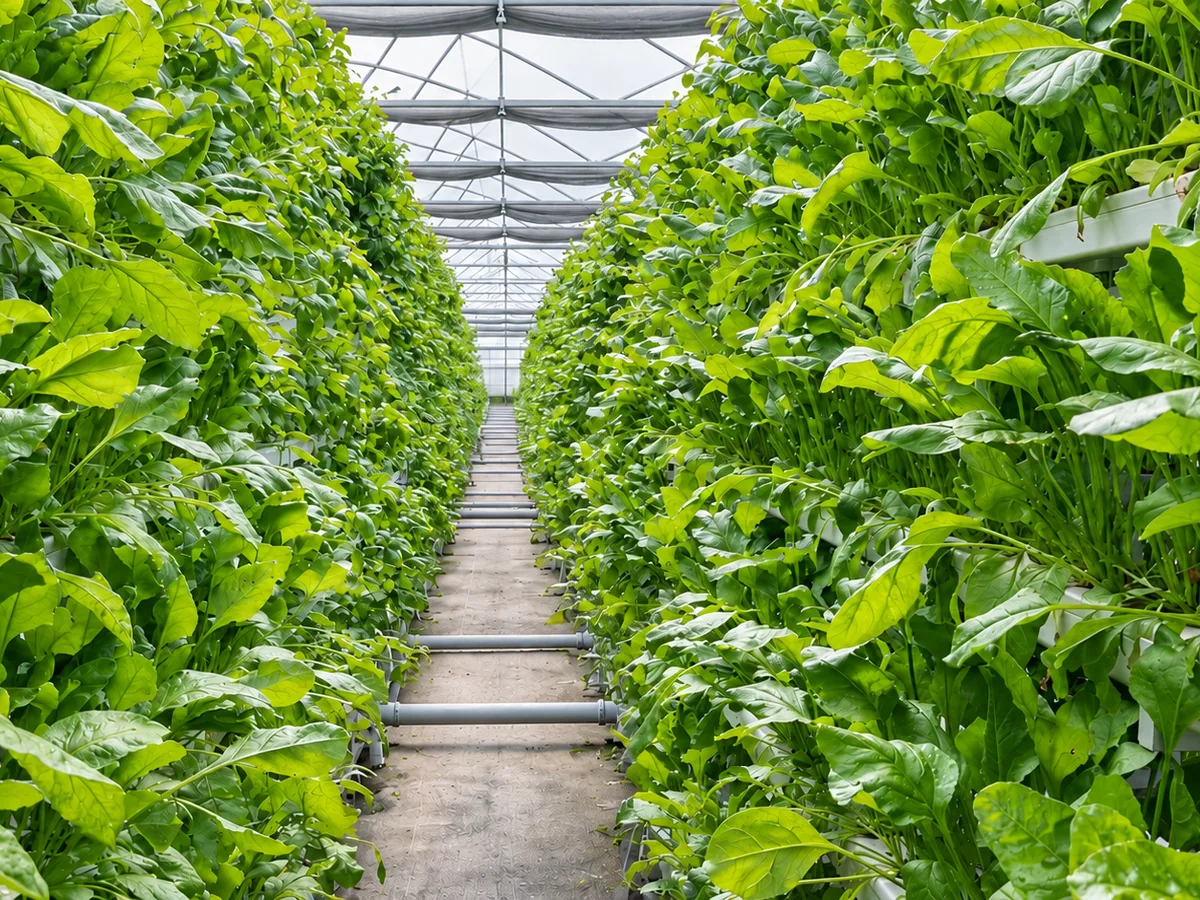
NFT A-frame
NFT channels on a vertical A-frame for more plants per m².
Best for: Lettuce, leafy greens, herbs
See nft a-frameNFT flatbed
NFT channels laid flat on tables, a thin film of solution flows past the roots.
Best for: Large leafy-green farms
See nft flatbed
Cocopeat grow bags
Plants in bags of cocopeat, fed by drip.
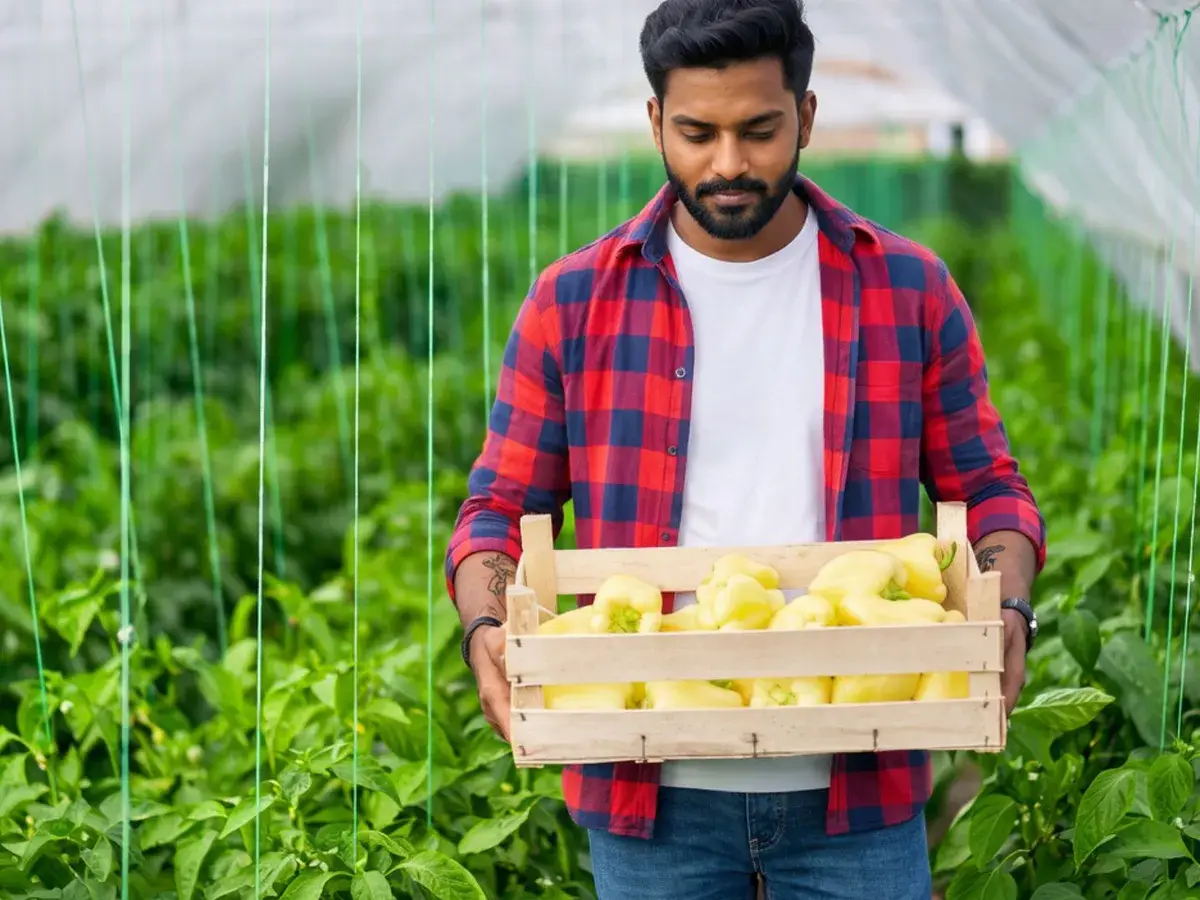
Best for: Capsicum, cucumber, tomato
See cocopeat grow bags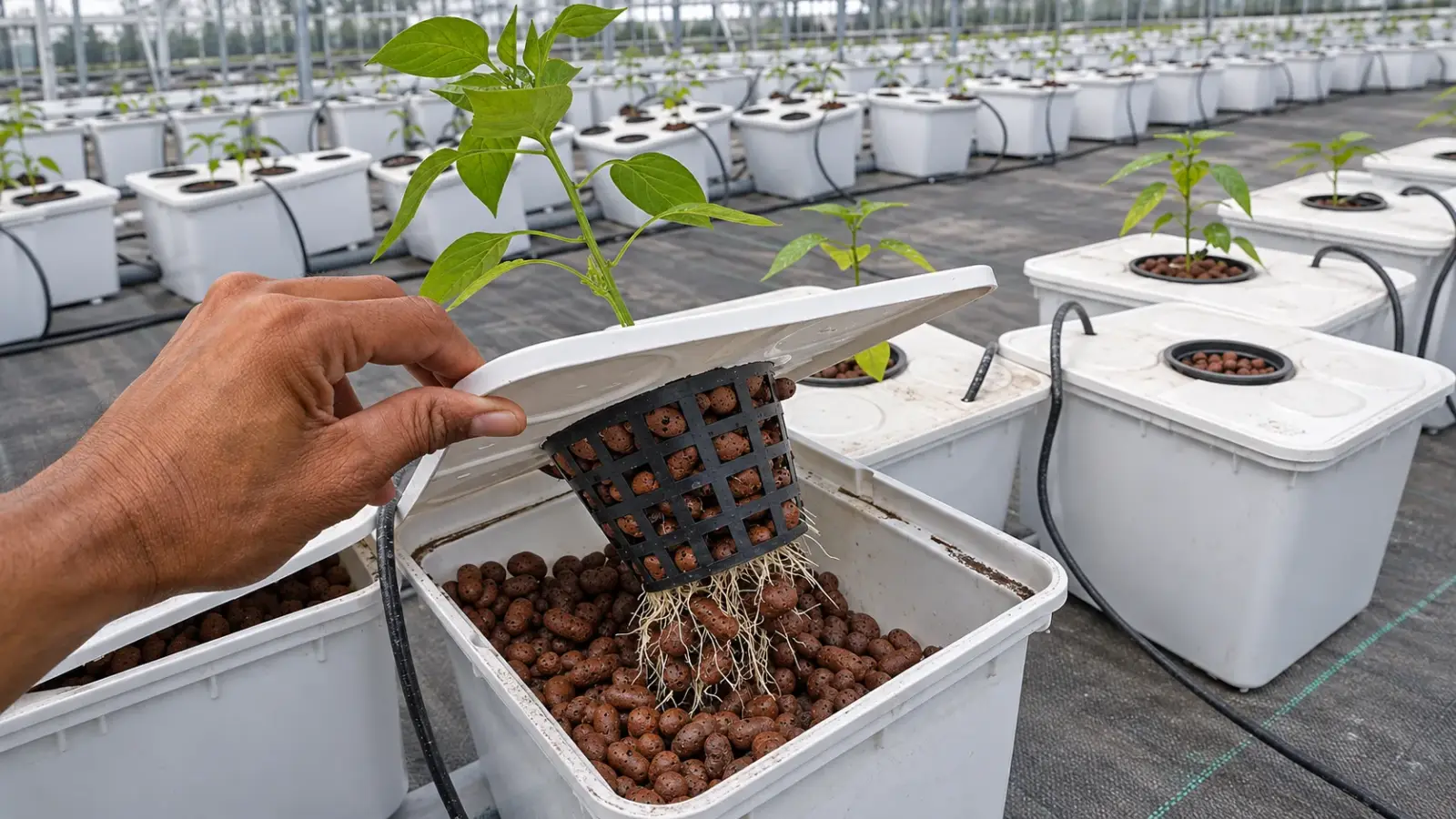
Dutch bucket
Buckets of perlite or clay balls, fed by drip.
Best for: Vine crops, large plants
See dutch bucket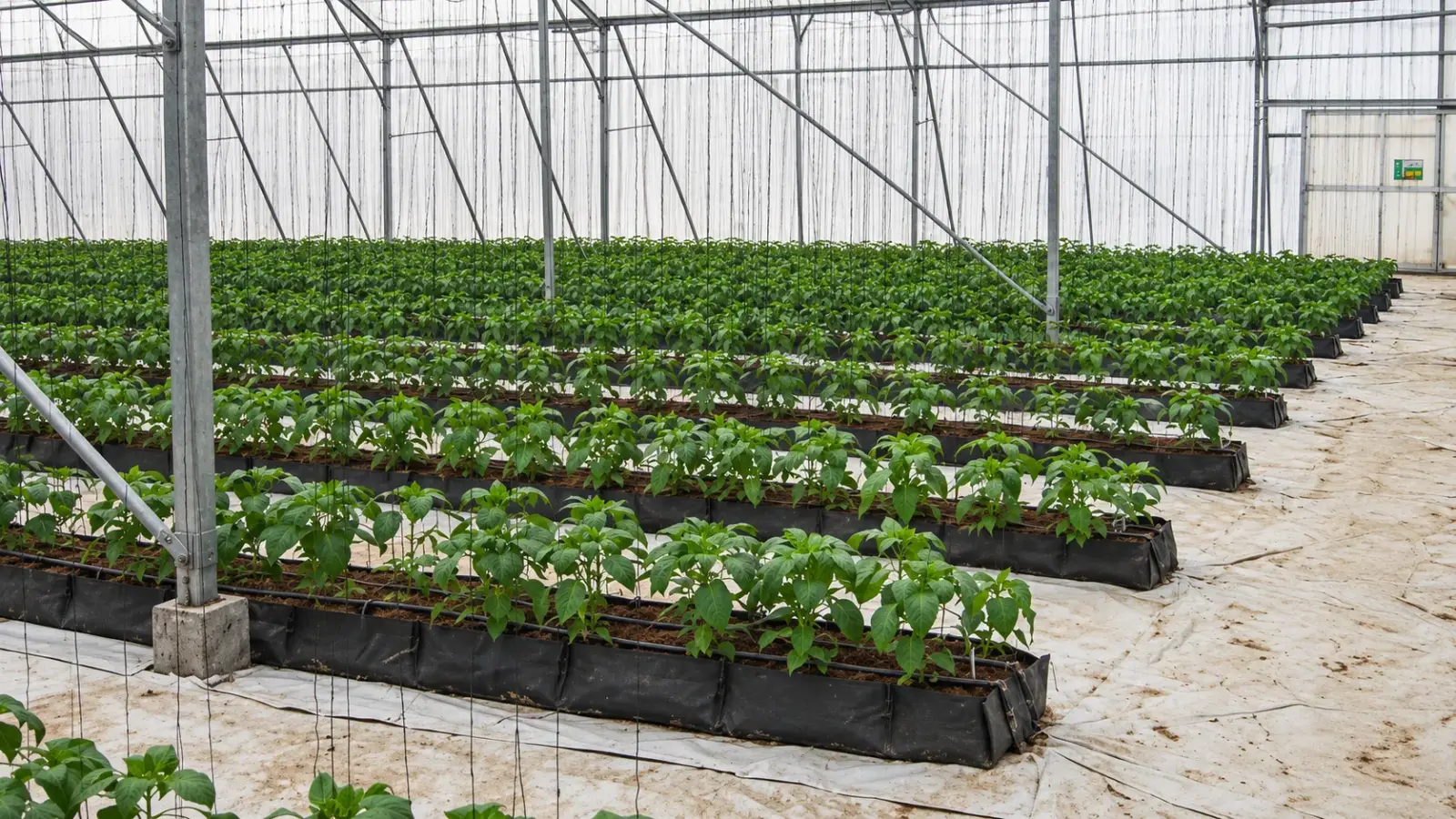
Trough
Long troughs filled with growing media.
Best for: Strawberry, herbs
See trough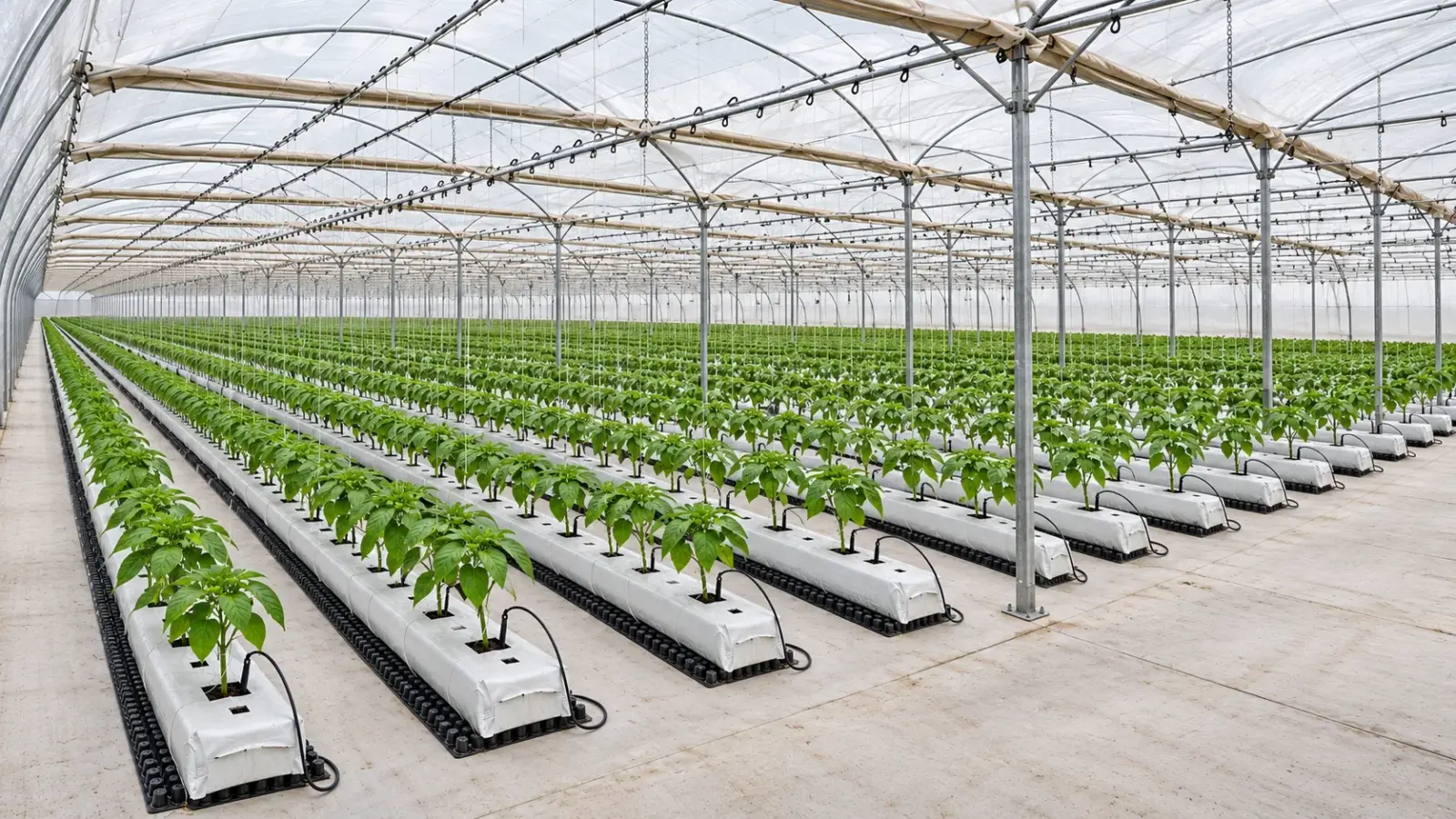
Cocopeat grow slab
Cocopeat slabs fed by drip, for uniform plantings.
Best for: Vine vegetables, roses
See cocopeat grow slab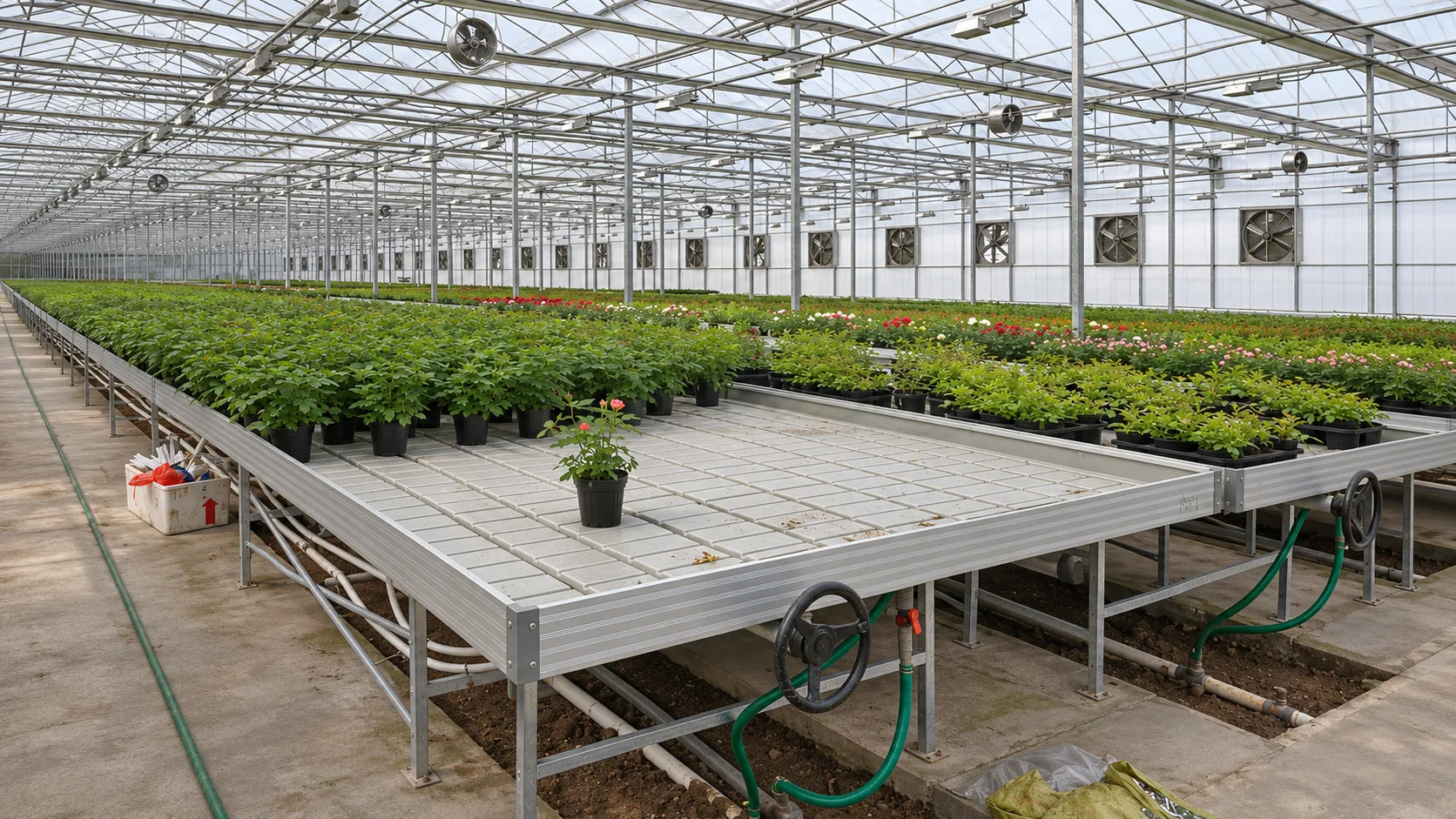
Ebb and flow
Trays flood and drain on a timer.
Best for: Nursery, potted plants, bonsai
See ebb and flowNot sure which system?
Leafy greens and herbs suit NFT. Fruiting vegetables suit grow bags or Dutch buckets. Strawberry suits troughs. Nursery plants suit ebb and flow.
Get a free consultation
Hydroponics vs regular farming
How hydroponics compares with soil farming
| Point | Hydroponics | Soil farming |
|---|---|---|
| Water use | Far less, with recirculation | High |
| Land needed | Less for the same output | More |
| Soil disease and weeds | Almost none | Common |
| Growing time | Faster | Normal |
| Production | Year-round in a polyhouse | Seasonal |
| Upfront cost | Higher | Low |
| Skills needed | Training needed (EC, pH, nutrients) | Traditional |
Why Kryzen hydroponics
Built, run and supported by one team
From design to harvest and selling, Kryzen stays with you.
Our own factory
Structures and systems are made and quality-checked in our own factory.
Growers ourselves
We run our own commercial hydroponic farms, so our designs are tested on real crops.
NHB subsidy provider
Registered NHB subsidy provider for all states, with realistic subsidy figures in your project report.
Training for your team
4 days of hands-on training for your workers at handover.
Agronomy support
6 months of virtual agronomy support after handover.
Software included
Alpha farm management, IoT automation and the nutrient calculator for your farm.
Help to sell
Contract buyers, quick commerce and Buyers Connect to sell your harvest.
350+ farms built
Projects across India, from small commercial farms to large corporate projects.
Hydroponic seeds and nutrients
The right seed and a balanced feed decide your yield
Hydroponic nutrients come in parts so the minerals do not react in the tank. They supply major nutrients (nitrogen, phosphorus, potassium, calcium, magnesium, sulphur) and micro nutrients (iron, manganese, zinc, copper, boron, molybdenum). Normal fertilisers can block drippers and miss key minerals.
Seeds
Polyhouse hybrids from leading seed brands, matched to your crop and market.
Nutrients
Two or three-part (A, B and C) nutrients with all major and micro elements, fully water-soluble.
Growing media
Washed, buffered cocopeat, perlite, clay balls, rockwool and net cups.
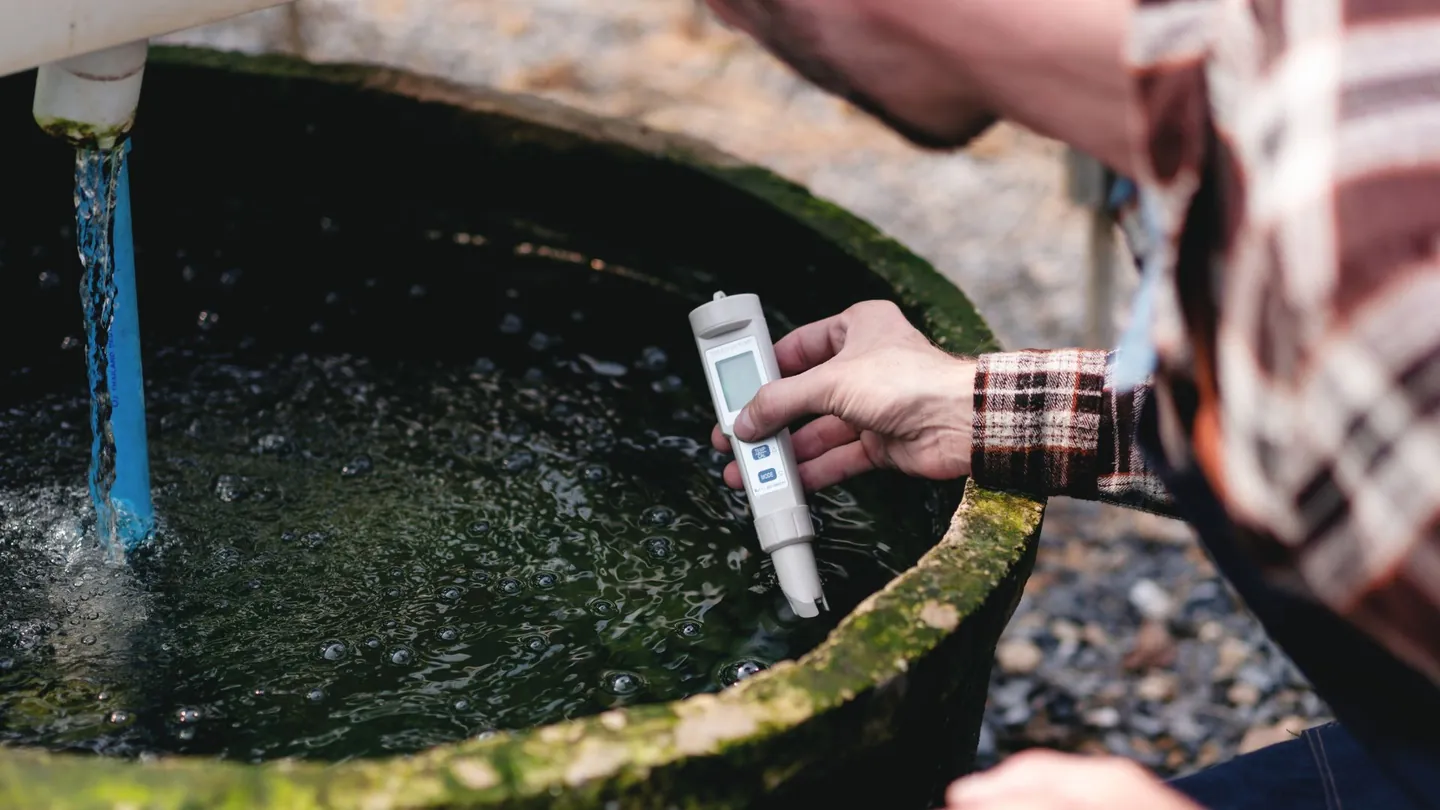
Testing tools
EC meter, pH meter, pH up and pH down, and TDS meter. Check EC and pH every day.
Pest management in hydroponics
Prevention is cheaper than cure
A protected farm with good hygiene has far fewer pest problems.
Keep pests out
Maintain insect net, doors and the double-door ante-room. Use the foot dip, bring in only clean seedlings and remove weeds around the structure.
Scout every week
Walk every row, check under leaves and count insects on sticky traps. Record what you see in the Alpha app.
Control safely
Use biological controls and approved, low-residue products first. Follow the label dose and the waiting period before harvest.
Clean between crops
Flush and sanitise channels, tanks and drippers between cycles, and replace used media where needed.
Common pests and diseases
| Problem | Signs | First action |
|---|---|---|
| Thrips | Silver streaks, curled leaves | Blue sticky traps; remove affected leaves |
| Whitefly | Tiny white insects under leaves | Yellow sticky traps |
| Mites | Fine webbing, yellow dots | Raise humidity; targeted control |
| Aphids | Clusters on new growth | Wash off; biological control |
| Powdery mildew | White powder on leaves | Improve air flow; reduce humidity |
| Root rot (Pythium) | Brown, slimy roots | Cool, aerated solution; clean the system |
See full guides in the Agronomy Wiki.
How we build
From first call to first harvest
Ten steps in three phases, with one team from start to finish. Most hydroponic farms are built in 45 to 90 days after material reaches the site.

Phase 1Plan Consultation, site inspection, design and finance
- 1
Free online consultation
We discuss your land, water, budget and goals on a video or phone call.
- 2
Site inspection
Our team checks level, slope, sunlight, soil, water, power and road access.
- 3
Design and quotation
We design for your climate, crops and hydroponic system, and share a detailed quotation.
- 4
Project report and finance
We prepare the DPR for your bank loan and subsidy file.
- 5
Subsidy and loan
We help you apply for NHB or NHM subsidy and your bank loan.
- 1
Phase 2Build Manufacturing, construction and handover
- 6
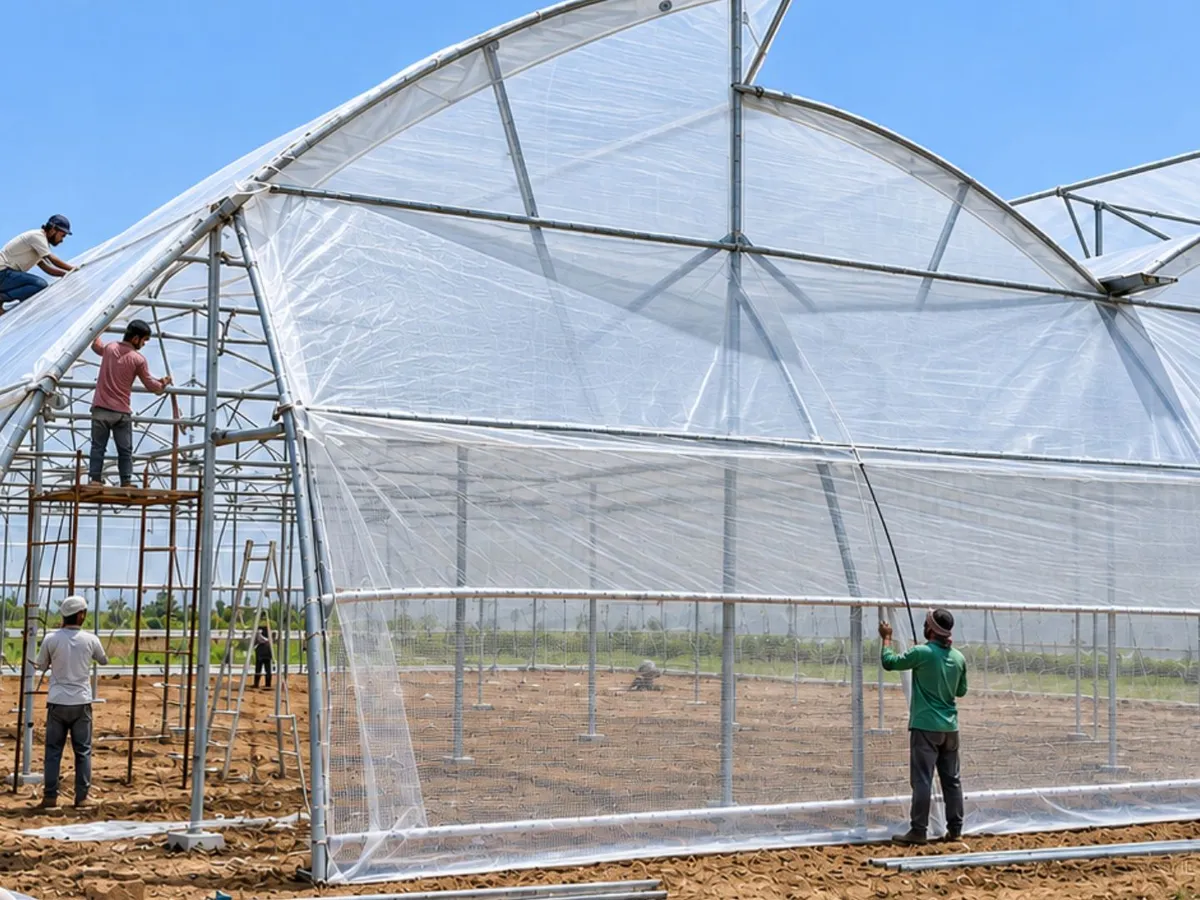
Manufacturing
We cut, shape and quality-test the material at our factory in Satara.
- 7
Construction
Our team builds the foundations, structure and hydroponic systems on your land.
- 8
Testing and handover
We test every pump, channel and dripper and hand over a working farm.
- 6
Phase 3Grow Training, agronomy and selling
- 9
Training and agronomy
Hands-on training for your team and 6 months of virtual agronomy support.
- 10
Harvest management
We help you plan harvests, grading and sales, with prices from Price Watcher and buyers through Buyers Connect.
- 9
Learn hydroponics
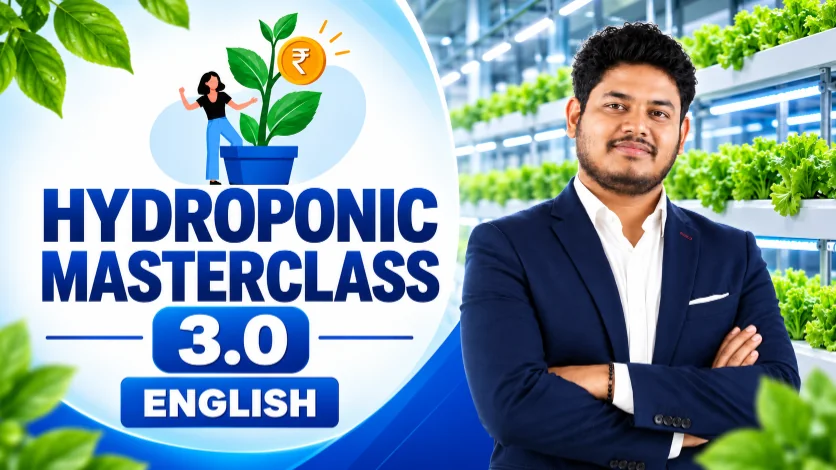
Want to learn hydroponics? Join the Hydroponic Masterclass
Our online course takes you from the basics of soil-less farming to running a profitable hydroponic farm, taught by the founders of Kryzen.
Everything in one course
System design, nutrient management, crop cultivation, protected farming, greenhouse operations and building a hydroponics business.
Learn your way
On-demand videos, practical farm experience and live Q&A sessions, on any device.
Taught by growers
Sudhir Devkar and Priya Devkar, engineers who became hydroponic farmers and founded Kryzen.
Lifetime access
Learn at your own pace, with regular content updates and a certificate of completion.
Is hydroponic farming profitable in India?
It can be, when the crop, market and system are matched and the farm is well managed.
Do I need a polyhouse for hydroponics?
For commercial farming in most of India, yes. A polyhouse or nethouse protects plants from rain, heat and pests.
Which hydroponic system should I choose?
NFT for leafy greens and herbs, cocopeat grow bags or Dutch buckets for fruiting vegetables, troughs for strawberry and ebb and flow for nursery plants.
Can I get a subsidy for hydroponics?
Hydroponic projects inside eligible protected structures can apply under NHB, NHM/MIDH and AIF. Check current rules with your state.
Can I use normal fertiliser in hydroponics?
No. Hydroponic plants need fully water-soluble nutrients with all micro elements.
How often should I check EC and pH?
Every day.
Do hydroponic farms have fewer pests?
Usually yes, because there is no soil and the crop is inside a protected structure. But pests can still enter and spread fast without good hygiene.
What does it take to learn hydroponics?
You need to learn EC, pH, nutrients and crop care. The Kryzen Hydroponic Masterclass and practical farm training cover these.
Talk to our team
Plan your hydroponic farm with us
Tell us your land, water and market. We’ll suggest the right structure, hydroponic system and crops, and share a detailed quotation.