Protected cultivation · Shade net house
Nethouse
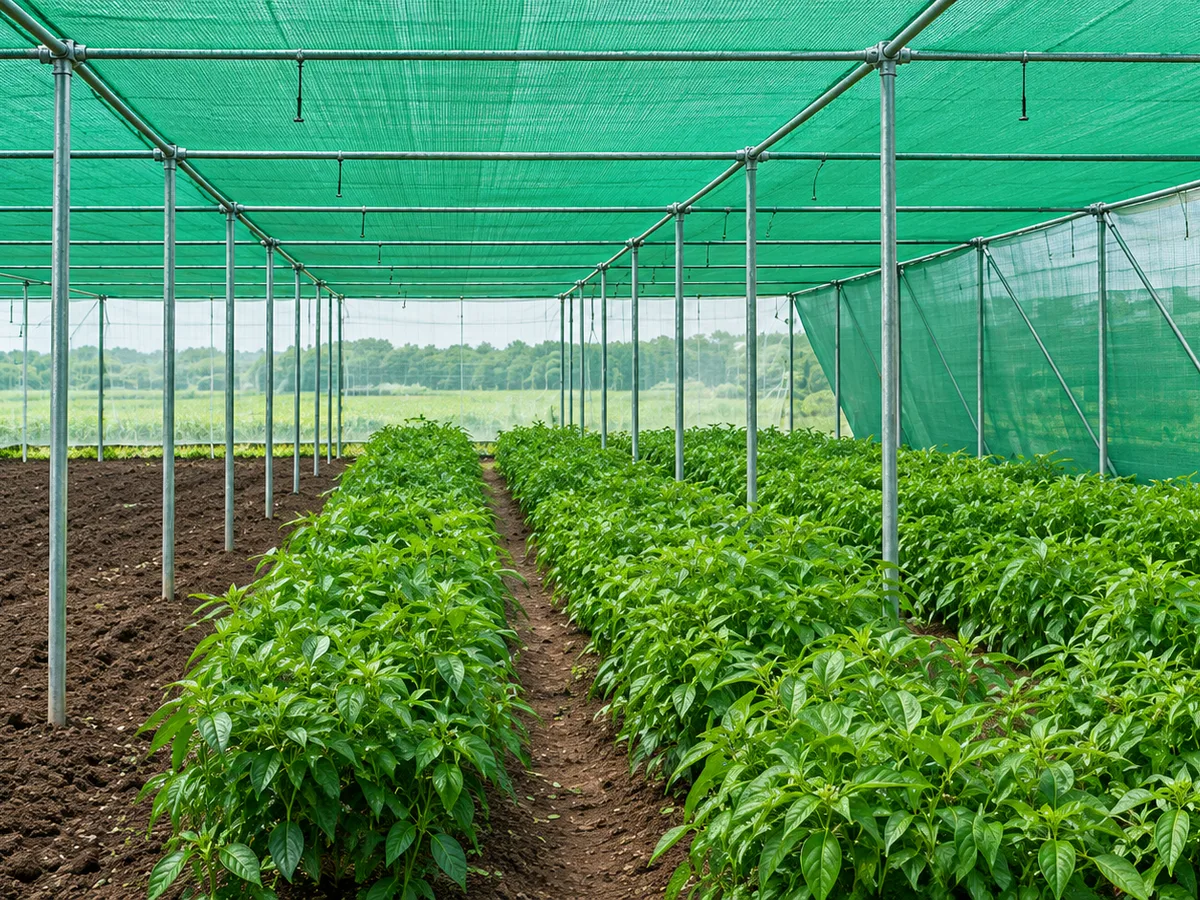
A GI steel frame covered with shade net on top and insect net on the sides. It cuts harsh sun, keeps out most insects and protects crops from wind and hail. The lowest-cost way to start protected farming, built on your land by Kryzen.
350+farms built by Kryzen across India
Cooler, shaded crop
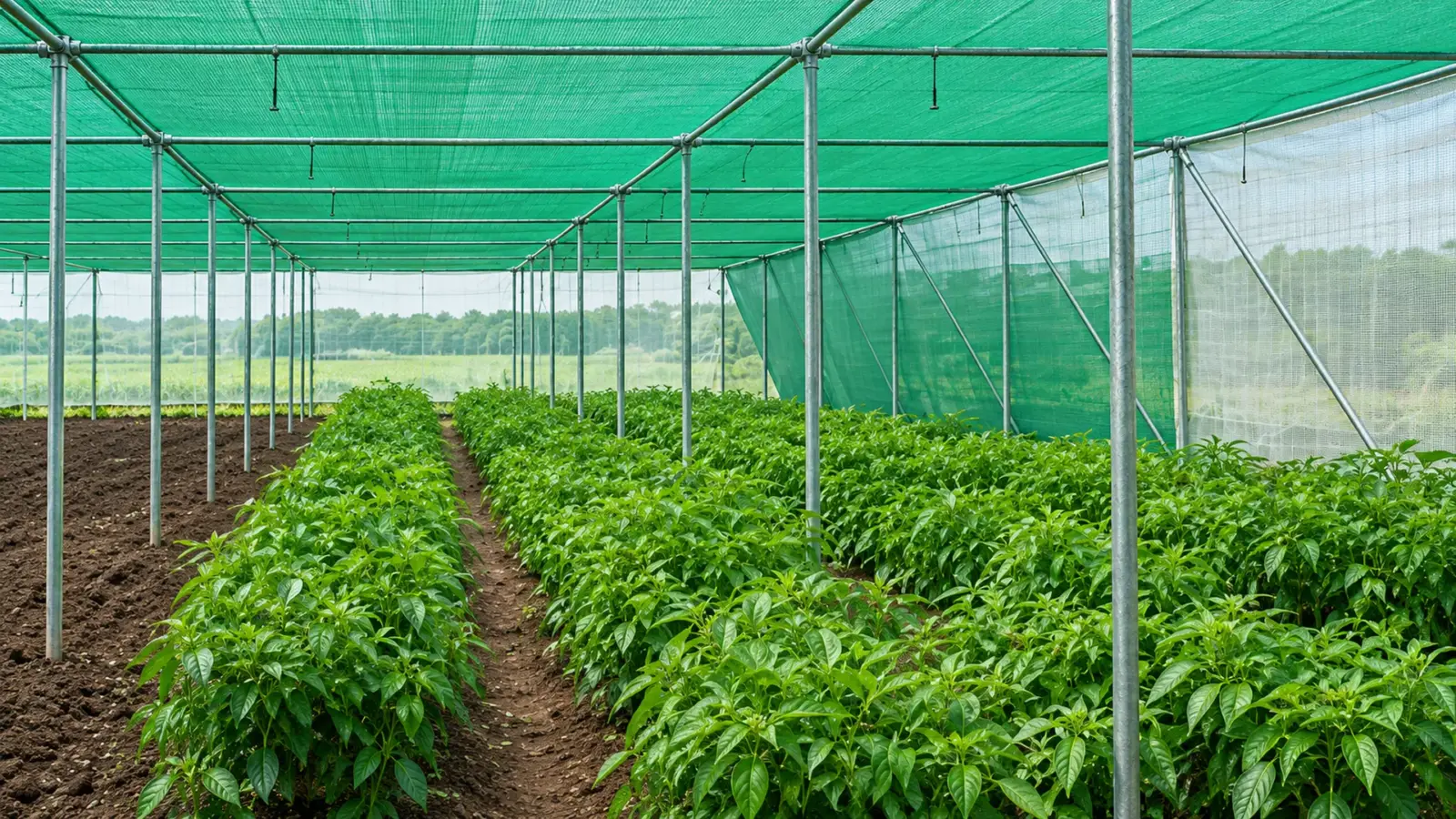
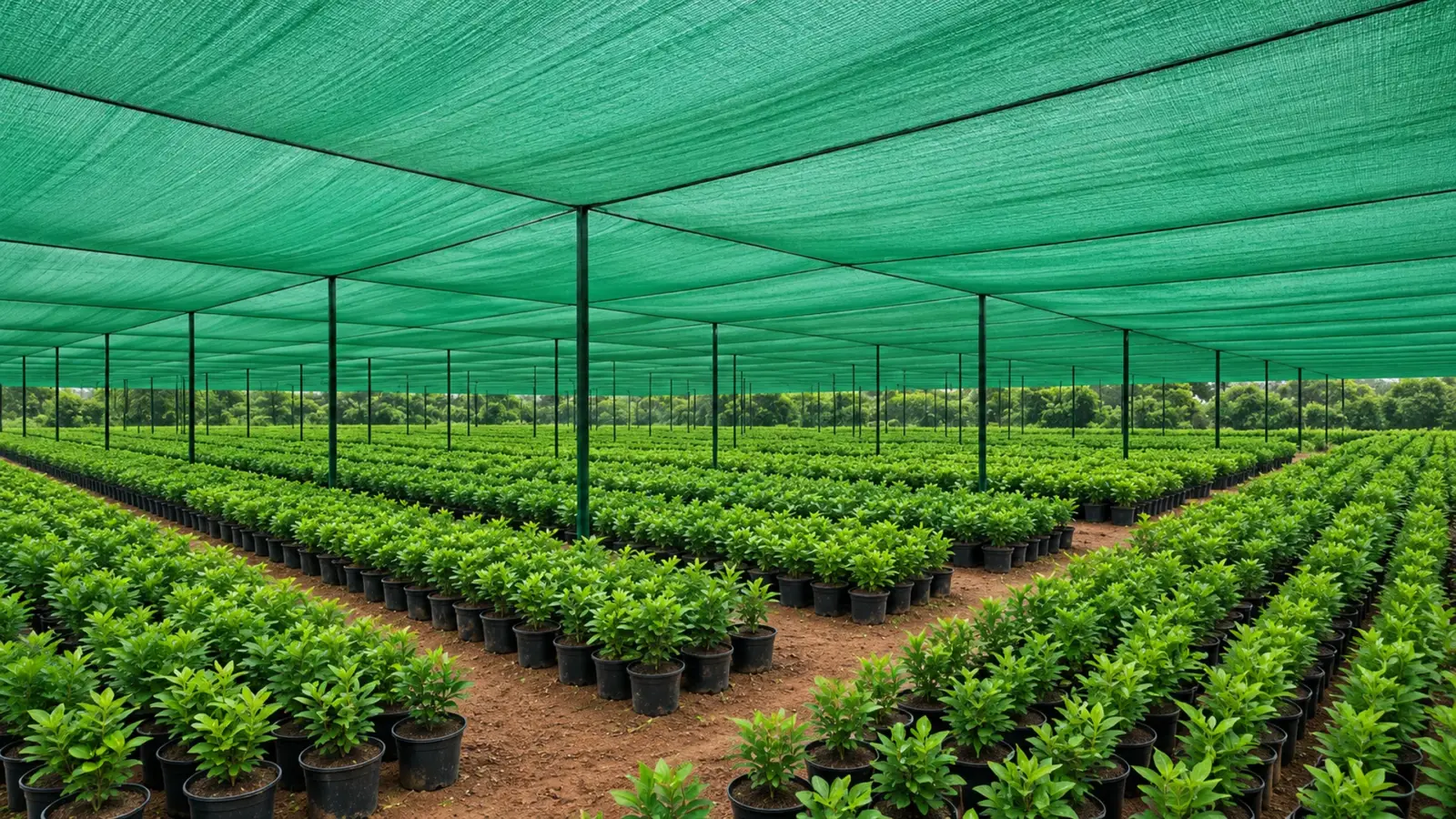
Shade net cuts harsh sun and lowers leaf temperature through Indian summers.
Fewer pests, fewer sprays
40-mesh insect net on the sides keeps most flying pests away from your crop.
Lowest-cost protection
The most affordable way to start protected farming, with no fans or film to run.
What is a nethouse?
Shade on top, insect net on the sides
Quick answer
A nethouse, also called a shade net house, is a galvanised steel structure covered with shade net and insect net instead of plastic film. It reduces sunlight and heat, keeps most insects out and protects plants from wind and hail. It costs much less than a polyhouse and is simple to run, but gives less protection from heavy rain and cold.
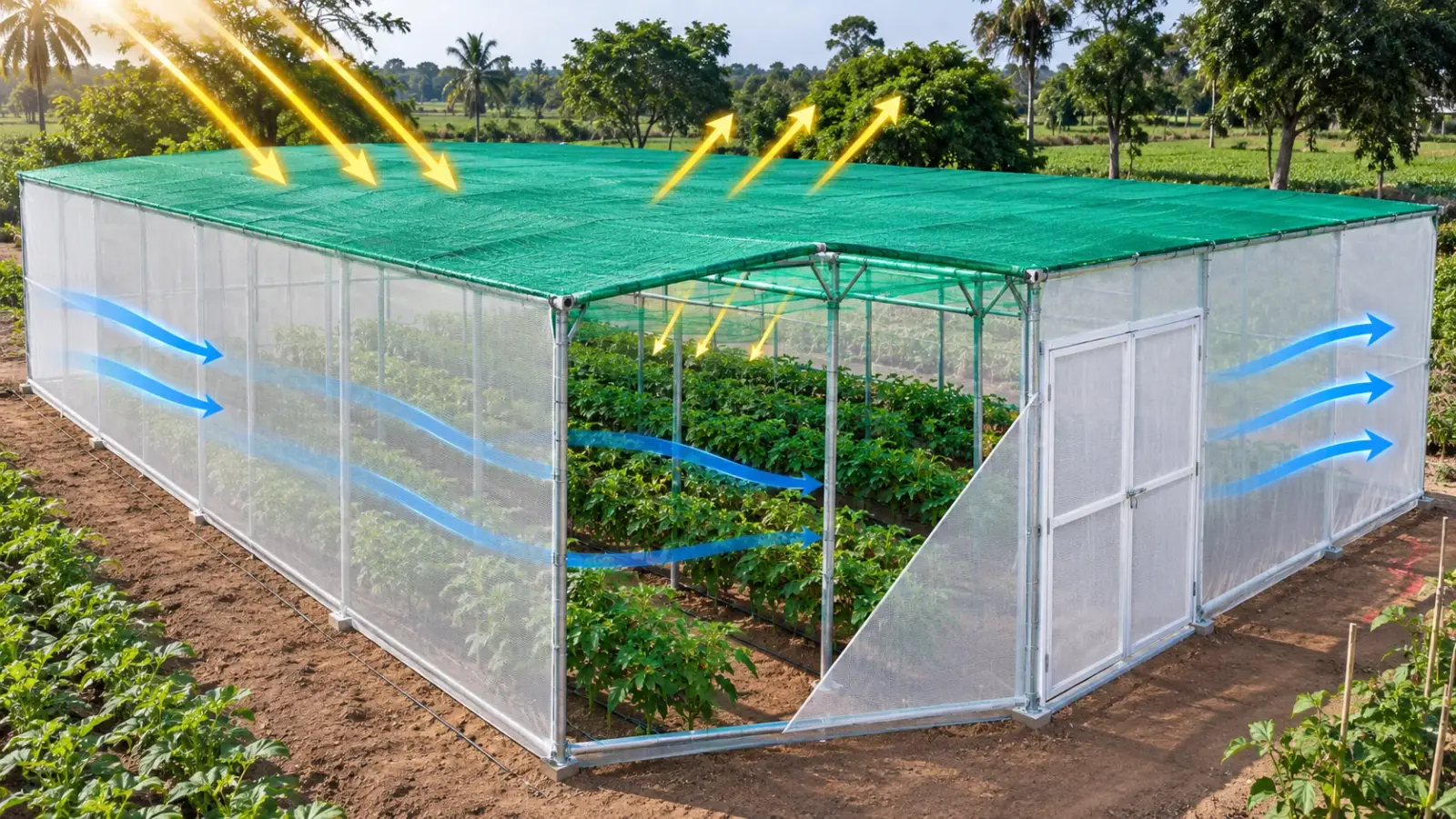
Because the net lets rain and air through, a nethouse stays cooler than a naturally ventilated polyhouse but protects less from rain. It suits cucumber, capsicum, tomato, leafy greens and nurseries in warm regions.
What a nethouse is made of
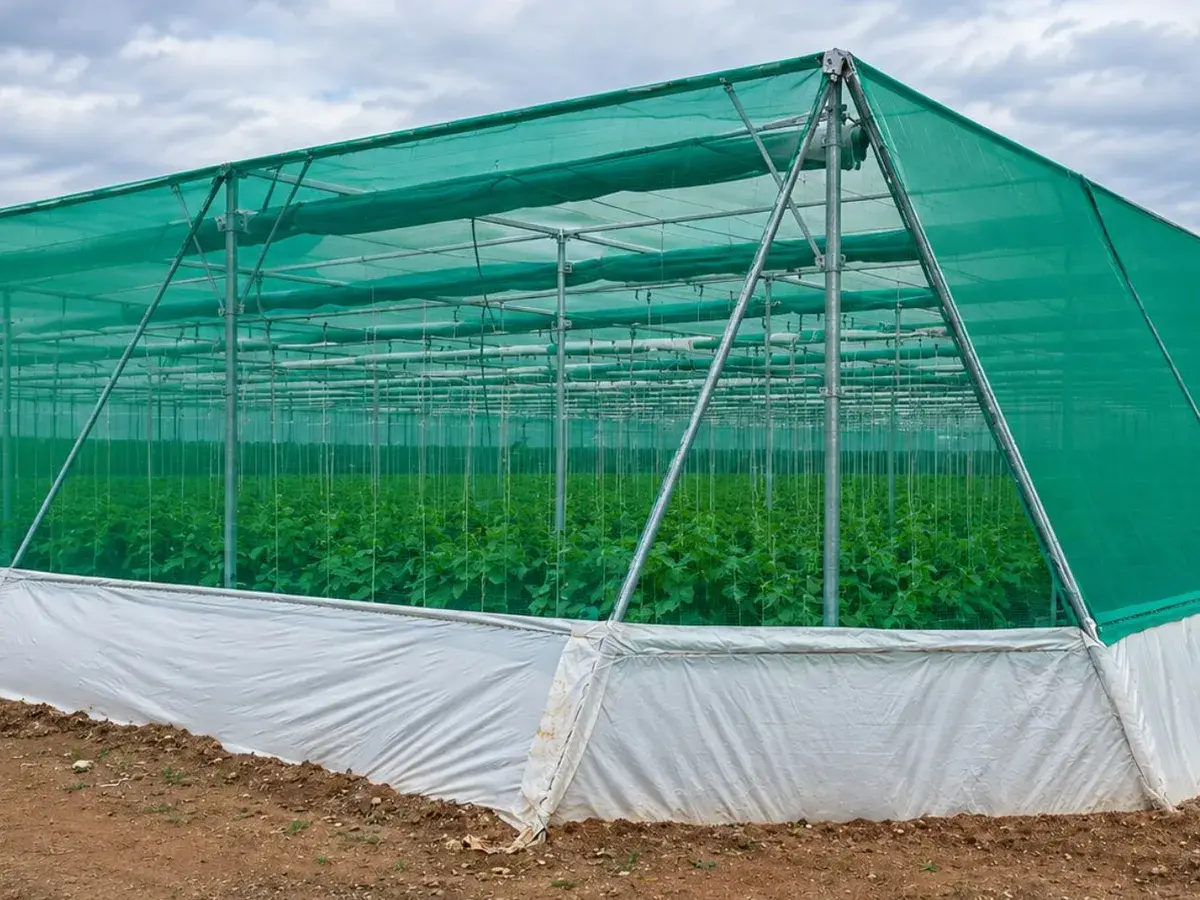 01
Shade net roof
UV-stabilised shade net on top blocks part of the sunlight, so leaves stay cooler and do not scorch.
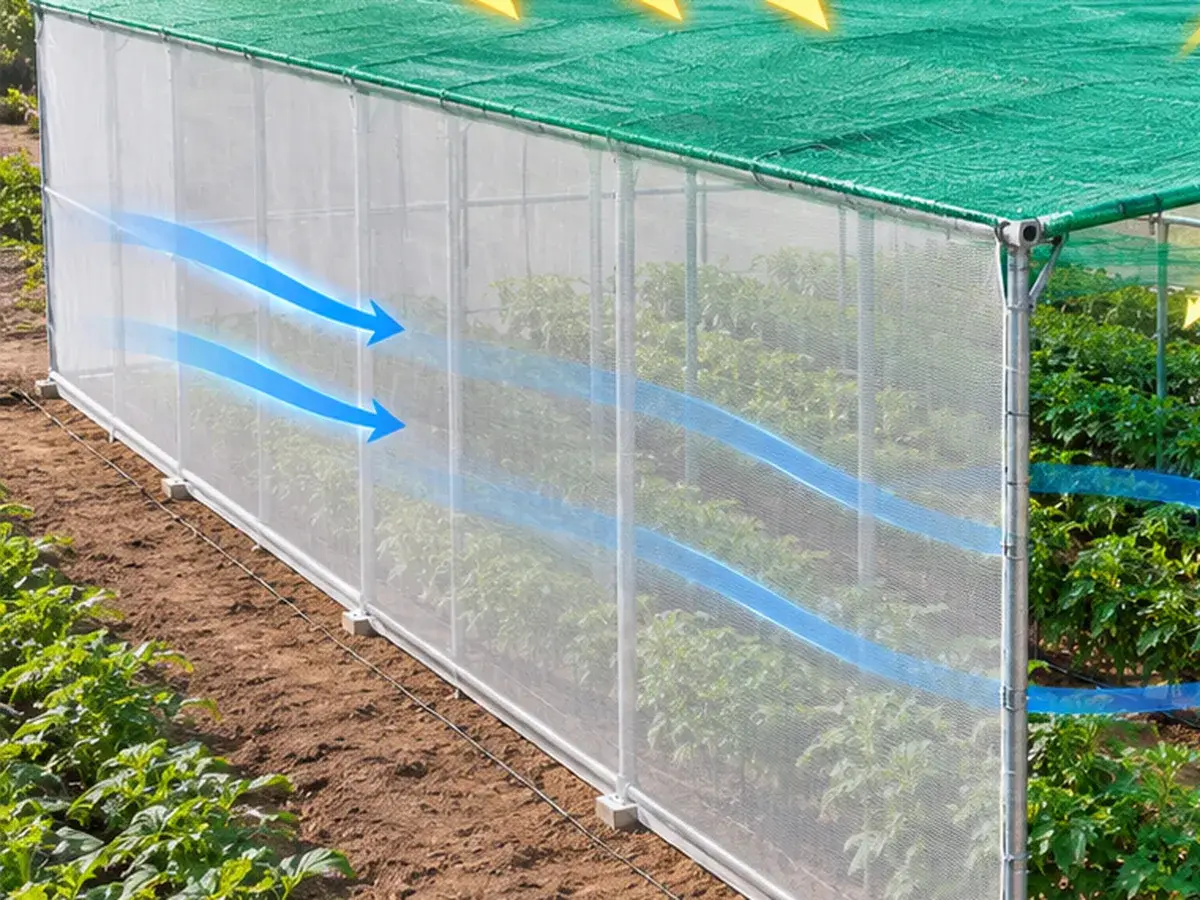 02
Insect net sides
40-mesh insect net closes the sides, keeping most flying pests out while air moves through.
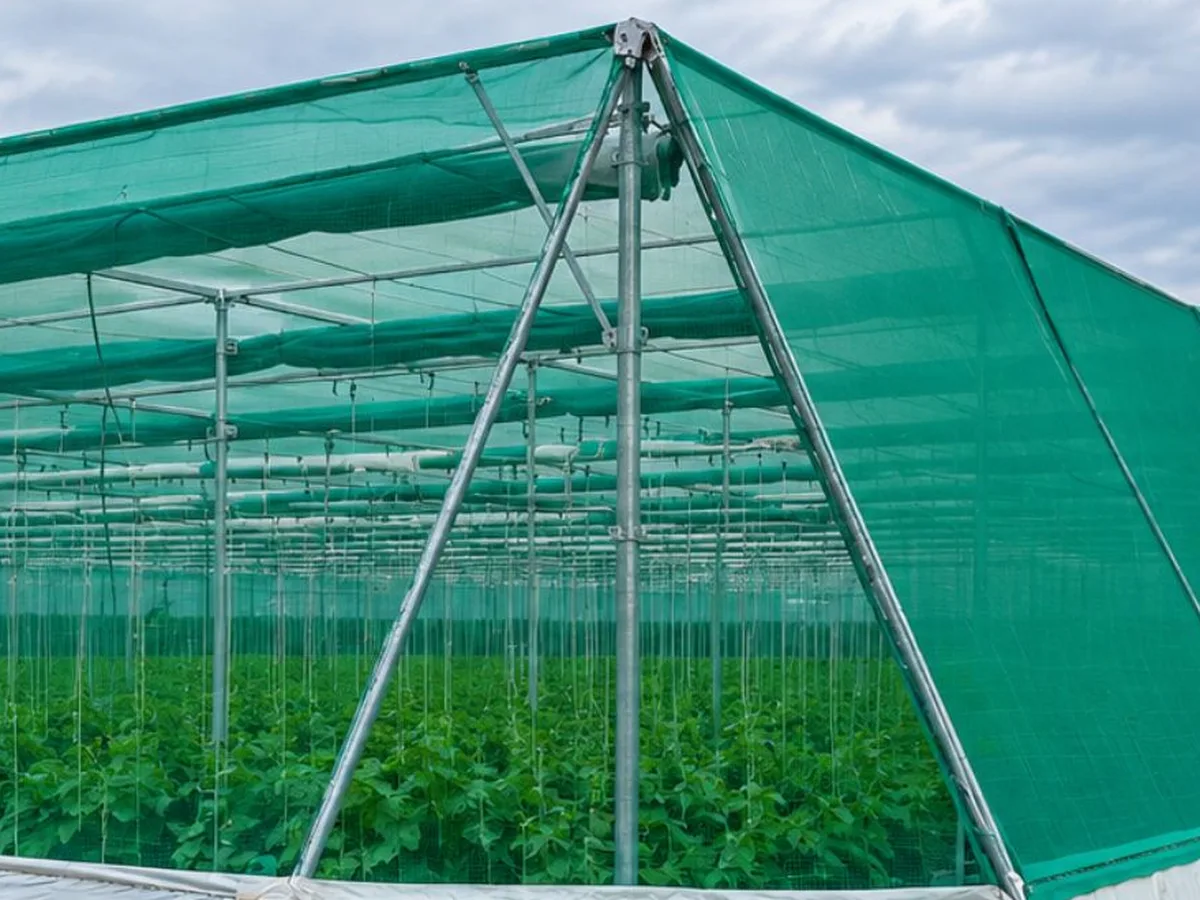 03
GI steel frame
Galvanised steel pipes and wires hold the nets tight and take the load of wind and hail.
Choose your design
Types of nethouse
Two designs. We recommend one after seeing your land, wind and rainfall.
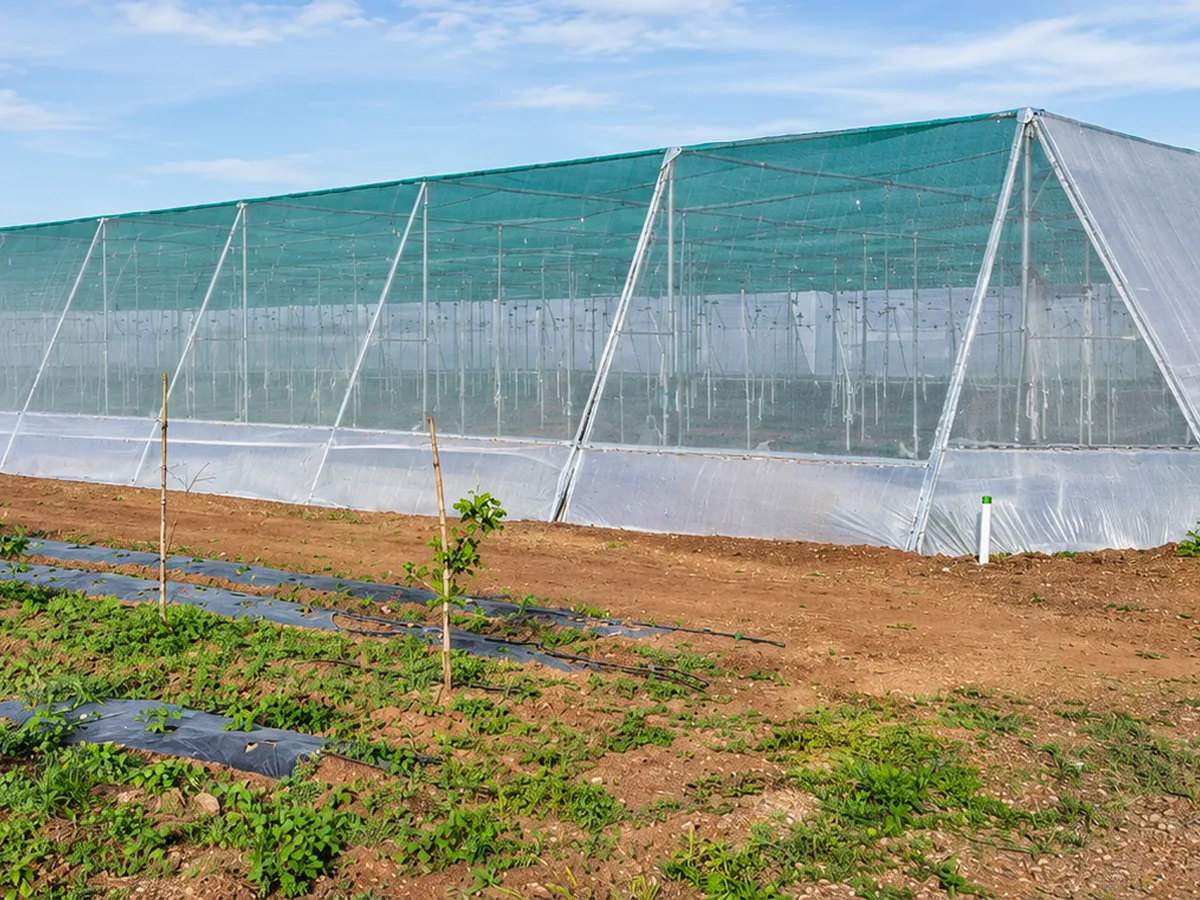
Flat-roof nethouse
A flat net roof on a grid of GI pipes and tensioned wires.
Best forLarge, low-cost vegetable farms on level land
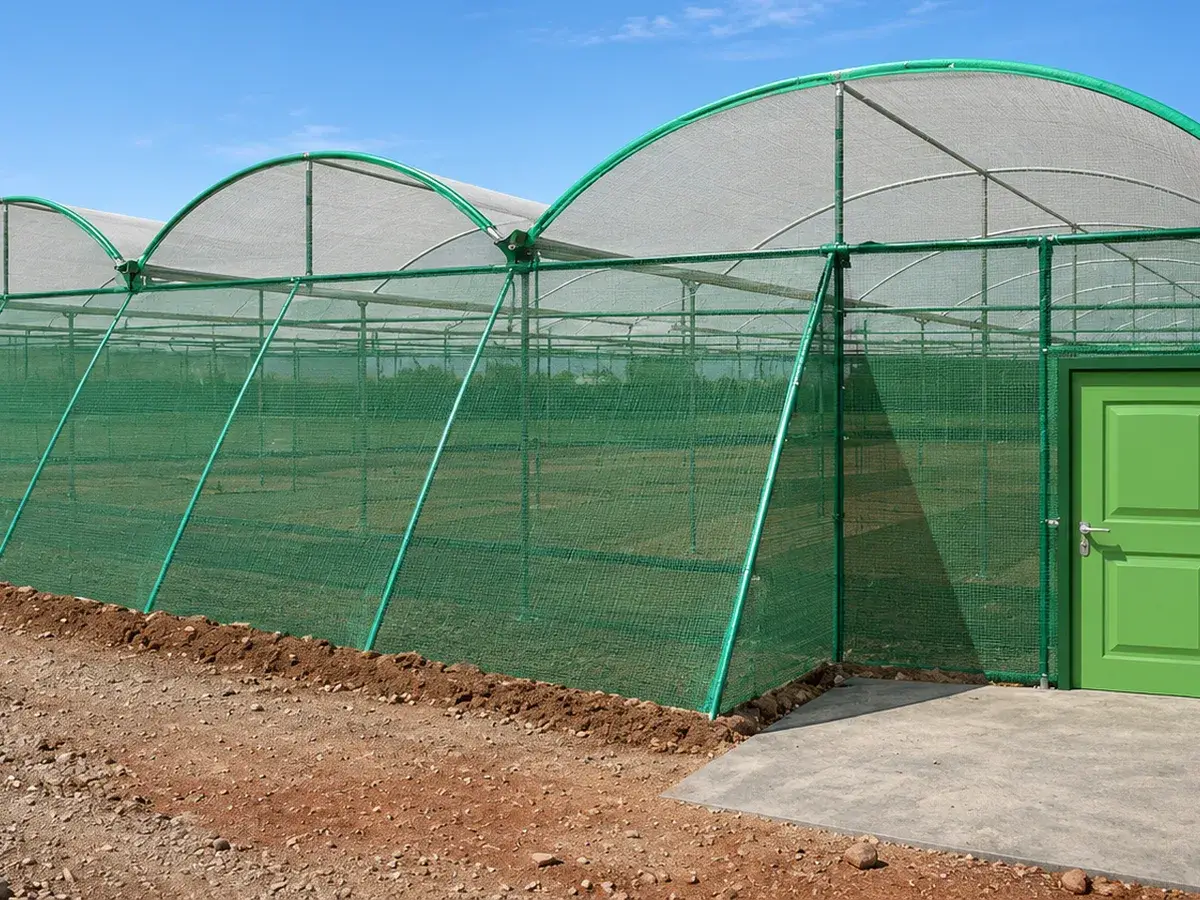
Dome nethouse
A curved roof like a tunnel, which sheds rain and wind better.
Best forWindy and rainy areas, and a longer life
Roof and purlin options
Cable purlin
Tensioned GI cables hold the roof net between the columns.
Best forLower cost; suits sites with low wind
Pipe purlin
GI pipes in place of cables hold the roof net in shape under load.
Best forExposed, windy plots and a longer life
Single layer
One shade net on the roof.
Best forMost vegetable and nursery farms
Double layer
A second net under the roof: 50% white shade net or 50% aluminet.
Best forVery hot regions and heat-sensitive crops
Shade net
Pick the right shade factor
The shade factor is how much sunlight the net blocks. A 50% net blocks half the light. Kryzen chooses it for your crop and climate.
See the difference
 30%
 40%
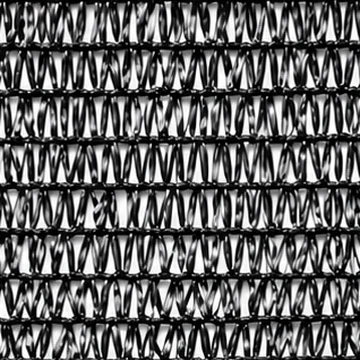 50%
 60%
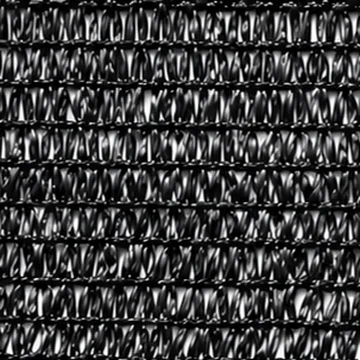 70%
 80%
 85%
 90%
Denser knit, more shade80–90%: not for agriculture
Shade % guide: what works for your crop?
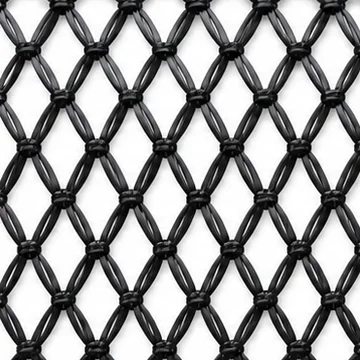
35%
Light shade
Tomato, capsicum, cucumber and leafy greens, which need plenty of light.

50%
Widely used in India
Nurseries, young orchard plants and spices such as turmeric and ginger.
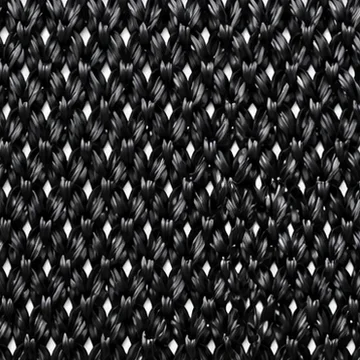
75%
Heavy shade
Flowers such as rose, gerbera and carnation, and crops that scorch in strong sun.
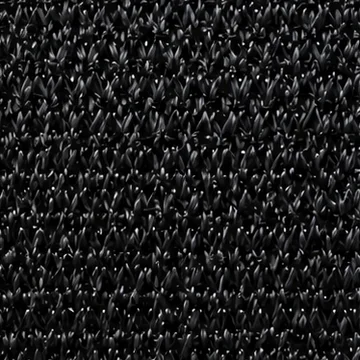
80–90%
Not for agriculture
For extreme heat, parking and domestic shade. Too dark for most crops.
Shade net types
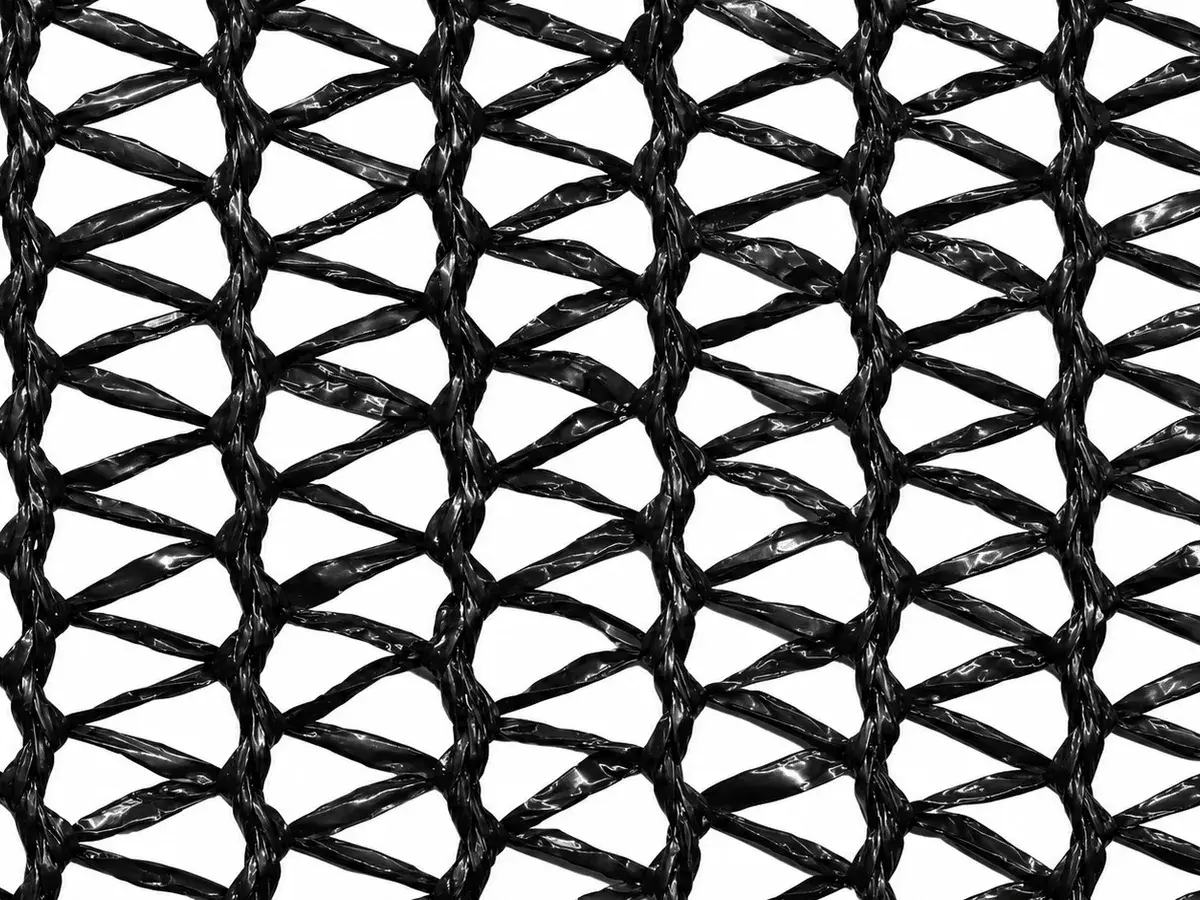
Tape × tape shade net
Woven from flat HDPE tapes. Economical and widely used for vegetables, flowers and nurseries.
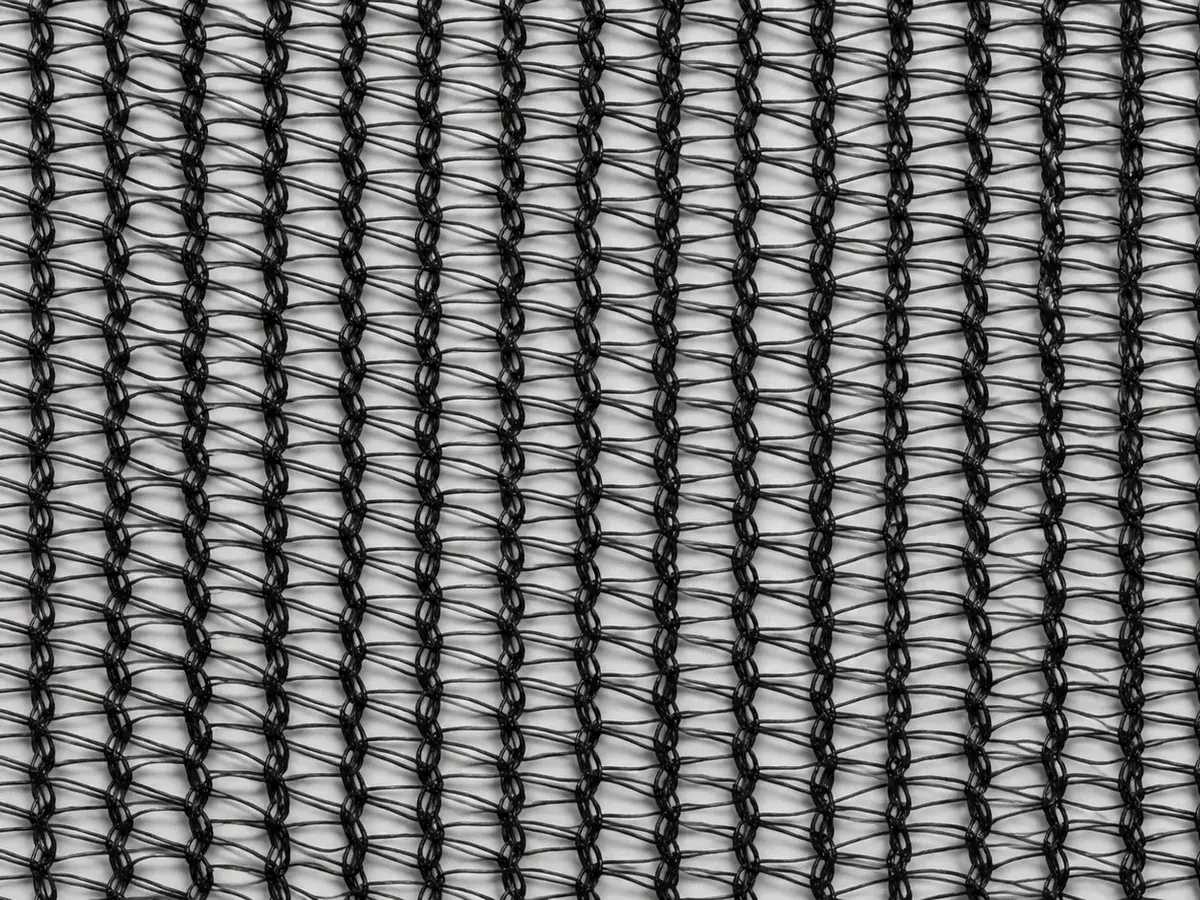
Mono × mono shade net
Woven from round monofilament threads. Stronger and holds its shape longer on large nethouses.
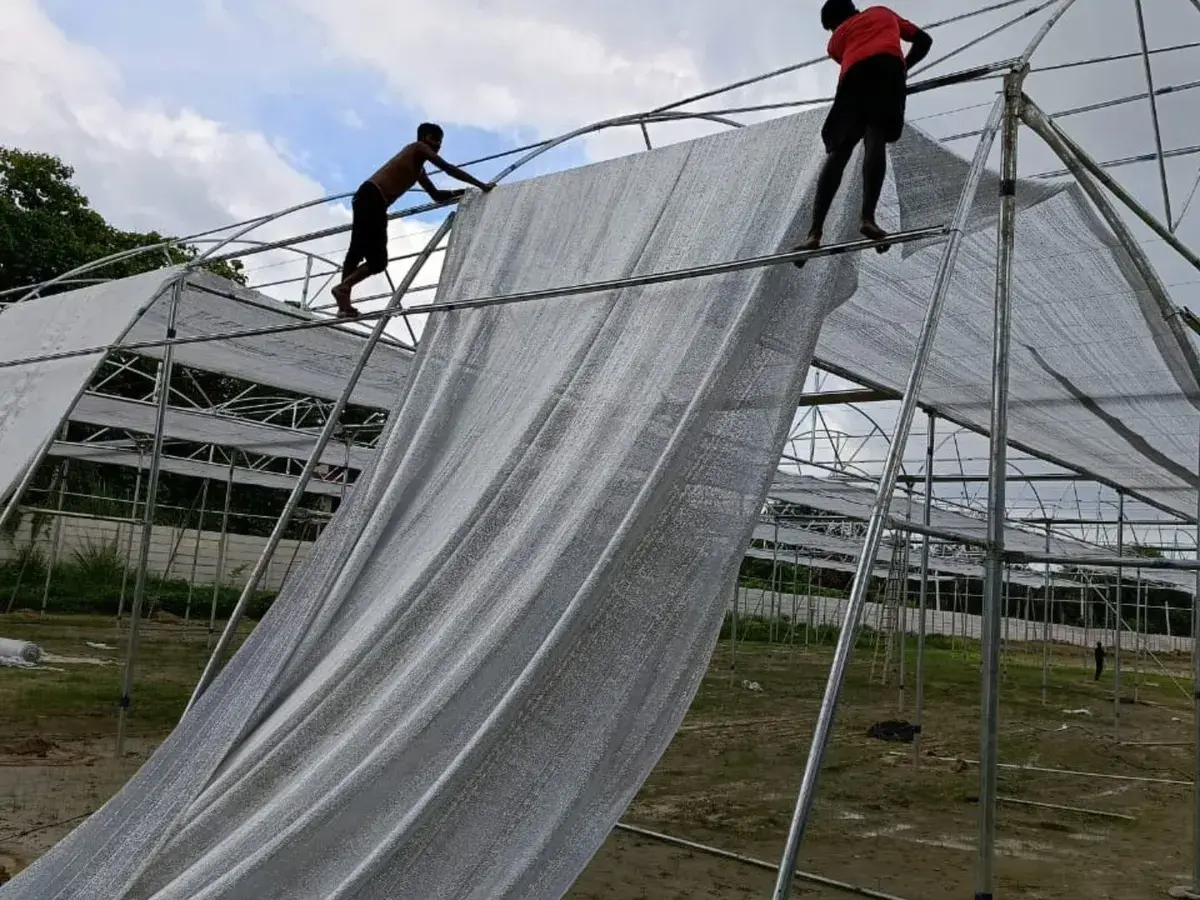
Aluminet (add-on)
Aluminium-coated shade net that reflects heat. It keeps the crop cooler in summer and holds some warmth on winter nights.
Which shade net fits your farm?
| Product | Material | Shade / weight | UV life | Best for |
|---|---|---|---|---|
| Tape × tape | Virgin HDPE | 35–75% shade | 3 years | Vegetables, flowers, nurseries |
| Mono × mono | Monofilament HDPE | 100–125 GSM | 3 years | Nethouses, greenhouses (BIS approved) |
| Aluminet | Aluminium-coated | 50% or 80% shade | 4 years | Floriculture, horticulture |
Colour options

Green
Blends with the farm and gives soft, even shade. Popular for nurseries and vegetables.
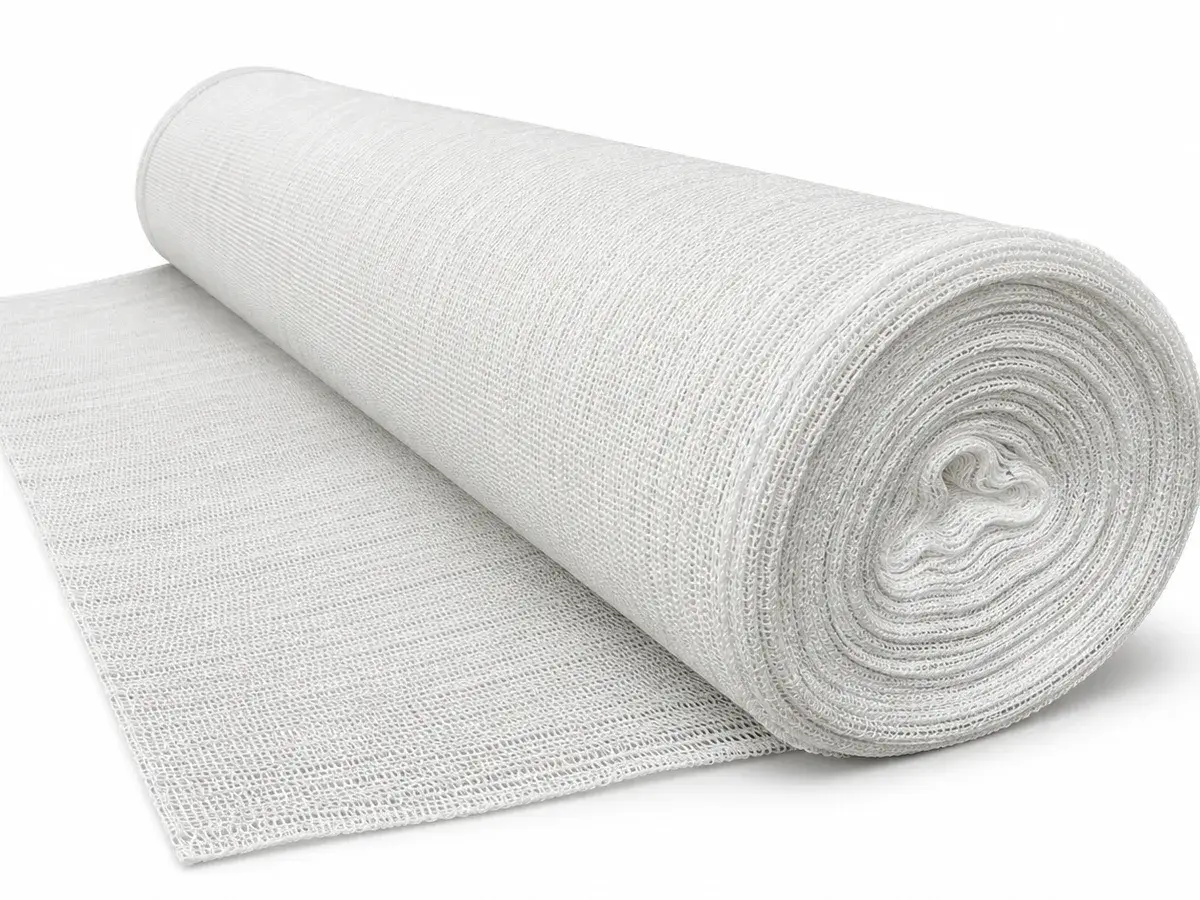
White
Reflects more heat and spreads light evenly, so the crop stays cooler under the net.
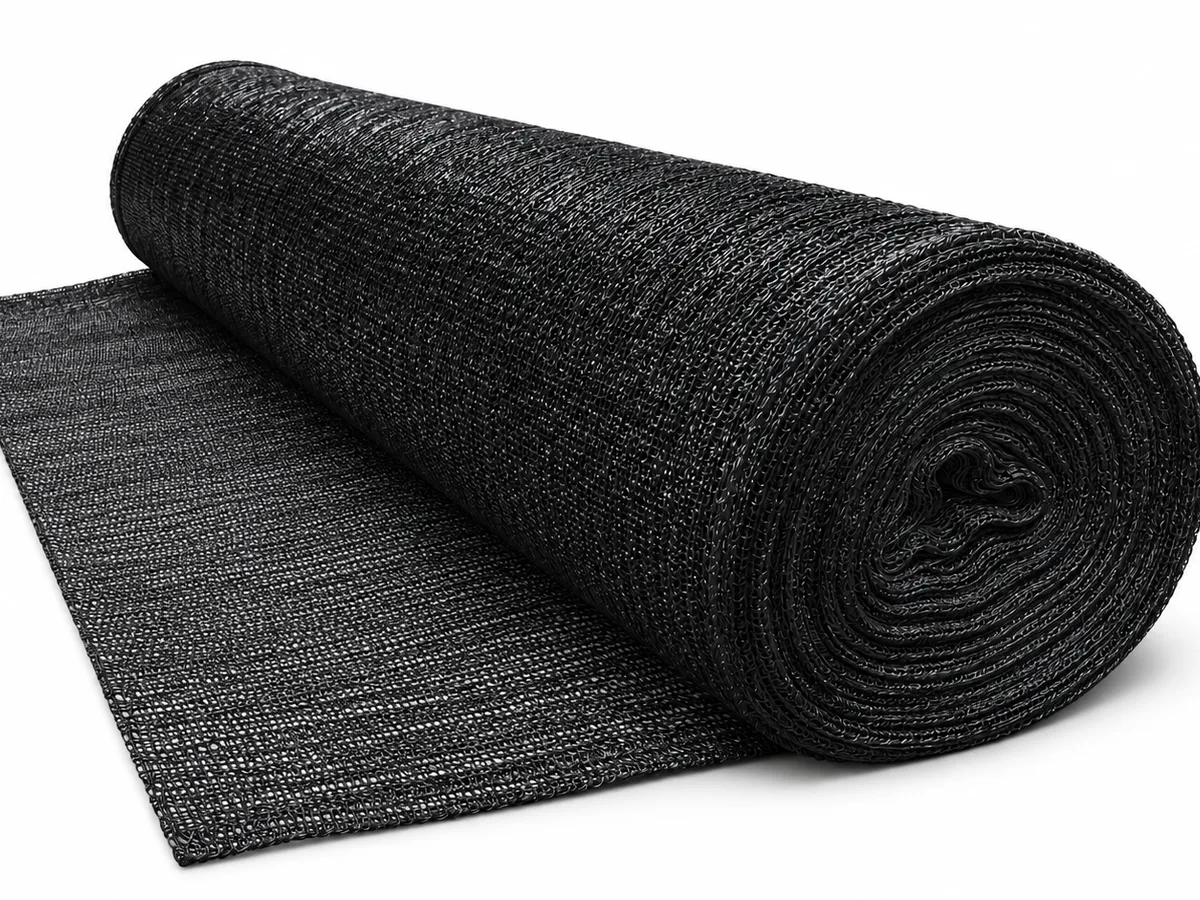
Black
The most widely used colour. Gives the full rated shade and lasts well in strong sun.
All our shade nets are UV-stabilised. We suggest a colour for your crop and climate.
Compare shade nets
Monofilament vs tape shade net
Both are UV-stabilised HDPE and give the same shade. The difference is how the net is made, and that decides how strong it is and how long it stays tight.
Tape netFlat tapes
Monofilament netRound threads
| Point | Tape net | Monofilament net |
|---|---|---|
| Thread | Flat HDPE tapes, woven or knitted | Round monofilament HDPE threads |
| Strength | Good | Stronger |
| Stretch | Can stretch and sag over time | Does not stretch, so it stays tight on the frame |
| Wind and weather | More affected by strong wind | Holds up better to wind, sun and weather |
| Weight | Lightweight | 100–125 GSM |
| Cost | Economical | Costs more |
| UV life | 3 years | 3 years |
| Best for | Vegetables, flowers and nurseries on a budget | Large nethouses and windy sites (BIS approved) |
Choose tape net for a lower budget. Choose monofilament for large or windy sites where the net must stay tight for years. Our team recommends one after the site inspection.
Upgrade for hot regions
Summer above 40 °C? Upgrade to aluminium reflective net
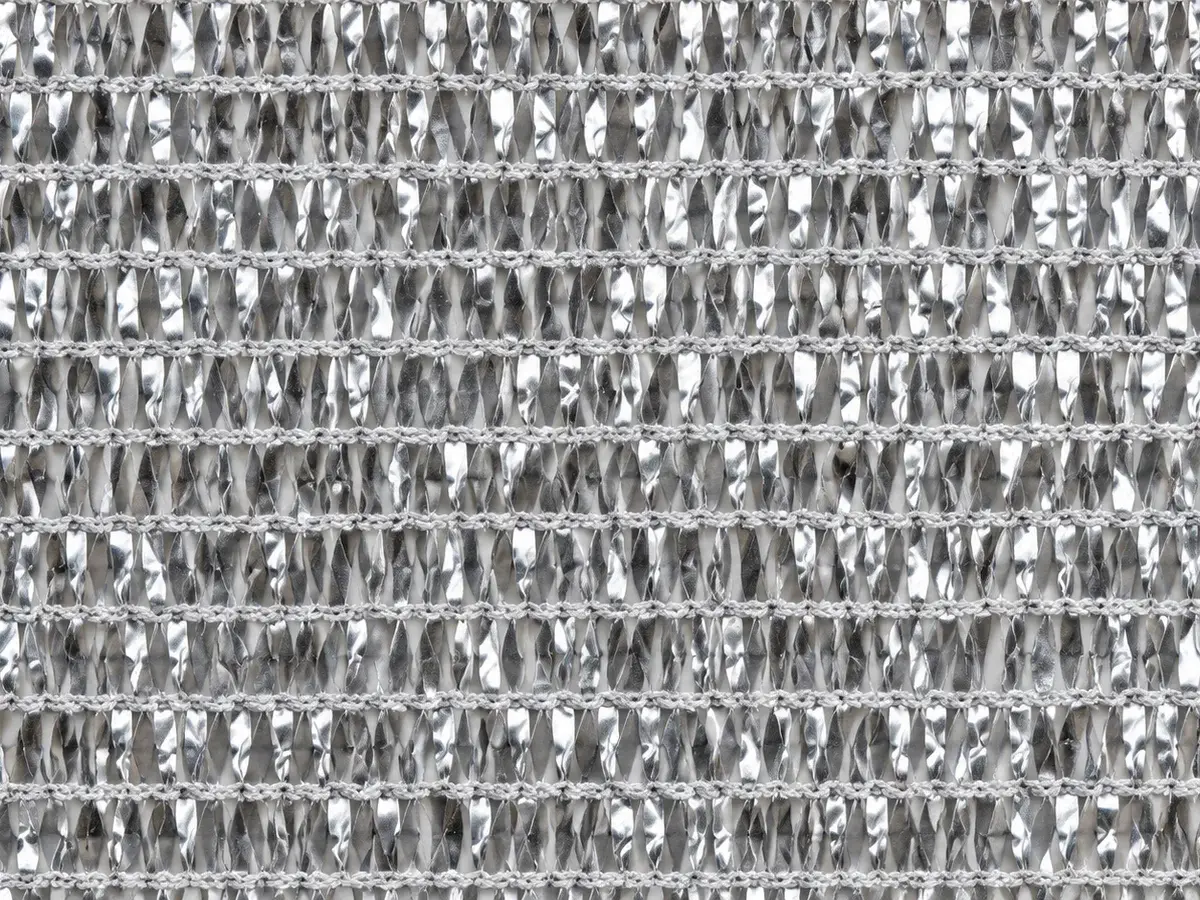
Where summer temperatures cross 40 °C, a normal shade net is not enough. Aluminet reflects the extra heat away from your crop, so plants keep growing through the hottest months.
Reflects heat
The metallised surface reflects sunlight and heat instead of absorbing it, so less heat reaches the crop.
About 5 °C cooler
Retractable aluminet lowers the temperature under the net by about 5 °C.
Warmer winter nights
It also holds back some of the warmth that would escape on cold nights.
| Aluminet | Details |
|---|---|
| Material | High-quality metallised knitted screen with a special anti-oxidation and UV-resistant coating |
| UV stabilised | Yes |
| UV life | 4 years* |
| Shade | 50% or 80% |
| Width | 4.2 m, 4.5 m or 5.5 m |
| Length | 50 m, 100 m or 200 m |
| Recommended for | Aluminet 50%: agriculture, for flowers and horticulture crops. Aluminet 80%: domestic use |
Why build one
Advantages of a nethouse
Protection for your crop at the lowest cost.
Low cost
Much cheaper per acre than a polyhouse, so you start protected farming with less money.
Quick to build
A simple structure that our team installs fast on your land.
Cooler crop
Shade net lowers leaf temperature and stops sun scorch in summer.
Fewer pests and sprays
Insect net keeps most pests out, so you spray less.
Wind and hail protection
The net takes the impact of strong wind and hail instead of your plants.
Almost no running cost
No fans, pumps or curtains to run. Only your irrigation uses power.
Two crops a year
Cucumber in summer, then capsicum or tomato in winter, so the structure works most of the year.
Subsidy eligible
Built to government norms, so your project can apply for subsidy.
Technical details
Nethouse specifications
Every value goes in writing in your quotation.
Design, height and shade factor are set for your crop, land and local weather after a site inspection.
| Specification | Kryzen nethouse |
|---|---|
| Structure | GI steel frame, flat-roof or dome design |
| Steel | Galvanised iron (GI) pipes with tensioned GI wires |
| Roof | UV-stabilised shade net: tape × tape (virgin HDPE, 35–75% shade) or mono × mono (100–125 GSM, BIS approved) |
| Net UV life | 3 years; aluminet 4 years |
| Net colour | Green, white or black |
| Add-on | Aluminet heat-reflective shade net, 50% or 80% |
| Sides | 40-mesh UV-stabilised insect net |
| Entrance | Ante-room with double door |
| Foundation | Concrete foundations for every column |
| Roof support | Cable purlin or pipe purlin; single or double layer |
| Crop support | Trellising wires fitted with the frame |
| Irrigation | Drip and fogger lines along the bays, as an add-on |
| Warranty | 3 years on shade net and insect net |
Made by Kryzen
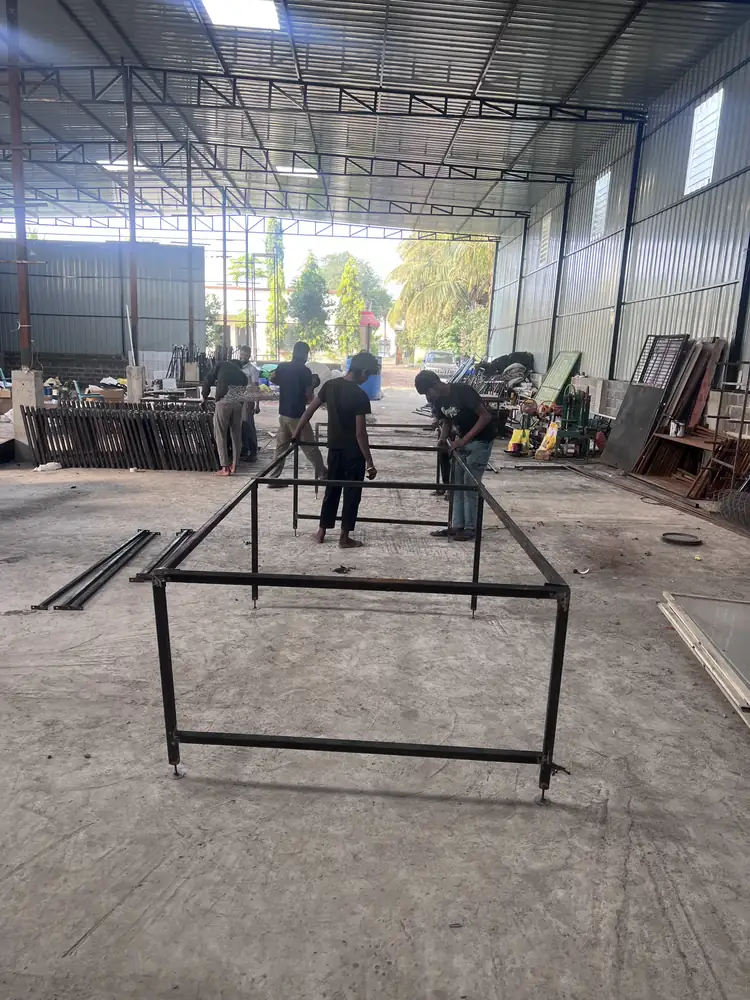
Our own factory. Our own build team.
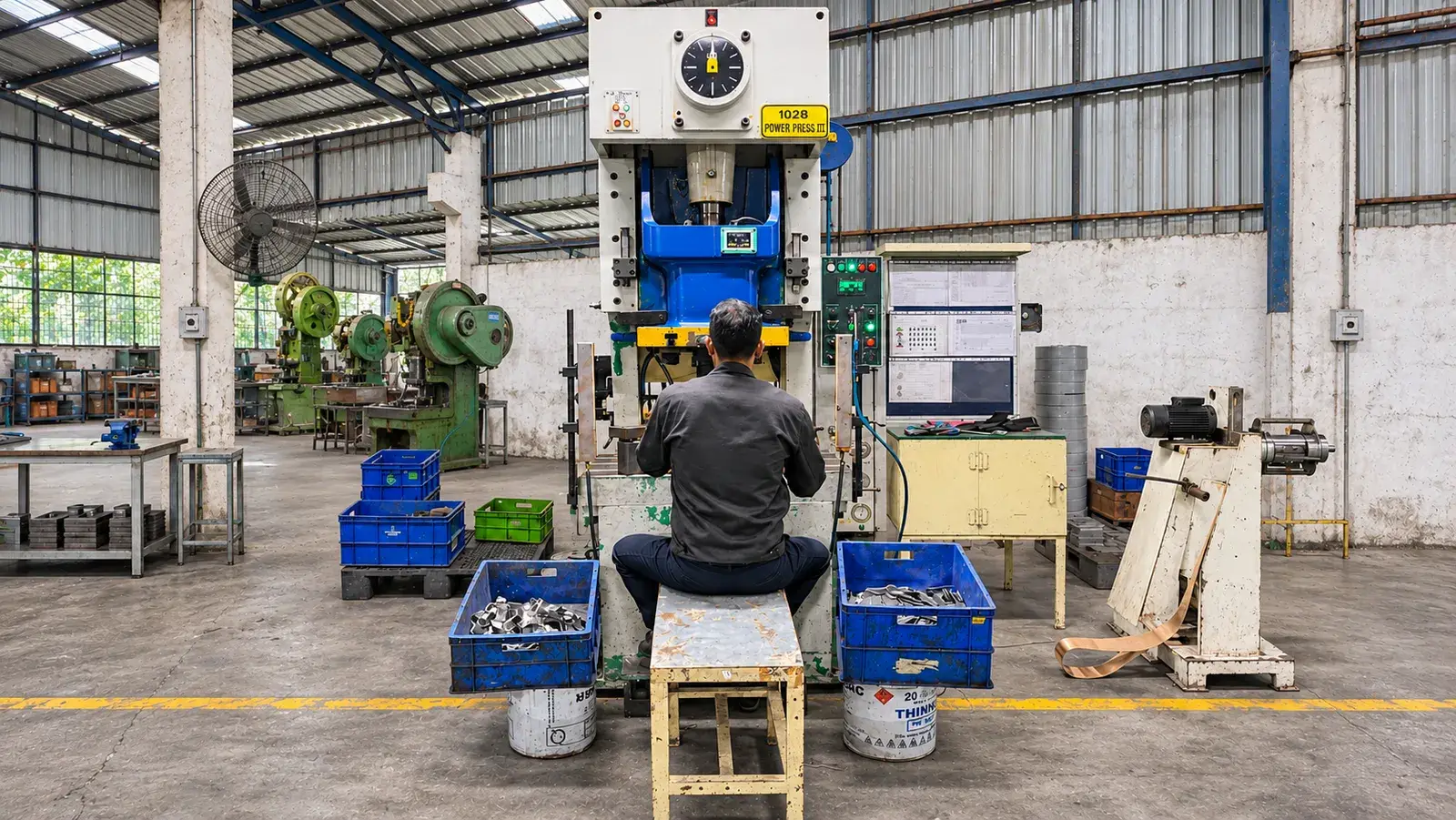
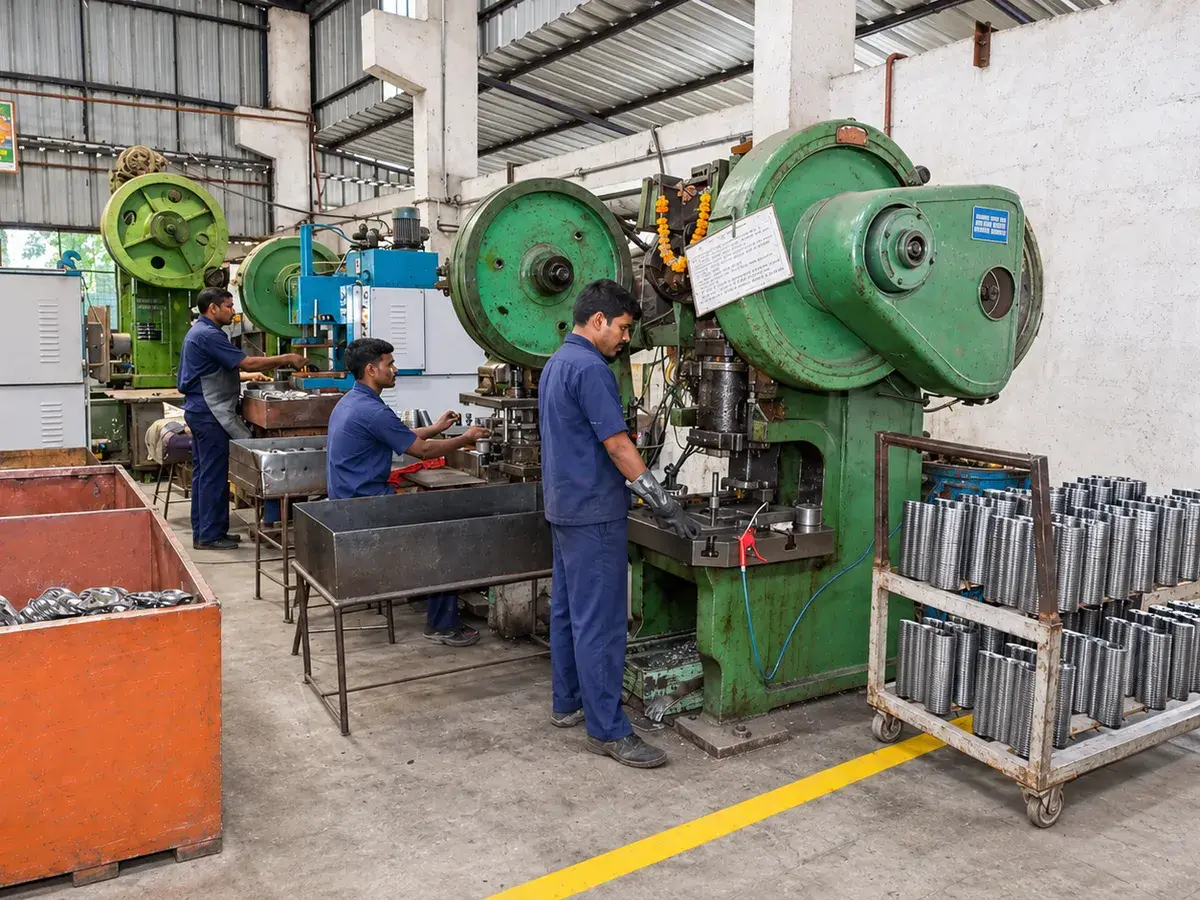
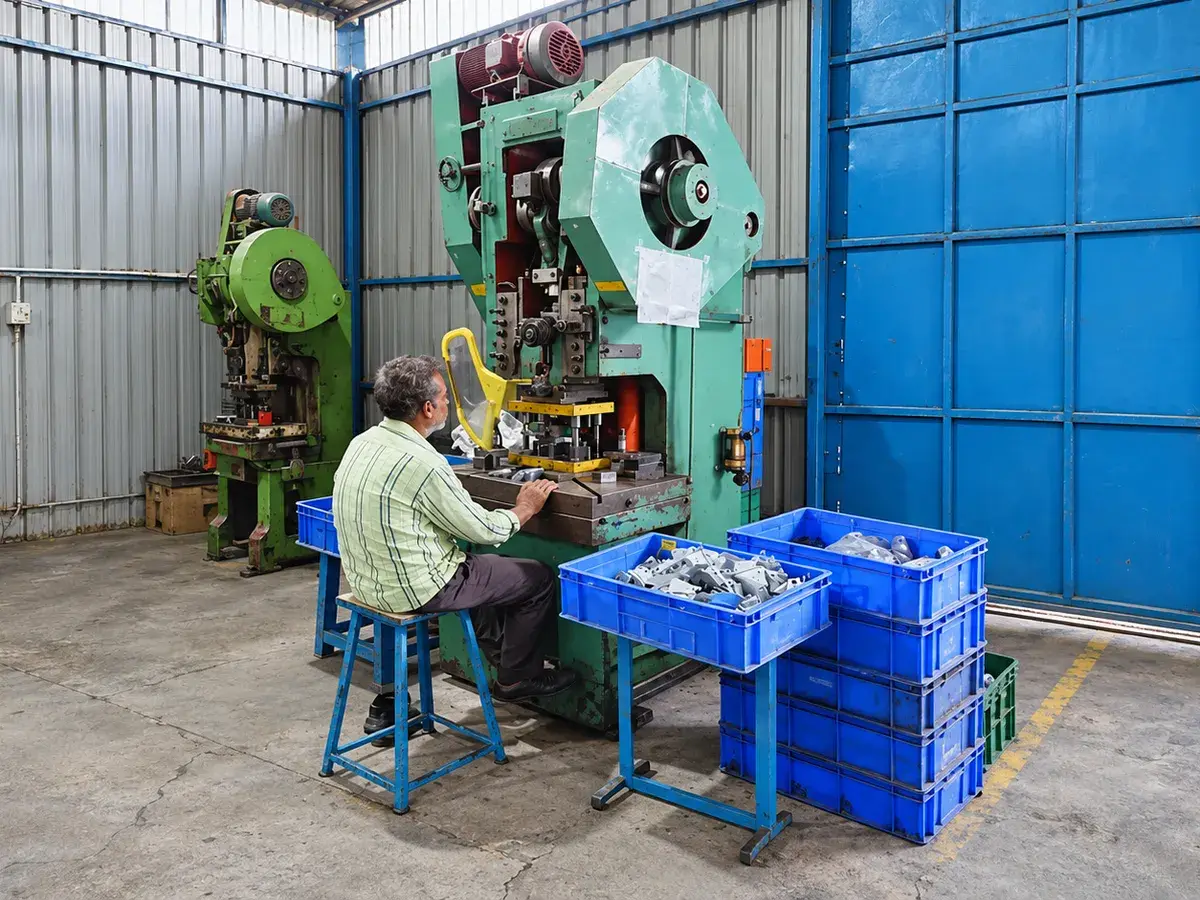
We cut, shape and quality-test the steel at our factory in Satara, Maharashtra, and our own construction team builds it on your land. You can follow every step live on your client portal at alpha.kryzen.com.
Crops you can grow in a nethouse
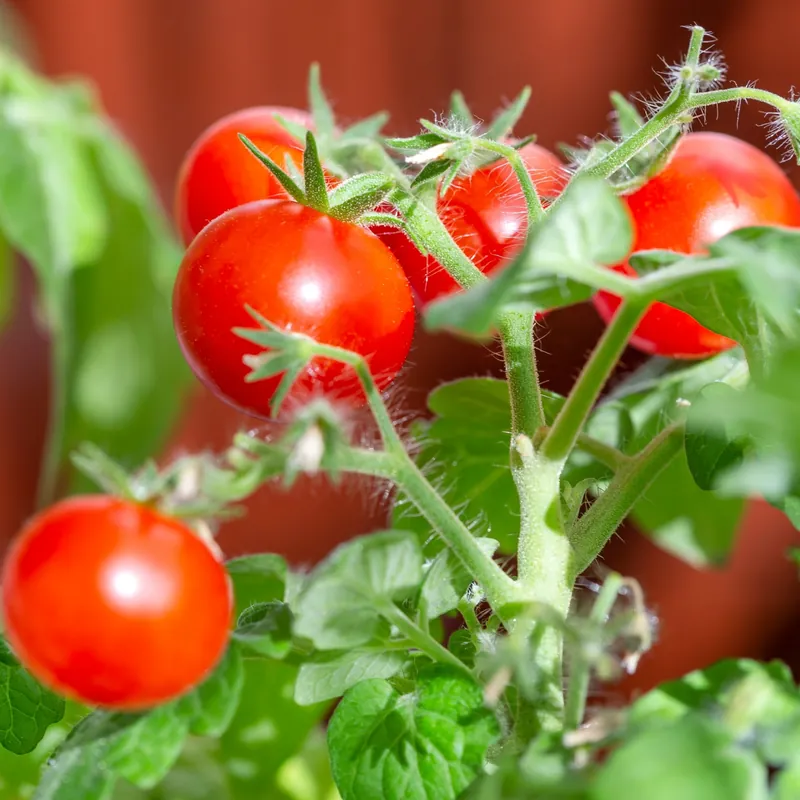
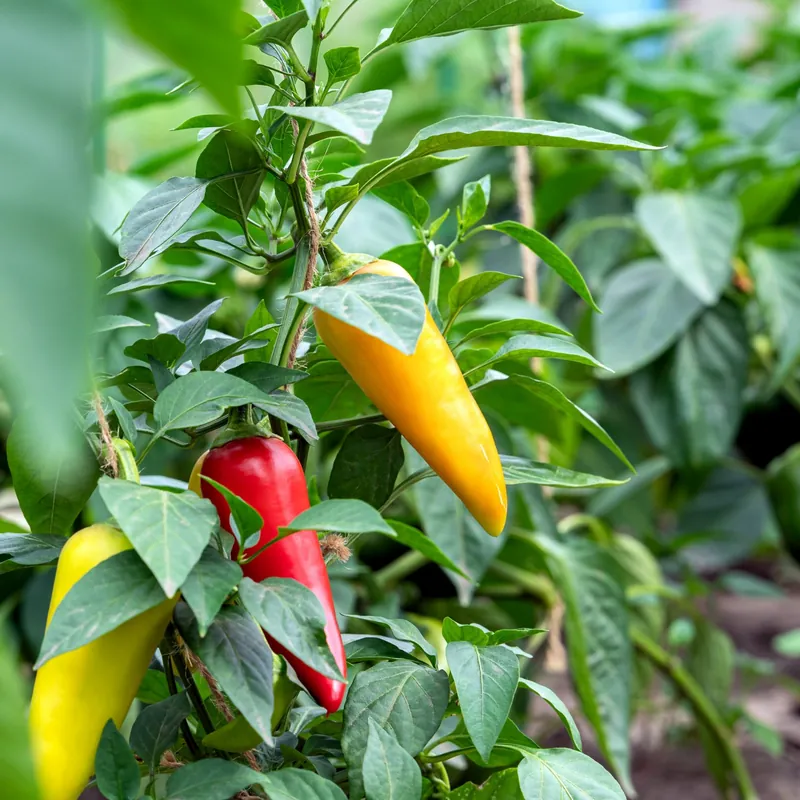
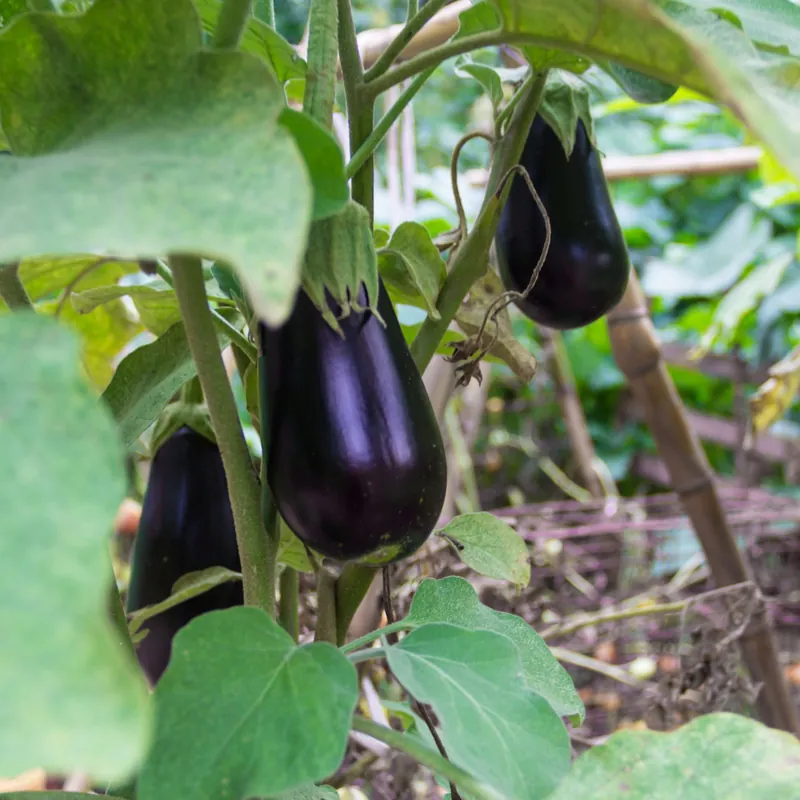
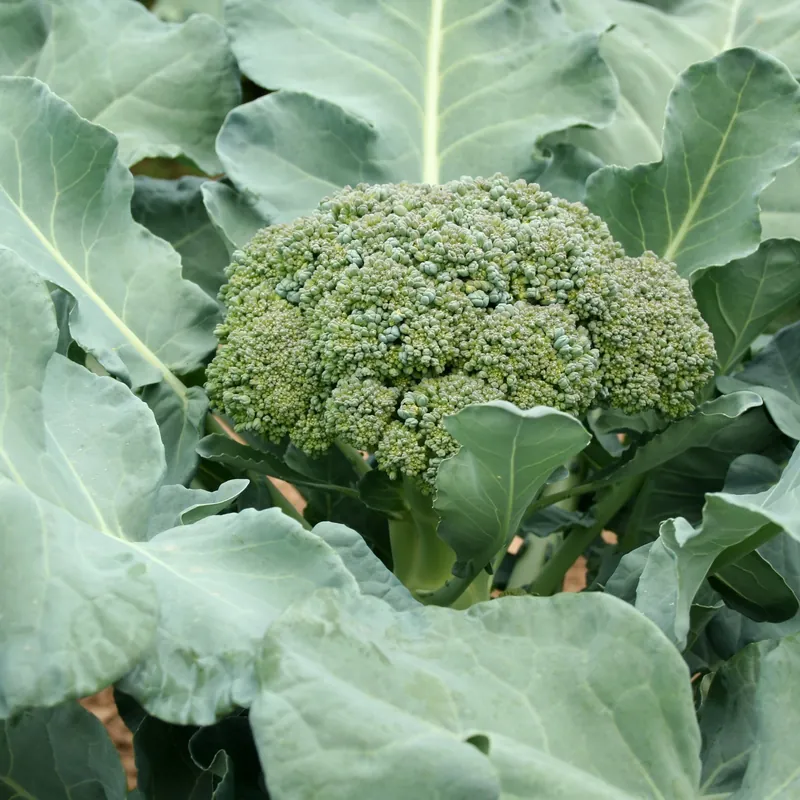
Vegetables and leafy greens that do well under net
One nethouse, two crops a year: a quick summer crop, then a long winter crop, so the structure earns most of the year.
Summer crop
April to July
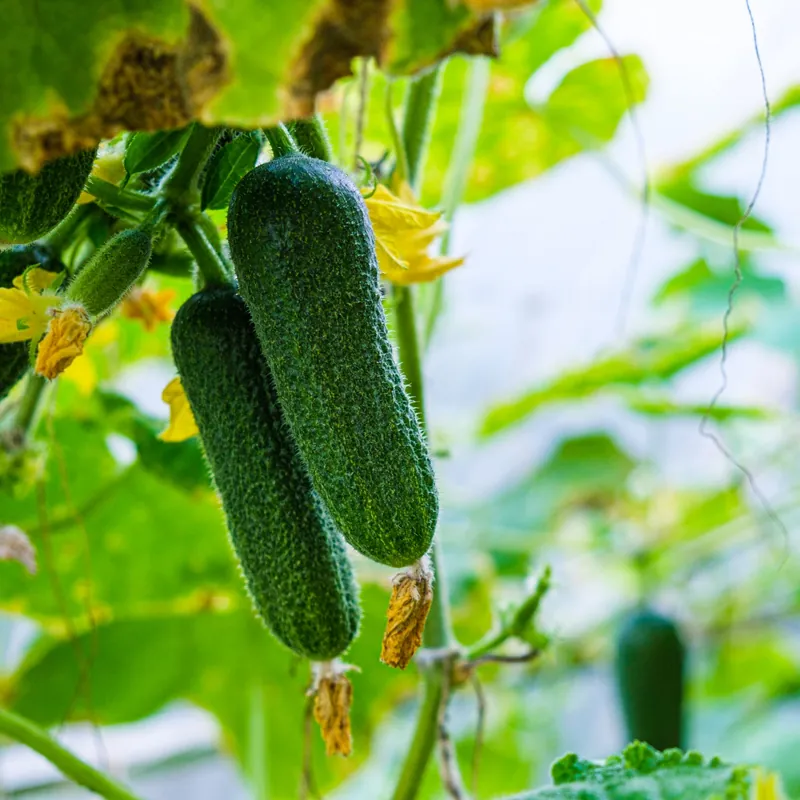
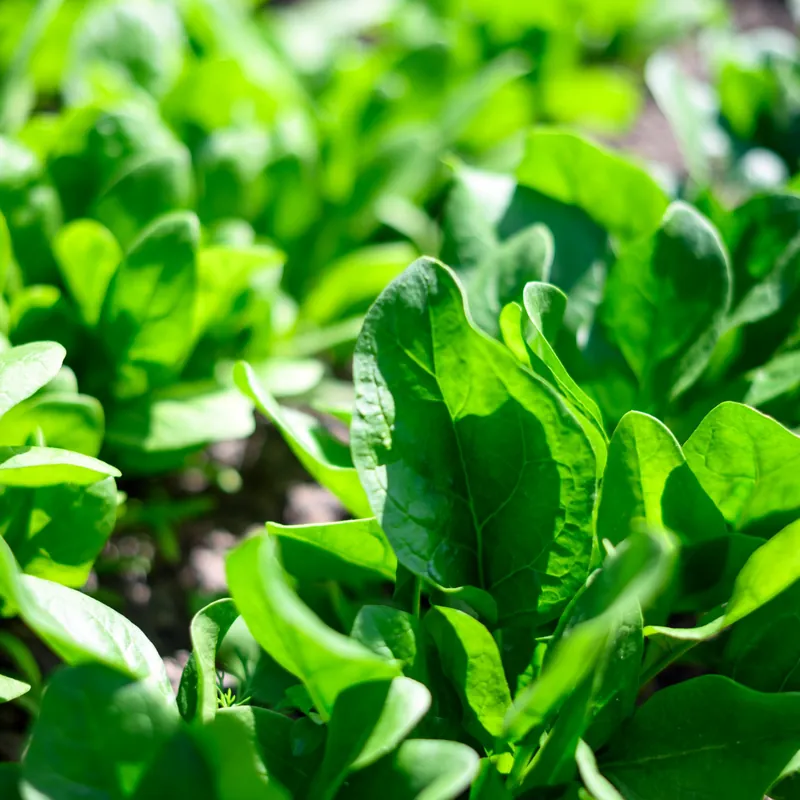
A fast cucumber crop of about 90 days, when shade net keeps the plants cool. Shade-loving greens also grow well.

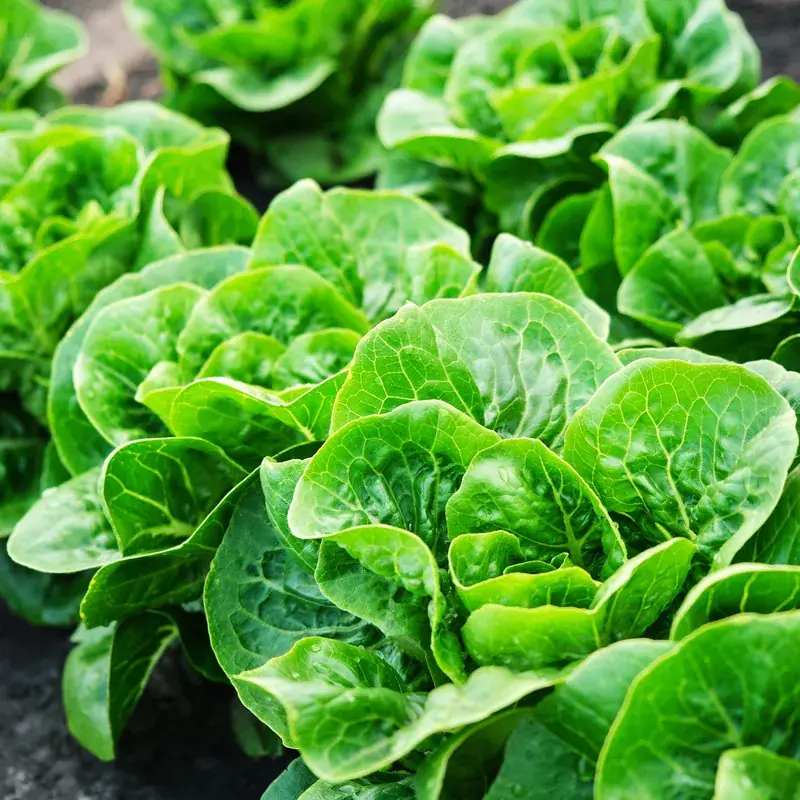
All crops for a nethouse
Go soil-less
You can also grow soil-less inside a nethouse
Add a hydroponic system inside the same structure. No soil-borne disease, exact nutrition for every plant, and higher yield from the same area. We design and install the system with your polyhouse.

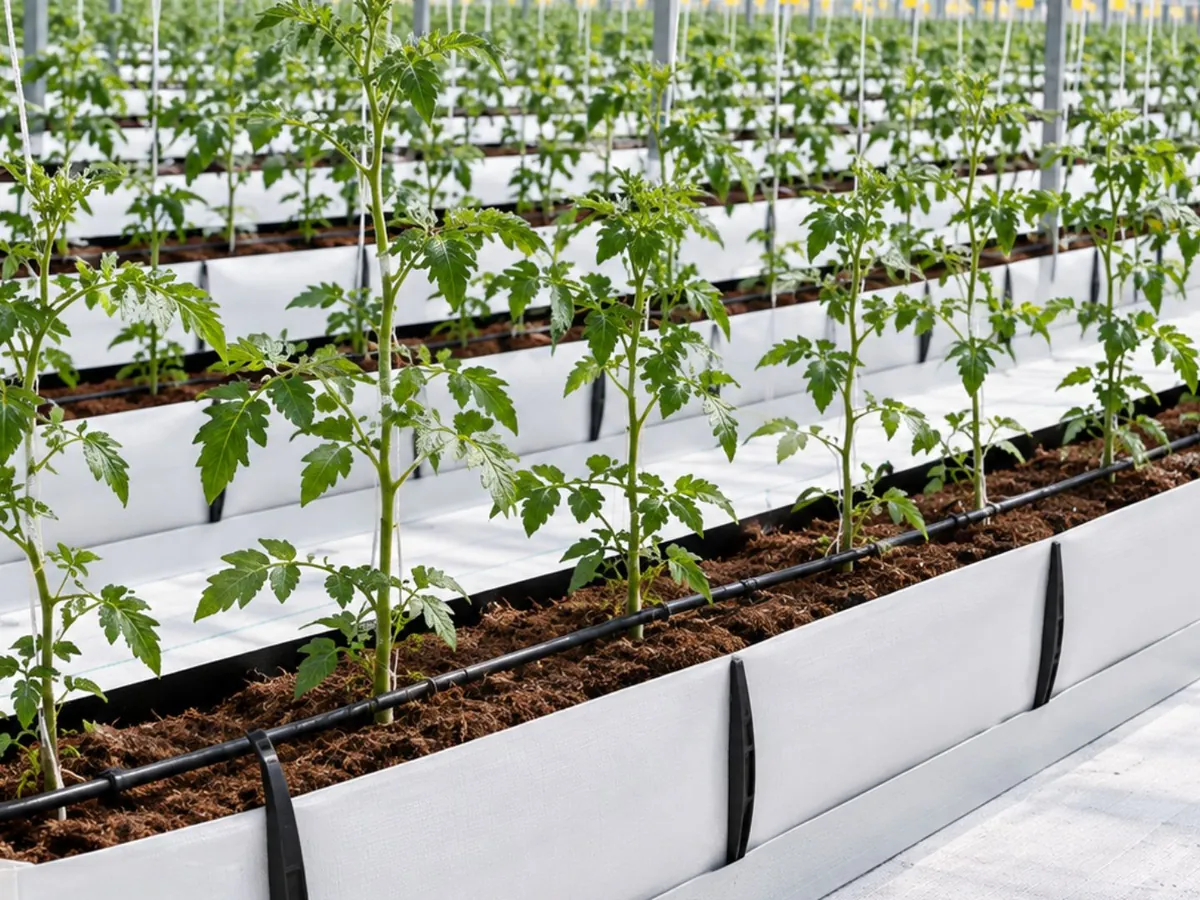
Cocopeat grow bags
Capsicum, cucumber and tomato in washed cocopeat, fed by drip.
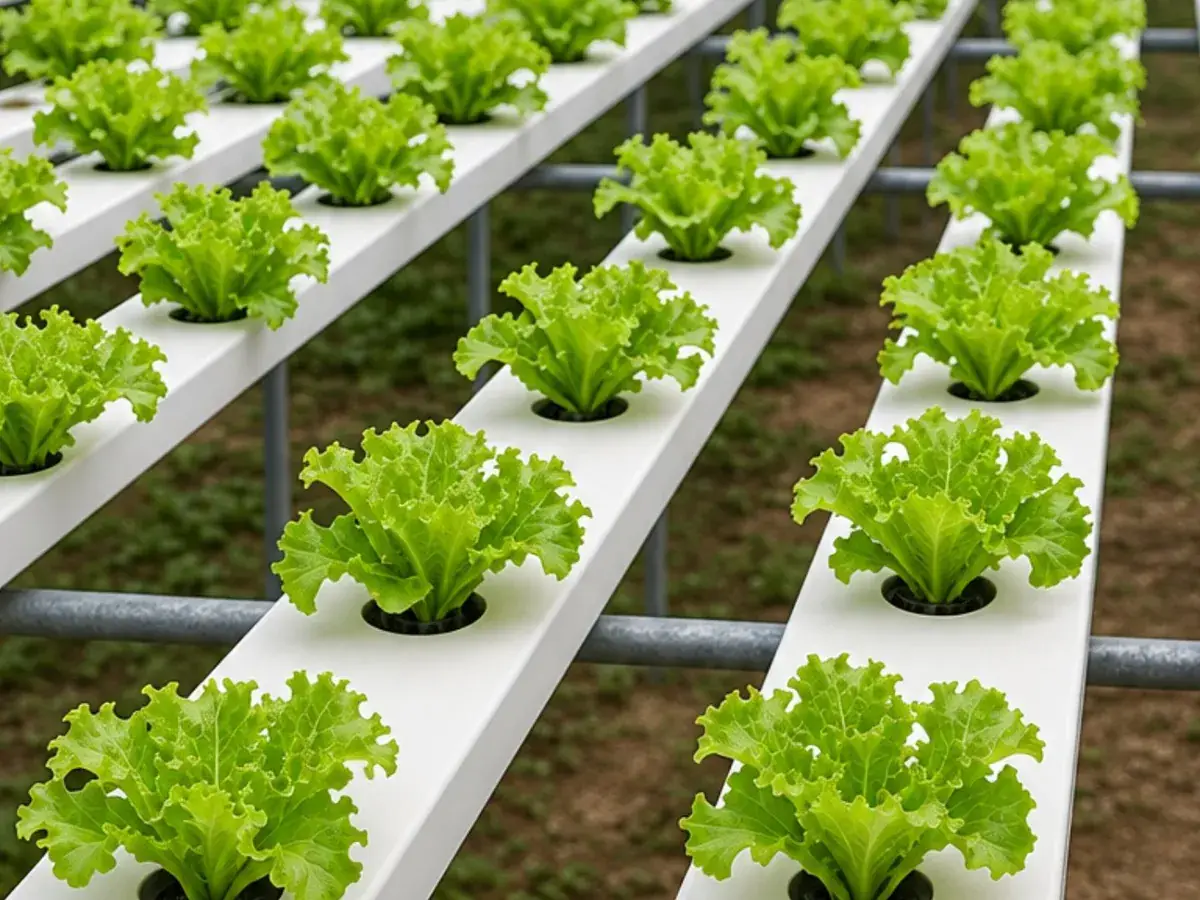
NFT flatbed
Lettuce, leafy greens and herbs in food-grade channels.
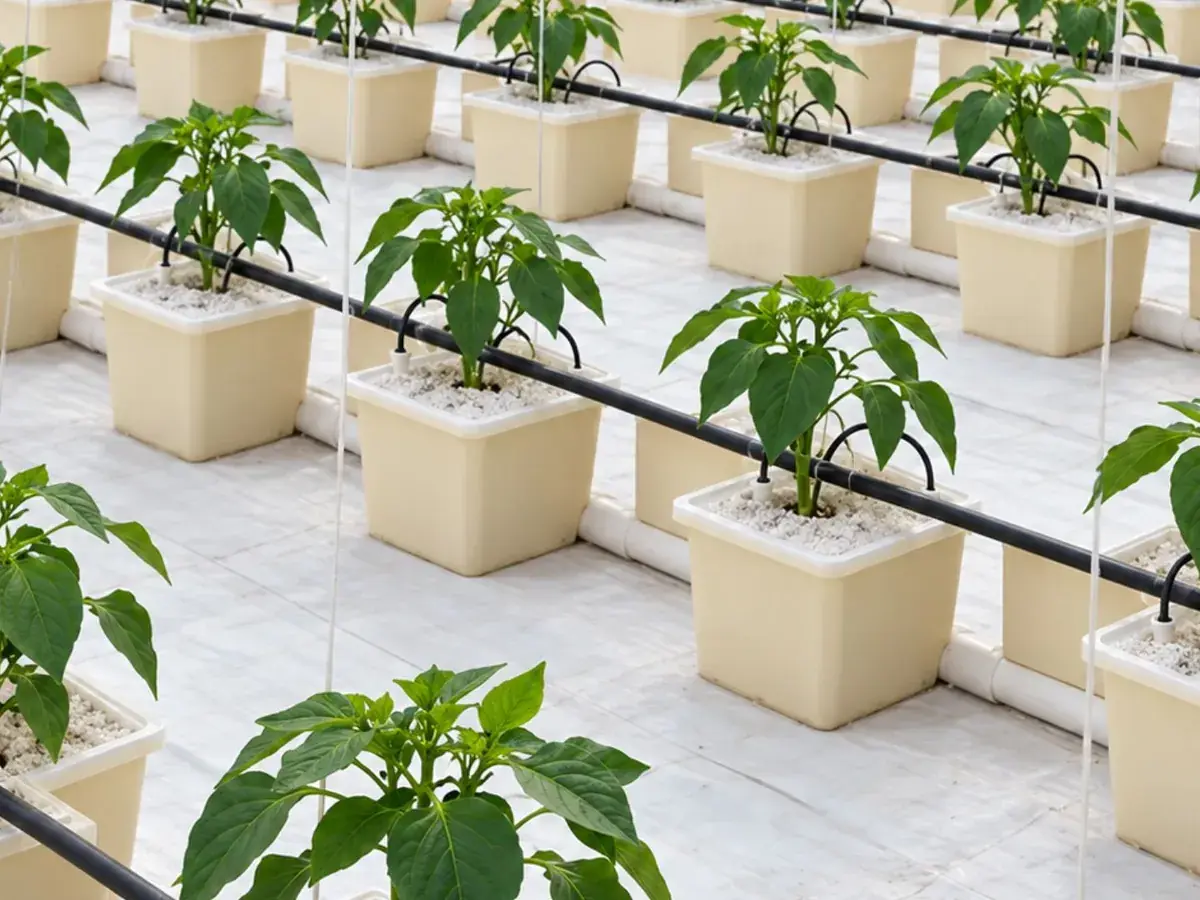
Dutch bucket
Vine crops in buckets that recirculate the nutrient solution.
Trough
Strawberry and leafy crops in raised troughs at working height.
Every soil-less farm comes with our nutrient calculator and agronomy wiki.
Cost and profit in 1 acre nethouse
What a nethouse costs to build and run
A nethouse is the lowest-cost protected structure. 1 acre is 4,047 m². Kryzen project prices for a tubular nethouse, with GST and the estimated subsidy shown separately.
| Item | 1 acre | 2 acres | 3 acres |
|---|---|---|---|
| Covered area | 4,047 m² | 8,094 m² | 12,141 m² |
| Project price (before GST) | ₹24 lakh | ₹45 lakh | ₹68 lakh |
| Price per m² | ₹593 | ₹556 | ₹560 |
| GST (18%) | ₹4.32 lakh | ₹8.10 lakh | ₹12.24 lakh |
| Total invoice value | ₹28.32 lakh | ₹53.10 lakh | ₹80.24 lakh |
| Estimated NHM/MIDH subsidy (2,500 m² limit) | − ₹8.88 lakh | − ₹8.88 lakh | − ₹8.88 lakh |
| Cost after subsidy | ₹19.44 lakh | ₹44.22 lakh | ₹71.36 lakh |
Monthly running cost, per acre
About ₹45,500
- Labour (2 full-time workers × ₹12,000)₹24,000
- Seedlings₹8,000
- Fertiliser and crop protection₹8,000
- Packaging₹3,000
- Electricity (irrigation)₹2,500
Expected revenue, cucumber + capsicum
₹1.4–2.1 lakh/monthly
Per acre, averaged over a year of two crops. It depends on variety, season, market price and how well the crop is managed.
Subsidy has an area limit
- NHM / MIDH: the government pays 50% of ₹710 per m² (₹355 per m²), but only on up to 2,500 m² per farmer. That is about 0.6 acre, so the most you can get is about ₹8.88 lakh, even if your nethouse is bigger.
- 4,000 m² is the polyhouse limit, not the nethouse limit.
- NHB: projects bigger than 2,500 m² can apply for a credit-linked subsidy of 50% of the eligible project cost, up to ₹100 lakh per project. A bank loan is part of the project.
Source: MIDH Operational Guidelines 2025 (NHB) and MIDH Implementation Guidelines 2025-26.
Cash flow and break-even over 12 years
Cumulative cash position of your nethouse, with and without the NHM/MIDH subsidy. Pick a farm size and crop plan below, then move the sliders to see how capacity use and your loan change it.
- With subsidy
- Without subsidy
- Before break-even
- After break-even
Farm size
Crop plan: cucumber in summer, then a winter crop
These are tentative numbers.
Want to know your own calculations? Book the site inspection kit and our team of experts will find out your break-even period.
Illustration only, not a guarantee. Based on the project price for the size you pick plus 18% GST, an NHM/MIDH subsidy of ₹8.88 lakh (50% of ₹710/m² on up to 2,500 m²) received after year 1, subject to approval, revenue for the crop plan you pick per acre per month, scaled from the low end of its range at 50% capacity use to the high end at 95%, running cost of about ₹45,500 per acre a month in year 1 rising by the opex increase you select each year, crop rates rising by the crop rate increase you select each year, and a net change of ₹3 lakh per acre every 4 years. Year 1 counts 9 months of sales. Crop plan revenue is a tentative Kryzen estimate. Tax free: agricultural income is generally exempt from income tax in India under Section 10(1); check your case with a tax adviser.
What you earn depends on your crop
A two-crop plan, such as cucumber in summer and capsicum or tomato in winter, keeps the nethouse working most of the year. Your project report uses current prices from Price Watcher, and Buyers Connect helps you sell after harvest.
Included free
- 6 months of virtual agronomy
- 4-day training for your farm team
- Hydroponic Masterclass logins
- Farm management software
- Buyers Connect
Worth ₹1.08 lakh
Nethouse vs regular farming
How a nethouse compares with open-field farming
An open field costs nothing to cover, but sun, pests, wind and hail decide your harvest. A nethouse protects your crop for a small extra cost.
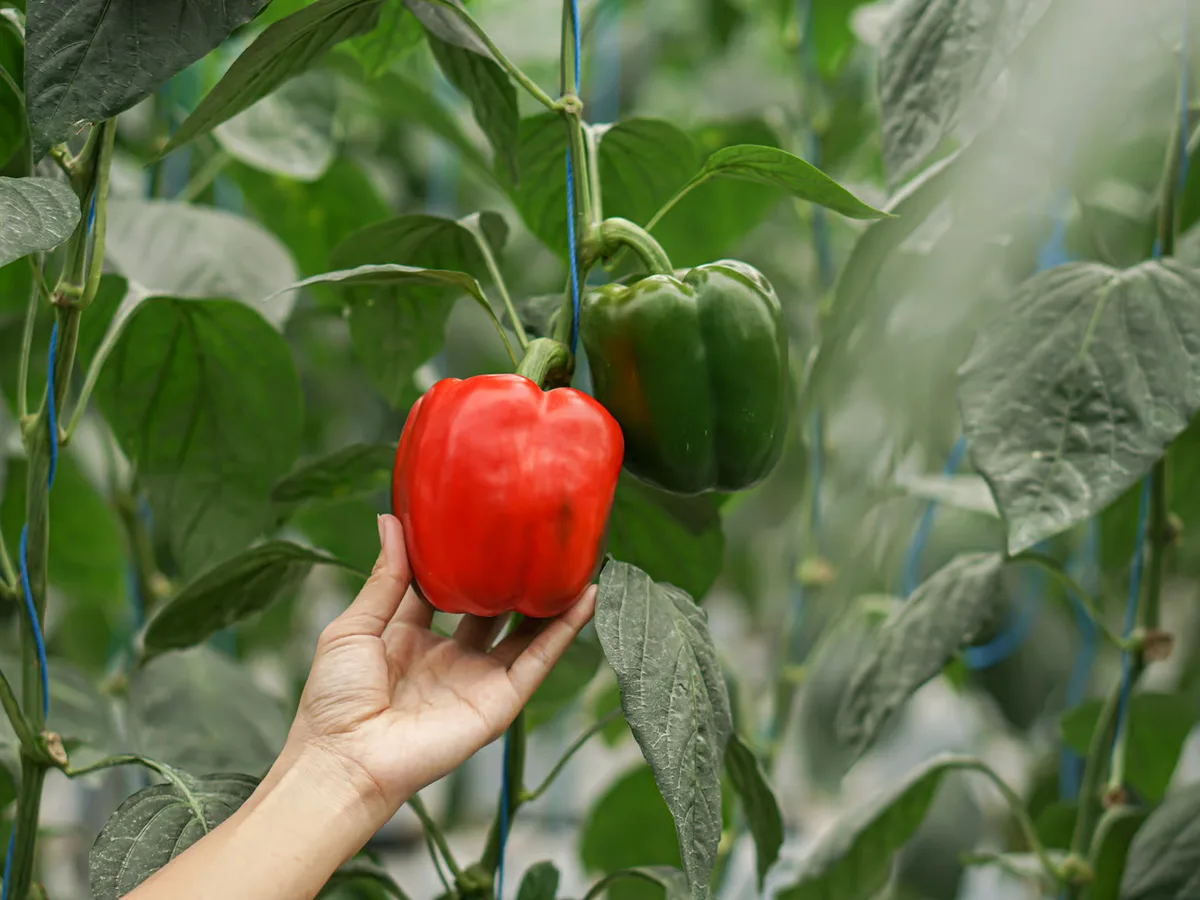

| Point | Nethouse | Open field |
|---|---|---|
| Sun scorch and heat | Reduced by shade net | Common in summer |
| Pests | Lower: insect net | High, with more spraying |
| Wind and hail | Net takes the impact | Crop damaged |
| Heavy rain | Partly protected | Crop exposed |
| Yield and quality | Higher and more uniform | Varies season to season |
| Upfront cost | Lowest of all protected structures | Low |
Nethouse vs polyhouse
Nethouse or naturally ventilated polyhouse?
Both grow profitable crops. The right one depends on your crop, climate and budget.
| Point | Nethouse | Polyhouse (NVPH) |
|---|---|---|
| Covering | Shade net roof and insect net sides | UV film roof, roll-up curtains and insect net |
| Rain and cold | Partly protected | Protected |
| Temperature | Cooler; air moves through the net | Warmer; vents and curtains control it |
| Electricity | Least | Low: mainly irrigation |
| Build cost | Lowest | Medium |
| Best for | Cucumber, green capsicum, tomato, leafy greens, nursery | Coloured capsicum, cucumber, tomato, flowers |
Nethouse vs fan and pad
Nethouse or fan and pad polyhouse?
A fan and pad polyhouse controls temperature with exhaust fans and wet cooling pads. It costs more to build and run, but suits high-value crops in hot, dry regions.
| Point | Nethouse | Fan and pad polyhouse |
|---|---|---|
| Covering | Shade net roof and insect net sides | Closed film house with exhaust fans and wet cooling pads |
| Temperature control | Shade only; air moves through the net | Active cooling with fans and pads |
| Rain and cold | Partly protected | Fully protected |
| Electricity | Least | Highest: fans and pumps |
| Build cost | Lowest | Highest |
| Best for | Cucumber, green capsicum, tomato, leafy greens, nursery | Roses, gerbera, orchids, exotics, hot dry regions |
Already have a team who can build?
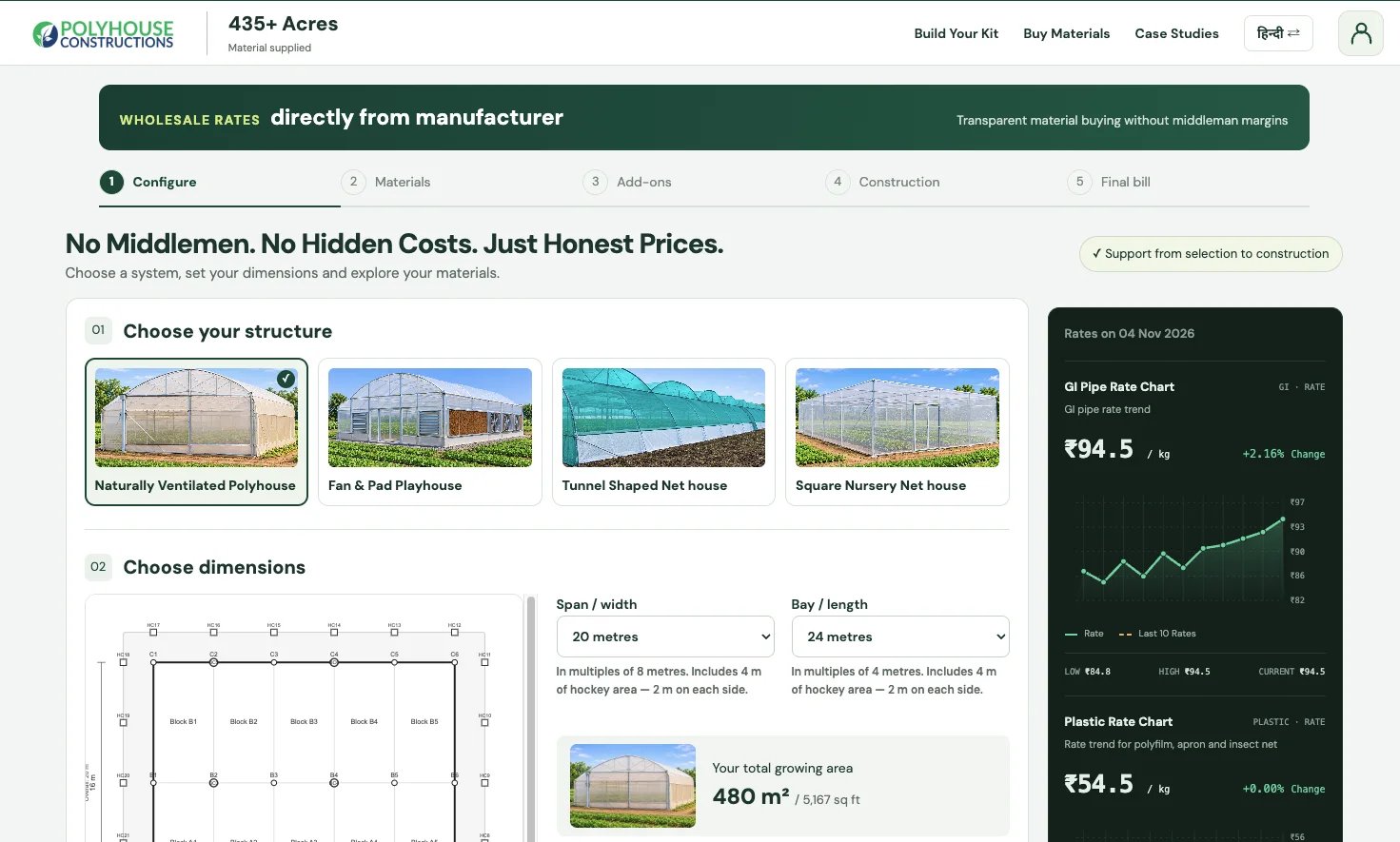
Buy your nethouse material from us
No middlemen. No hidden costs. Just honest prices.
India’s first and only fully transparent material purchase for protected cultivation. The same material we use on our own projects, from our factory.
- 1Choose a system
- 2Set your dimensions
- 3Explore your materials
Subsidy on nethouse
Government subsidy for your nethouse
Nethouses can get assistance under the Mission for Integrated Development of Horticulture (MIDH), through your state's National Horticulture Mission (NHM), or under the National Horticulture Board (NHB) for larger projects.
NHM / MIDH subsidy

NHM state subsidy providerEnrolled with the National Horticulture Mission in Maharashtra and Karnataka for state horticulture schemes.
- Assistance rate50% of the cost normSubject to the government cost norm and approval.
- Tubular / rectangular nethouseCost norm ₹710/m²At 50%, about ₹355/m²: ₹3.55 lakh for 1,000 m² or ₹8.88 lakh for 2,500 m².
- Area limitUp to 2,500 m² per farmerAbout 0.6 acre. A bigger nethouse still gets subsidy on 2,500 m² only.
- Design eligibilityApproved category sets the rateWe confirm the classification of your design before you apply.
NHB subsidy

NHB subsidy providerKryzen is a registered National Horticulture Board subsidy provider for all states.
- Project sizeAbove 2,500 m² of covered areaFor bigger farms that go past the NHM / MIDH limit.
- Assistance rate50% of eligible project costCredit-linked, so a bank loan is part of the project. Up to ₹100 lakh per project.
Subsidy has an area limit
- NHM / MIDH: the government pays 50% of ₹710 per m² (₹355 per m²), but only on up to 2,500 m² per farmer. That is about 0.6 acre, so the most you can get is about ₹8.88 lakh, even if your nethouse is bigger.
- 4,000 m² is the polyhouse limit, not the nethouse limit.
- NHB: projects bigger than 2,500 m² can apply for a credit-linked subsidy of 50% of the eligible project cost, up to ₹100 lakh per project. A bank loan is part of the project.
Source: MIDH Operational Guidelines 2025 (NHB) and MIDH Implementation Guidelines 2025-26.
Subsidy figures are indicative. The final amount depends on the approved design, covered area, eligible cost, location and applicable scheme rules.
How we build
From first call to first harvest
Ten steps, one team. Most projects are built in 45 to 90 days after material reaches the site.
 1
Free online consultation
We discuss your land, water, budget and goals on a video or phone call.
 2
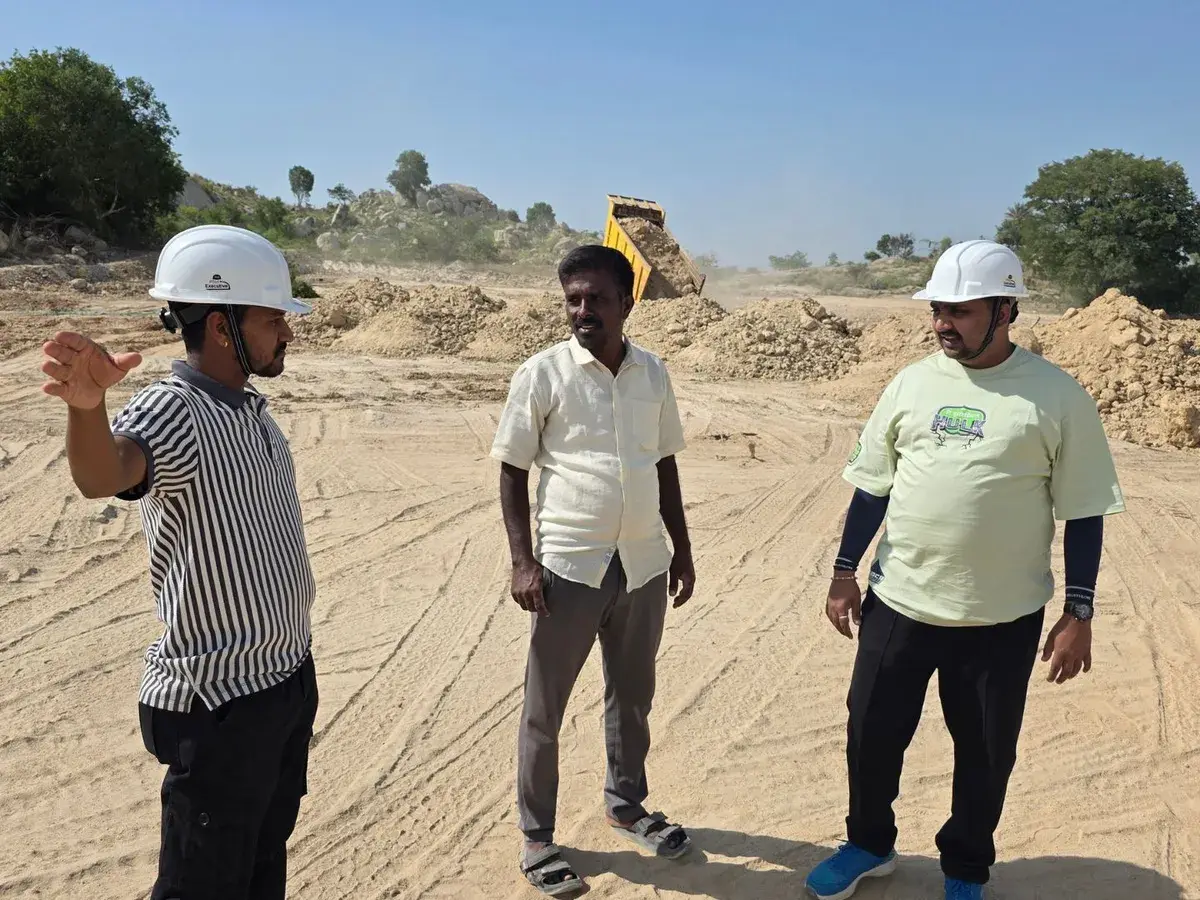
Site inspection
Our team checks level, slope, sunlight, soil, water, power and road access.
 3
Design and quotation
We design for your climate and crops, and share a detailed quotation.
 4
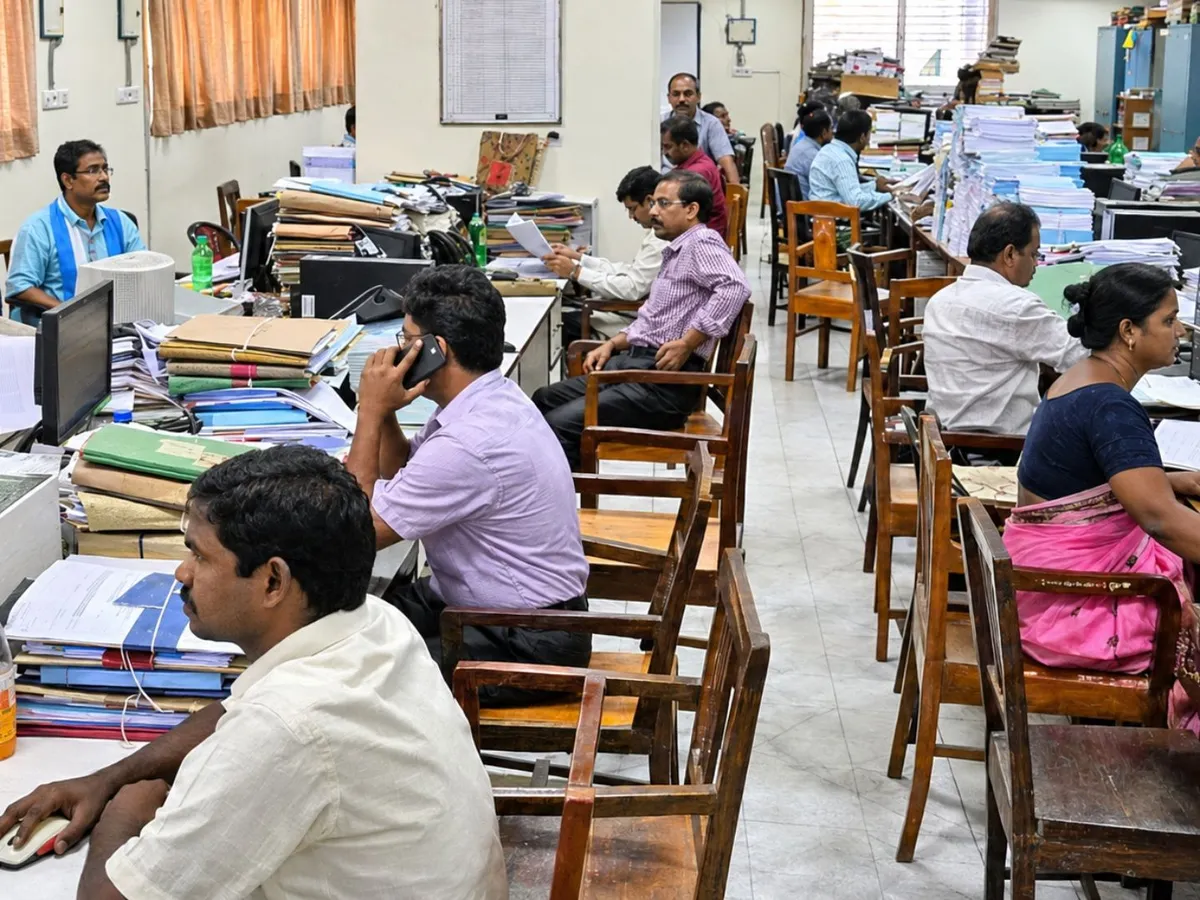
Project report and finance
We prepare the DPR for your bank loan and subsidy file.
 5
Subsidy and loan
We help you apply for NHB or NHM subsidy and your bank loan, with the documents each office needs.
 6
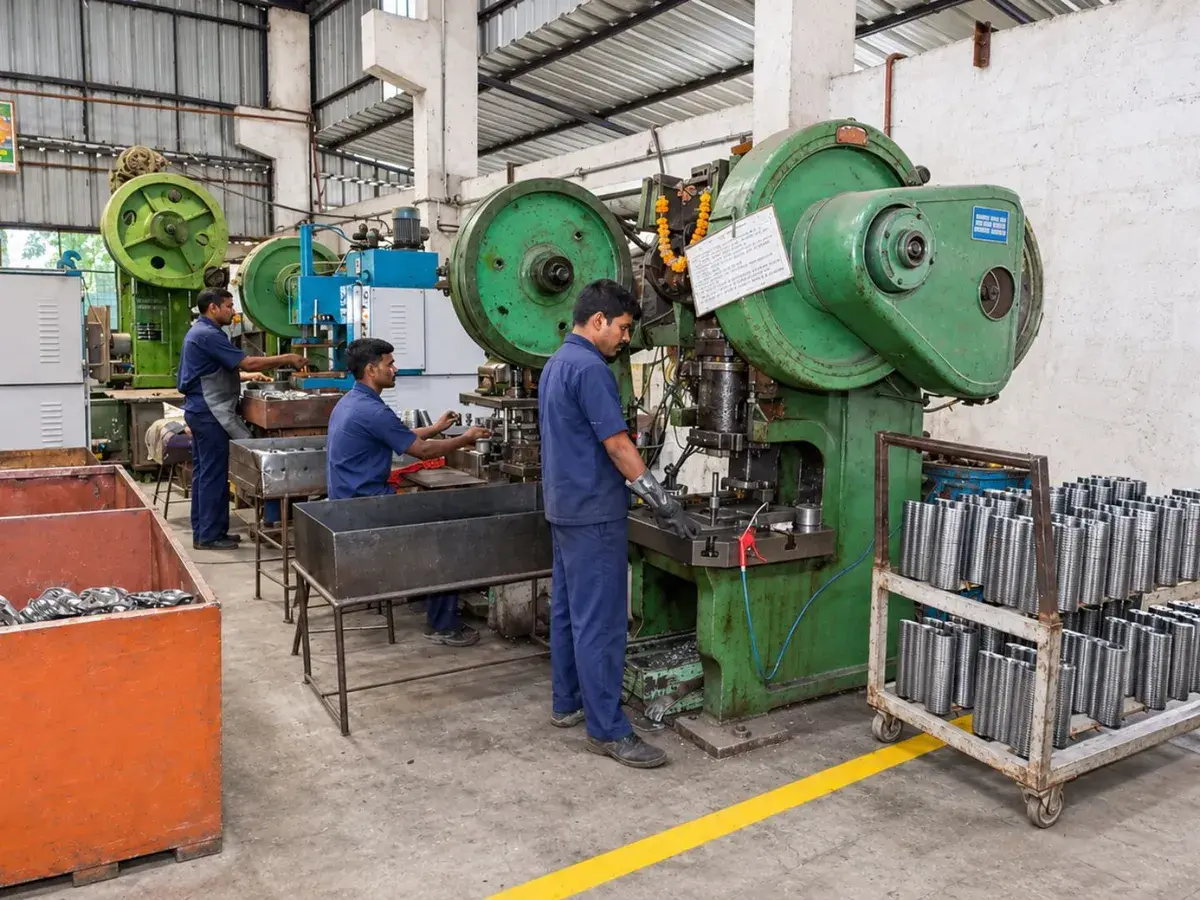
Manufacturing
We cut, shape and quality-test the material at our factory in Satara.
 7
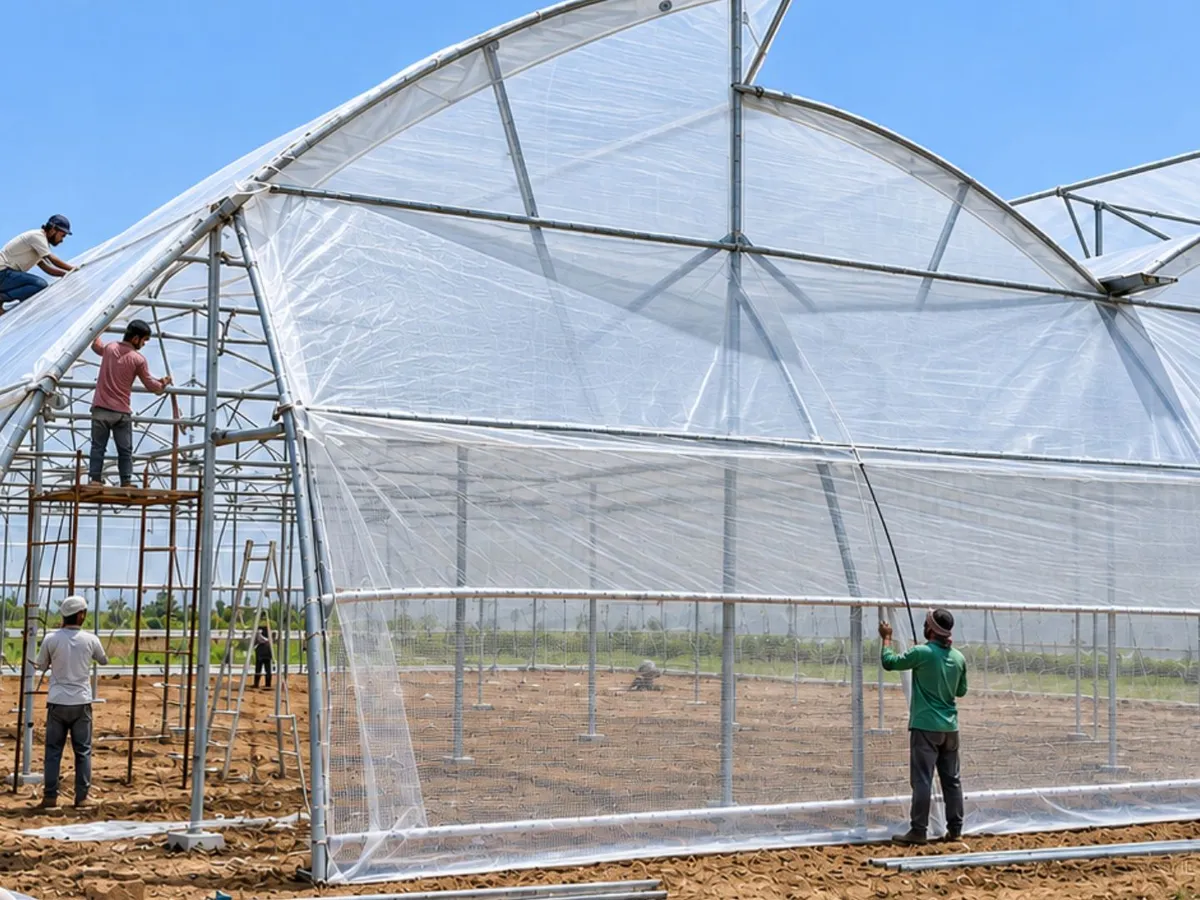
Construction
Our team builds the foundations, structure and growing systems on your land.
 8
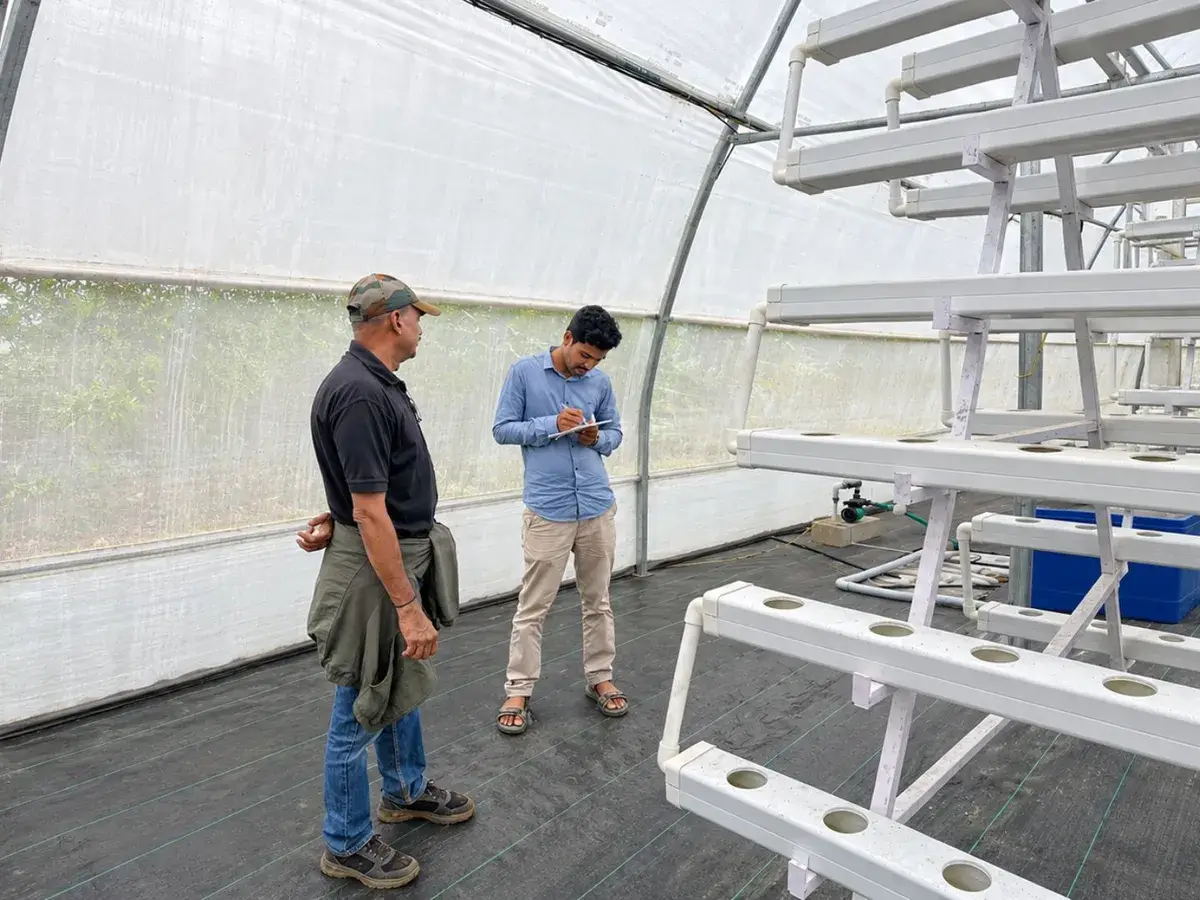
Testing and handover
We test every system and hand over a working farm.
 9
Training and agronomy
Hands-on training for your team and 6 months of virtual agronomy support.
 10
Harvest management
We help you plan harvests, grading and sales, with market prices from Price Watcher and buyers through Buyers Connect.