

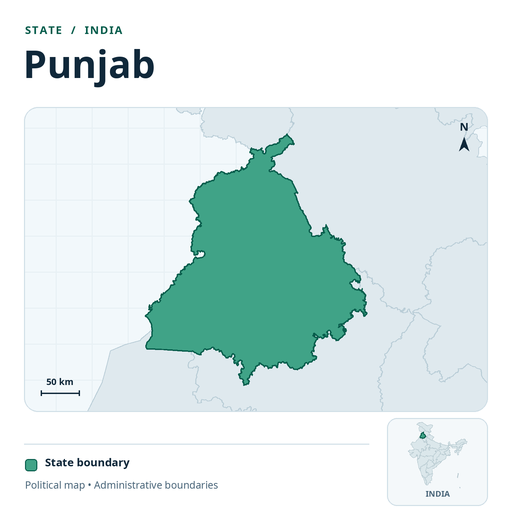
This page lists the 55 towns in Punjab where we have a polyhouse construction guide. Each guide uses that town's own monthly climate to suggest the right structure (naturally ventilated polyhouse, fan and pad polyhouse or nethouse) and lists our construction and material services. We have built 4 projects in Punjab so far (see our project map (नवीन टॅबमध्ये उघडते)).
The towns listed are 1,120 to 1,380 km in a straight line from our nearest site. On the Köppen–Geiger climate map, 35 of these towns fall in the hot semi-arid zone (BSh) and 16 in the humid subtropical with dry winters zone (Cwa), and the rest in other zones.[1] Urban households in Punjab spent an average of ₹7,383 per person per month in 2023–24, against an all-India urban average of ₹7,078.[2]
Locations in Punjab
| Town | Population | Climate zone | To our nearest site |
|---|---|---|---|
| Alawalpur | – | – | – |
| Amritsar | 11.6 lakh | Hot semi-arid | 1,300 km |
| Barnala | 1.2 lakh | Hot semi-arid | 1,170 km |
| Batala | 1.6 lakh | Humid subtropical with dry winters | 1,320 km |
| Bathinda | 2.9 lakh | Hot semi-arid | 1,140 km |
| Dhuri | 55,000 | Hot semi-arid | 1,170 km |
| Faridkot | 88,000 | Hot semi-arid | 1,190 km |
| Fazilka | 76,000 | Hot desert | 1,160 km |
| Firozpur | 1.1 lakh | Hot semi-arid | 1,220 km |
| Firozpur Cantt | – | Hot semi-arid | 1,220 km |
| Gobindgarh | 82,000 | Hot semi-arid | 1,200 km |
| Gurdaspur | 78,000 | Humid subtropical with dry winters | 1,350 km |
| Hoshiarpur | 1.7 lakh | Humid subtropical with dry winters | 1,300 km |
| Jagraon | 65,000 | Hot semi-arid | 1,210 km |
| Jalandhar | 8.7 lakh | Hot semi-arid | 1,270 km |
| Jalandhar Cantt | – | Hot semi-arid | 1,270 km |
| Kapurthala | 99,000 | Hot semi-arid | 1,280 km |
| Khanna | 1.3 lakh | Hot semi-arid | 1,210 km |
| Kharar | 74,000 | Humid subtropical with dry winters | 1,220 km |
| Kot Kapura | 92,000 | Hot semi-arid | 1,180 km |
| Longowal | 24,000 | Hot semi-arid | 1,150 km |
| Ludhiana | 16.2 lakh | Hot semi-arid | 1,230 km |
| Malerkotla | 1.4 lakh | Hot semi-arid | 1,190 km |
| Malout | 81,000 | Hot desert | 1,140 km |
| Mansa | 83,000 | Hot semi-arid | 1,120 km |
| Moga | 1.6 lakh | Hot semi-arid | 1,210 km |
| Mohali | 1.7 lakh | Humid subtropical with dry winters | 1,210 km |
| Morinda | 24,000 | Humid subtropical with dry winters | 1,220 km |
| Mukerian | 30,000 | Humid subtropical with dry winters | 1,340 km |
| Muktsar | 1.2 lakh | Hot semi-arid | 1,170 km |
| Nabha | 68,000 | Hot semi-arid | 1,170 km |
| Nakodar | 37,000 | Hot semi-arid | 1,250 km |
| Nangal | 48,000 | Humid subtropical with dry winters | 1,280 km |
| Nawanshahr | 46,000 | Humid subtropical with dry winters | 1,250 km |
| Pathankot | 1.7 lakh | Humid subtropical with dry winters | 1,380 km |
| Patiala | 4.5 lakh | Hot semi-arid | 1,170 km |
| Patti | 41,000 | Hot semi-arid | 1,260 km |
| Pattran | 28,000 | Hot semi-arid | 1,120 km |
| Phagwara | 1 lakh | Hot semi-arid | 1,260 km |
| Phillaur | 25,000 | Hot semi-arid | 1,240 km |
| Qadian | 24,000 | Humid subtropical with dry winters | 1,320 km |
| Raikot | 29,000 | Hot semi-arid | 1,200 km |
| Rajpura | 92,000 | Hot semi-arid | 1,190 km |
| Rampura Phul | 51,000 | Hot desert | 1,150 km |
| Rupnagar | 56,000 | Humid subtropical with dry winters | 1,240 km |
| Samana | 54,000 | Hot semi-arid | 1,150 km |
| Sangrur | 89,000 | Hot semi-arid | 1,150 km |
| Sirhind Fatehgarh Sahib | 61,000 | Hot semi-arid | 1,200 km |
| Sujanpur | 28,000 | Humid subtropical with dry winters | 1,380 km |
| Sunam | 69,000 | Hot semi-arid | 1,140 km |
| Talwara | 25,000 | Humid subtropical with dry winters | 1,340 km |
| Tarn Taran | 67,000 | Hot semi-arid | 1,280 km |
| Urmar Tanda | 23,000 | Humid subtropical with dry winters | 1,310 km |
| Zira | 37,000 | Hot semi-arid | 1,230 km |
| Zirakpur | 96,000 | Humid subtropical with dry winters | 1,210 km |
Protected structures we build
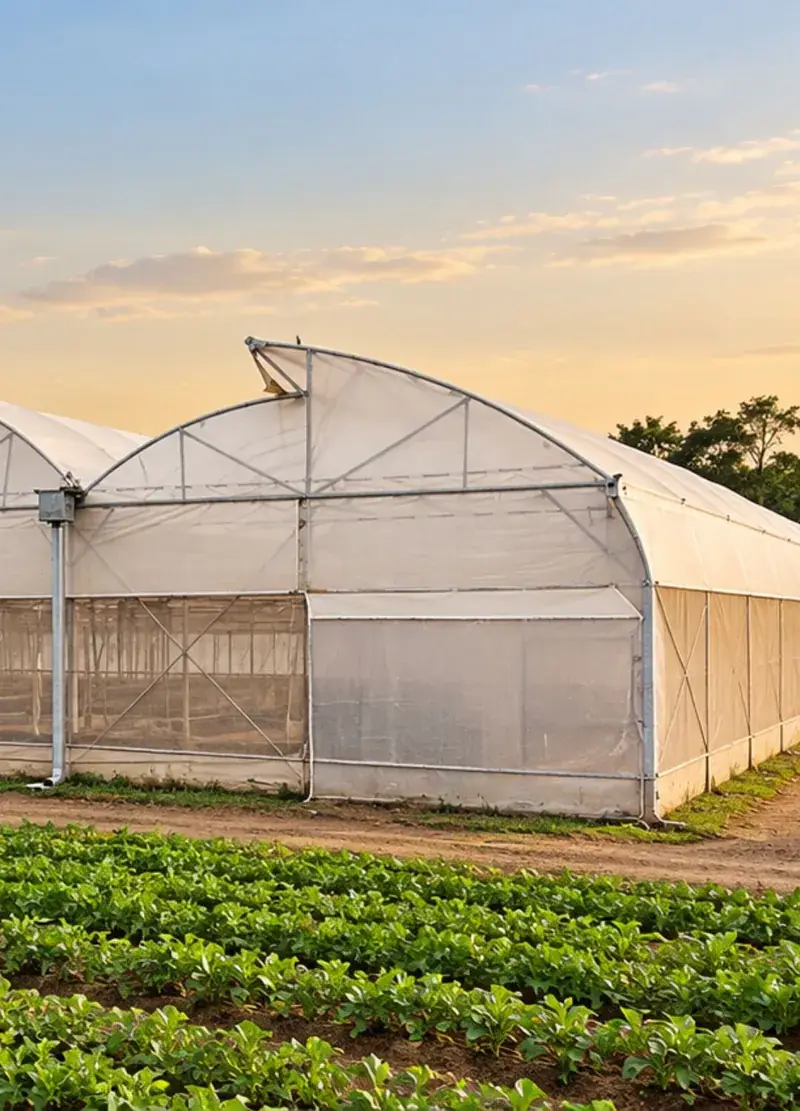

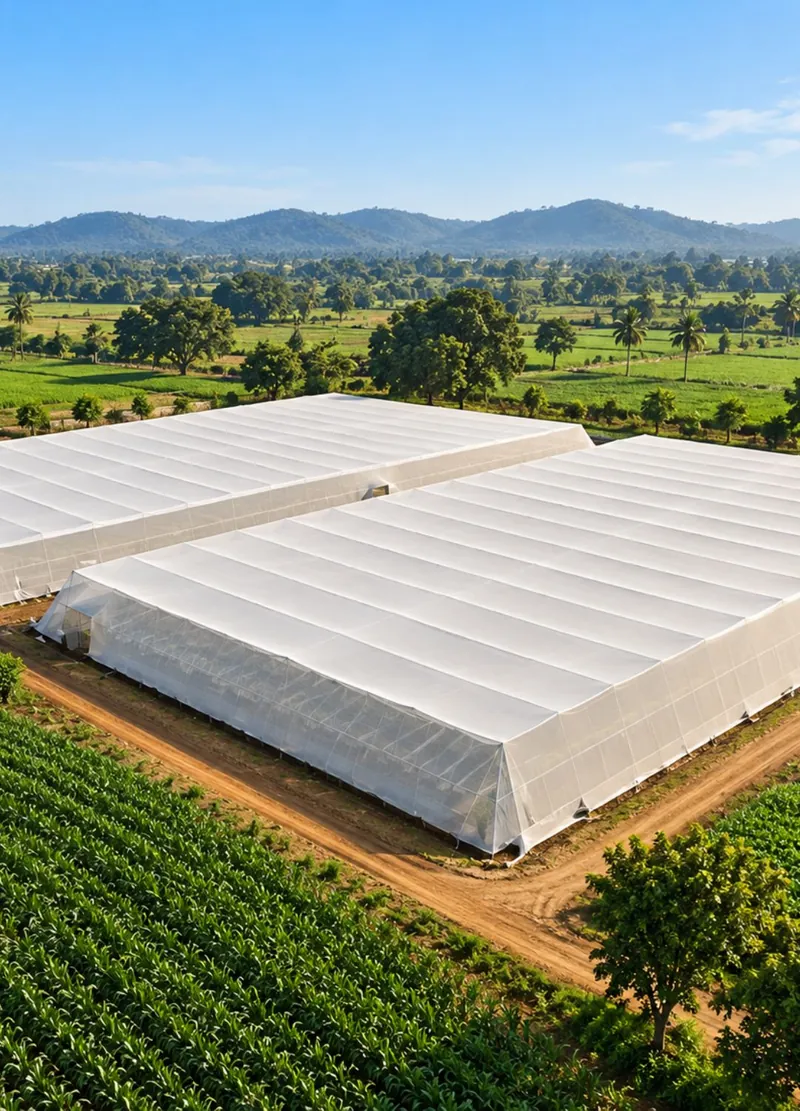
Subsidy in Punjab
Polyhouse, shade net and hydroponic projects can apply for assistance under the Mission for Integrated Development of Horticulture (MIDH) through the Punjab horticulture department. Rates and limits change, so check the current norms when you apply. We prepare the Detailed Project Report for your bank loan and subsidy application.[3]
Sources
- Rubel & Kottek, University of Veterinary Medicine Vienna · World map of the Köppen–Geiger climate classification (नवीन टॅबमध्ये उघडते)
- Ministry of Statistics and Programme Implementation (MoSPI) · Household Consumption Expenditure Survey 2023–24: press note (नवीन टॅबमध्ये उघडते)
- Ministry of Agriculture and Farmers Welfare · Mission for Integrated Development of Horticulture (MIDH) (नवीन टॅबमध्ये उघडते)